Fiction notes: This is why libraries matter
15/10/2023 at 11:24 am | Posted in Fiction notes, Uncategorized | Leave a commentTags: fiction reading, libraries, local community, reading community, reading inspiration, small town
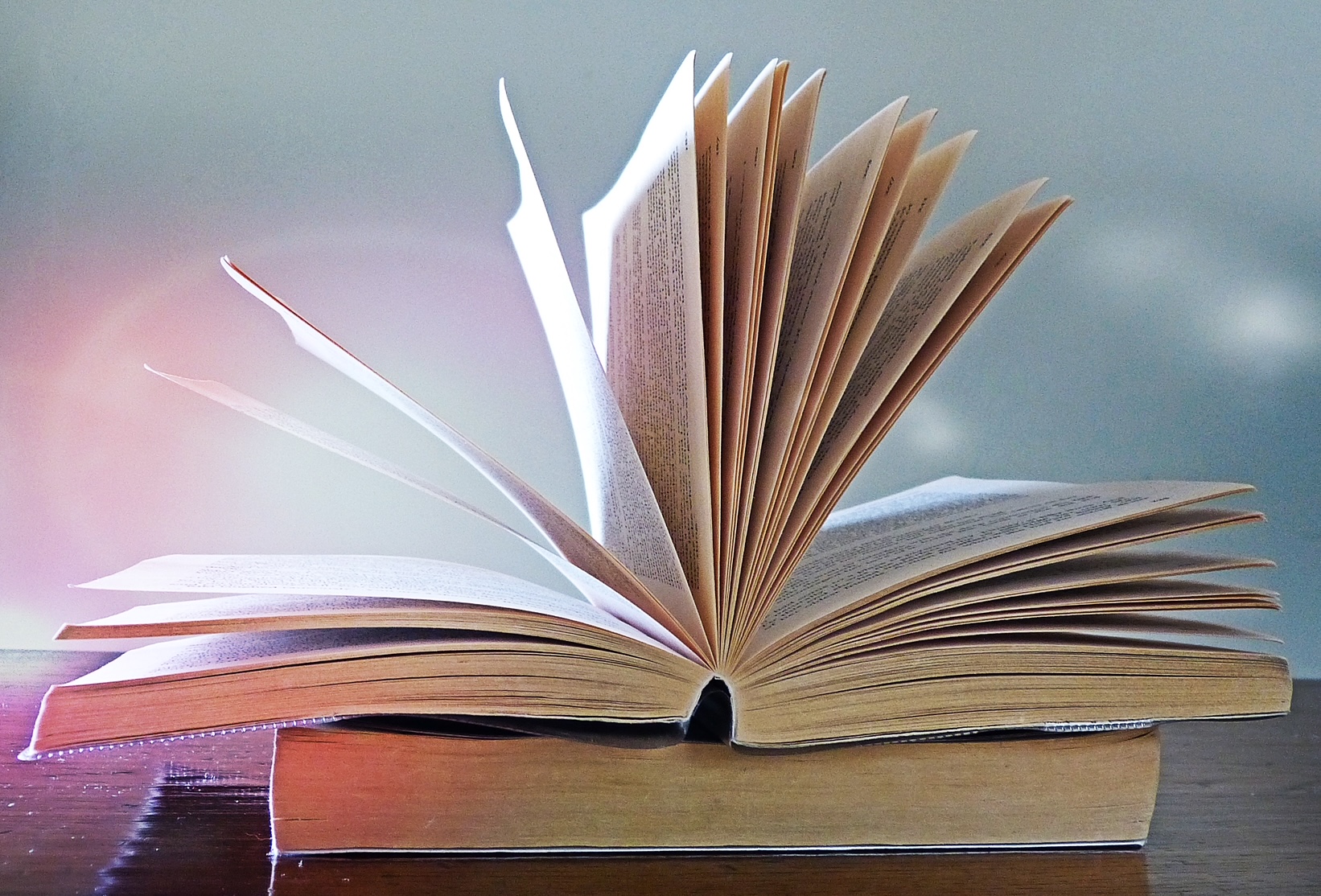
Yesterday I discovered that my local library was built on the site of a long-vanished Royal palace. On the outside, the building is an unremarkable, 20th Century design. But inside, it’s sheer magic. There are stories to lose yourself in, factual books to learn from, and a huge digital resource of free knowledge and entertainment.
In the library, children develop life-long reading skills which increase their opportunities to thrive. Older people come for company, for fiction, and to learn something new. As a free community resource, there’s always something going on: rhyme time; board games and hot chocolate; book clubs, home library deliveries…
When I recently returned after a long absence, I wondered why I’d stayed away. The reason, I decided, was a bad habit of handing books in late, and having to pay a fine. But nowadays there’s an app for that! You receive a polite reminder, and an invitation to renew with a simple button-touch.
Friendly, inclusive and educational, public libraries deserve to be cherished. In an era which has seen hundreds of library closures, a thousand redundancies and reduced investment in stock, we can unfortunately no longer take these wonderful places for granted.
My local library is quite simply a treasure… and from this point on, through being a member and also volunteering there, I’m doing my bit to support it.
Fiction notes: These two aspects of character
15/09/2023 at 7:40 am | Posted in Fiction notes | 3 CommentsTags: character development, fiction writing, journalling, writing exercise, writing inspiration

Recently my mother rediscovered my old school journal, from when I was eight years old. Of course I was a bookworm then! It seems I’ve been a bibliophile all through my life.
Reading, for me, has alway gone hand in hand with writing – with the telling of stories; with the creation of fictional characters. This extract from my journal reveals, I believe, the essential stability of character. In certain, fundamental aspects I have not changed one iota from when I was eight. I’m still fascinated by stories, still intrigued by the way an author from past times can reveal truths that seem freshly relevant today.
Of course, I’m not exactly the same as when I was eight. Life has intervened. Countless events have acted on me like ocean waves over a pebble, shaping me differently to how I began.
In writing a novel, those twin aspects of character are both worth searching for, I believe. Which aspects of a person are fundamental… and how then are those aspects shaped by circumstance?
Writing exercise
Create a journal entry for your character, aged eight. At the top of the page, write ‘Hobbies’. Then write whatever comes to mind. What was your character’s main hobby when they were little? What does that reveal about them today?
Fiction notes: Every bookish person needs a tote
15/08/2023 at 9:10 am | Posted in Fiction notes, Uncategorized | Leave a commentTags: Amor Towles, bookish, fiction reading, Maggie O'Farrell, one book at a time, reading community, TBR pile, wellbeing

Some days are manic. There are so many demands on my time, it’s hard to focus on just one thing. So I write lists and action plans and those help. But what also helps is a book tote. A book tote, in the right circumstances, can be a pocket of calm within a hectic life. Open the tote and, aah, the pleasure of reading emerges.
This is currently my favourite tote, found recently at Waterstones in Bath. That day, I bought one book, and popped it inside to carry it home. And I’ve repeated the exercise several times since then.
The key point is this: in a busy life, recreational reading can seem like a waste of time. But it never is. Reading fiction in particular brings new ideas, fresh insights and a dose of escapism. If you’re bookishly inclined, reading is a necessary luxury that recharges you for the manic times. A tote of stories brings respite from the daily grind.
My tote is designed purely to carry books – just one or two or maybe three at a time. That moment of putting a new volume in the bag brings a breath of calm, a sigh of relief, and the prospect of a mini-holiday from other commitments.
It’s important not to to over-stuff my book tote. Yes, I have a giant TBR pile at home but that, while a wonderful thing, can bring pressures of its own: I should have read this, I should have read that. In contrast, the book tote only contains what I might read in a week or so. And therefore, I often do.
Currently my tote contains A Gentleman in Moscow by Amor Towles and The Vanishing Act of Esme Lennox by Maggie O’Farrell. Both, curiously, feature sequestered lives, something I’m both drawn to and repelled by. The incarcerated characters in each novel cannot choose freedom. But moments of optional solitude – just me with a book, enjoying a mini-break from my crazy schedule – now they can be wonderful.
Do you have a book tote for selected, pared down reading? Or do you have another method of creating pockets of fiction reading in an often busy life?
Fiction notes: The untutored retreat
15/07/2023 at 9:32 am | Posted in Fiction notes, Uncategorized | 2 CommentsTags: creative inspiration, fiction, nature, peace and quiet, tranquility, writers 'retreats
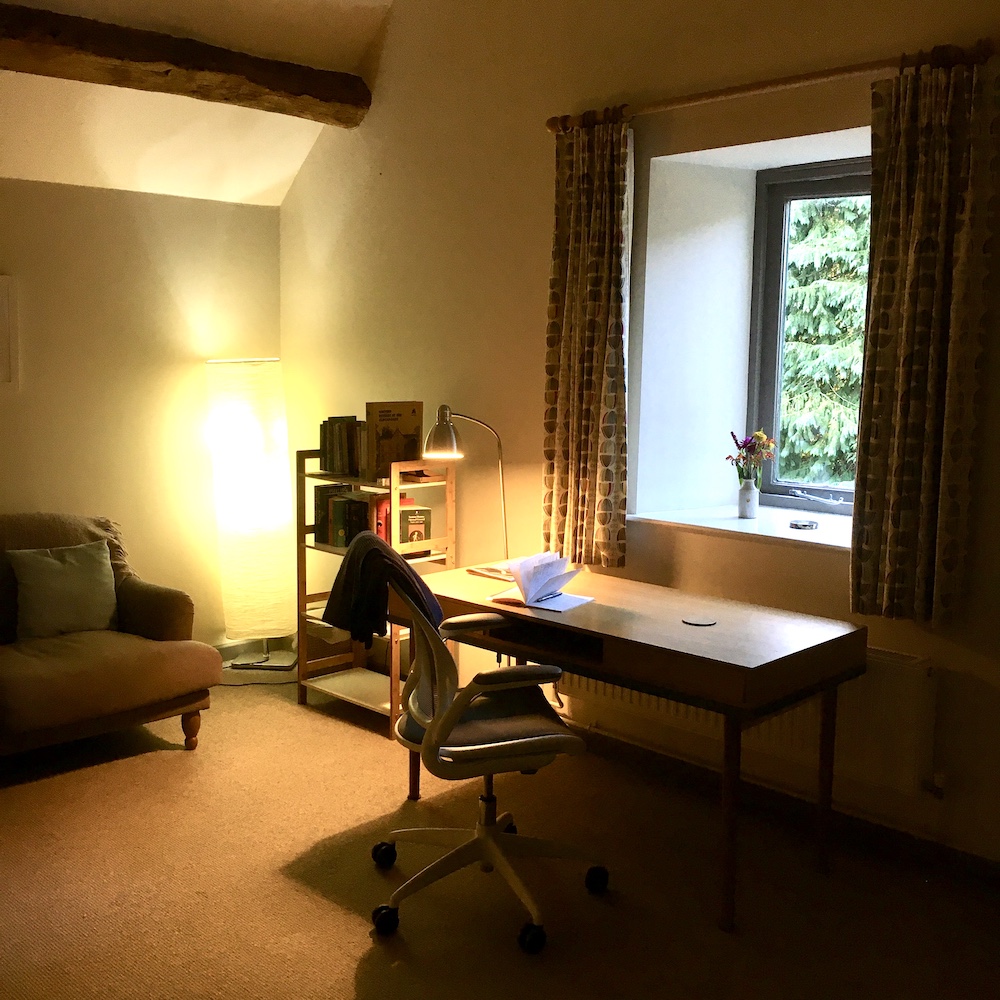
When I stepped into the old, stone building, I knew that all I had to do for the next six days was write. Yes, there would be country walks, and shared meals with some interesting authors. There would almost certainly be conversations with friendly strangers in the neighbouring village. But apart from those interactions, all I had to do was write, edit and write some more.
That permission to do what you love to do, without interruptions, is, for me, the biggest appeal of an untutored writers’ retreat.
There is a purity about the quiet that allows you to go deeper. From my desk, through the window, I could gaze into the apparent infinity of woodland. There was something about the way breezes created endless pathways through shimmering leaves that somehow helped my mind to take less obvious creative routes through my work in progress. House martins swooping every which way in the near distance seemed amplify the effect.
And when I walked around the beautiful estate, once owned by the playwright John Osborne, there were constant invitations to daydream, that essential precursor to creative writing. I explored grassy paths through fragrant gardens, discovered the occasional, intriguing statue, and met venerable redwood trees, the elders of the place.
But it wasn’t all seclusion. The other writers were fun, inspiring, and supportive – ideal companions for a relaxed yet productive week.
My recent retreat took place at the Clockhouse, at the Hurst, in Shropshire, owned and run by Arvon. It wasn’t my first visit, and it won’t be my last. For much of the year I’m happy writing in my own home, but every now and then, especially towards the end of a novel’s first draft, or at the beginning of a new one, a retreat centre becomes the perfect place to be.
How about you: what, and where, is your ideal retreat?
Fiction notes: Can writing by hand improve a novel?
15/06/2023 at 4:06 pm | Posted in Fiction notes | 3 CommentsTags: creativity, fiction, fountain pens, writing fiction, writing inspiration
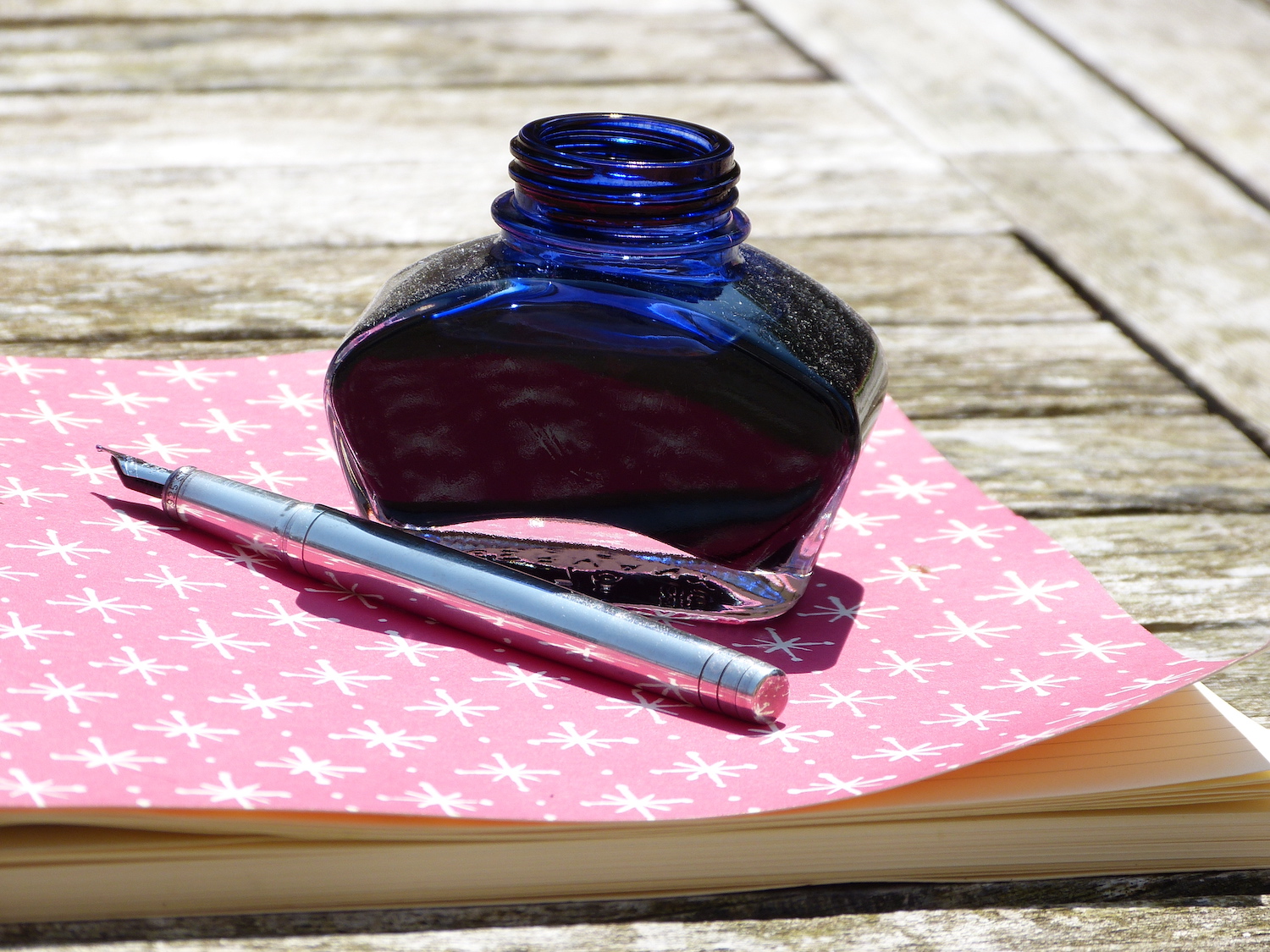
The scratch of pen against paper, and the flow of midnight ink. A rustle of turning pages, and the feel of a notebook against skin… When we write by hand, our senses get involved. It’s a tactile experience, involving texture and sound and even the evocative scent of the writing materials.
Contemporary authors have been known to write by hand. JK Rowling, for example, scrawled Harry Potter and the Philosopher’s Stone in notebooks in an Edinburgh café; Stephen King wrote Dreamcatcher by hand as a sort of pain-reducing therapy while recovering from a serious car accident; and Neil Gaiman hand-wrote Stardust, to help him to feel closer to that novel’s Victorian setting. All three novelists have continued to put literal pen to paper in later works, and they all use fountain pens to do so.
Why would any author opt for the relative messiness of an ink pot? Using a keyboard is generally much faster; you can move words around every which way in a document, and of course you don’t end up with ink-stained fingers. But tapping onto a keyboard does not please the senses in quite the same way. It seems that the extra effort involved in handwriting helps our brains to work differently, and that can be useful.
I have yet to write a full-length book by hand. Maybe, one day, I will. However, for every work in progress, I do keep a daily notebook. The jottings in it – about plot, and character, and dialogue that comes to me willy-nilly at any time of day and night – are hugely useful. They’re helpful for the creative process, and they bring contentment. When the nib touches paper, and the ink flows, I’m convinced that ideas flow too, in sensory and meditative ways.
How about you? Do you ever write by hand? And have you penned, or would you pen, an entire book by hand, inky fingers and all?
Fiction notes: Epistolary stories make it real
15/05/2023 at 9:28 am | Posted in Fiction notes | 2 CommentsTags: epistolary novels, fiction, novel writing, women's fiction, writing, writing community

Recently I’ve been reading two excellent books presented as a collection of letters and other correspondence. One, The Guernsey Literary and Potato Peel Pie Society by Mary Ann Shaffer and Anne Barrows, was fiction. The other, 84 Charing Cross Road by Helene Hanff, was fact. And yet both come across in a remarkably similar way, which I would describe as warm-hearted and real. Both feature World War Two in their recent past. Against the darkness of conflict, the humour and kindness of the main characters shine out.
The two books aren’t really that similar. But they both left me feeling moved and uplifted – and curious about the epistolary form.
When you start looking, the epistolary form – also known as a story made from a bunch of correspondence – is everywhere, all through the history of novel (and indeed non-fiction) writing. It’s a great way for an author to present multiple points of view. But until now, I didn’t realise that I was a fan, even though I’d read The Screwtape Letters by CS Lewis, and felt it had a freshness, an immediacy, that in certain ways surpassed his wonderful Narnia tales.
Why are epistolary novels so readable? The Smithsonian National Postal Museum has some interesting thoughts on the subject, as well as a giant list (even 84 Charing Cross Road manages to tiptoe onto it). The gist is that letters are often written for a small and intimate audience. That means that they’re personal, private and revealing. The reader of fictional letters is able to peer into that intimate world.
Reading epistolary books has made me notice the use of correspondence in the stories I’m writing. In my current work in progress, for example, a sealed letter was discovered that seems likely to reveal secrets. I have a rough idea of those are, but won’t know for sure until I get to that chapter…
And now, over to you. Do you have a favourite letter that you’ve read, or written, in a novel?
Fiction notes: The power of juxtaposition
15/04/2023 at 10:53 am | Posted in Fiction notes, Uncategorized | 2 CommentsTags: creative writing, short stories, writing fiction, writing inspiration, writing techniques

For decades, I wrote non-fiction. Then the poles shifted in my personal life, and now I almost always write fiction. But back in the beginning of my career, I did write a single short story. It was called ‘The Dormer Window’, even though the window in the story was a slanting, attic sort that could be more properly termed a skylight.
When it was published, in Britain and Ireland, no one seemed to mind the architectural inaccuracy. What they liked was the way it juxtaposed the hard drudge of a couple’s ordinary life with a window that revealed their passions and dreams, in unexpected ways. In the story, the husband created an attic bedroom, complete with slanted window above the bed. At night, their reflection revealed them as Chagall’s lovers, entwined and floating in the air. As one editor memorably put it, “It’s about love and DIY”.
I had a quick look for the story yesterday, but couldn’t find it. If I do, I’ll share it on these pages.
But what I really want to talk about is the use of juxtaposition in fiction writing. It’s such a useful device, to put two contrasting things closely together. And it seems to work particularly well for people. To be human is to have duties that we must do, to survive and hopefully thrive. But to be human is also to have powerful emotions. In day to day life we often try to hide these. However, it’s vital for our sanity that there is an outlet for our yearnings, hopes and dreams – a dormer window, if you will.
I invite you to consider what you are currently writing, or perhaps reading. Is juxtaposition present? And, if so, how does it enhance the story?
Fiction notes: Depicting war through the little moments
15/03/2023 at 11:25 am | Posted in Fiction notes | Leave a commentTags: emotional intelligence, emotions, empathy, healing, understanding conflict, war writing
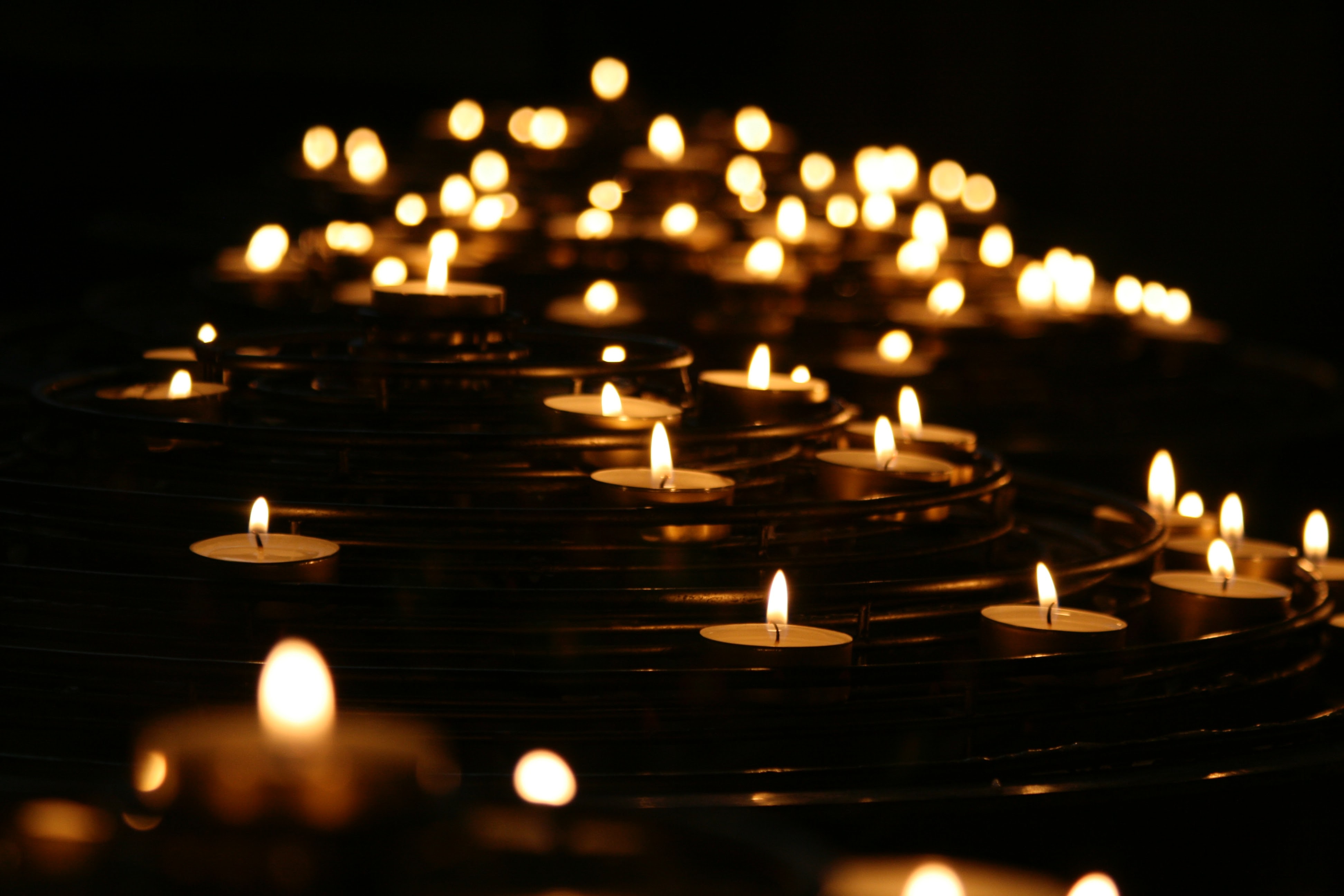
I’ll be honest. Long descriptions of war don’t always work for me. But when I read how ordinary people are affected by the conflict… then, I relate to their sorrow. Emotions are all-important. It’s hard for anyone to feel much in the midst of a crisis. But in the aftermath… that’s when people grieve, and mend, and sometimes fracture. That’s when empathy and understanding emerge.
Currently I’m reading a book that embodies this principle. It’s not comfortable material, but it is helping me to understand the effects of war better.
Lucky Breaks is a collection of short stories set in war-torn Ukraine by Yevgenia Belorusets. Like fairytale characters seen through a distorting lens, the women of these stories unaccountably disappear from their ordinary lives, while the businesses of war move in. The women’s homes are destroyed and their offices are repurposed for the war effort. And the women grapple with the changes, unable to make sense of their nation’s new disorder. Rumours abound. One neighbour may have escaped to the country. Another woman – intelligent, educated, artistic and penniless – may have accepted admin work with a man who requires intimate services. Meanwhile, yet another acquaintance develops peculiar habits born of ongoing traumatic stress.
For me, this mosaic of fragmented lives conveys war more effectively than any detailed battle scene. I think Yevgenia Belorusets’s collection is giving me a better view of conflict. These ordinary people could easily be you or me, or our families. It’s easy to identify with them and feel their pain. I think it matters to bear witness to such all-too-human stories. Sometimes, the reading can even bring a little healing.
Photo: Mike Labrum/Unsplash
Website Built with WordPress.com.
Entries and comments feeds.
 Suzanne Askham