Embrace Nature: February Activities for Wellbeing
01/02/2026 at 10:32 am | Posted in Uncategorized, Wellbeing notes | Leave a commentTags: mental wellbeing, mindfulness, nature, nature inspiration, wellbeing
There’s a tree in my garden that has been shaped by south-westerly gales, like those wind-twisted trees you see in places like Dartmoor. But my tree is not as hardy as its native cousins and might not have survived this long except for one simple fact. One year, somebody hung a bird feeder in its branches. Then another, and another, until that tree became a feeding post for countless winged visitors who by way of ‘thank you’ regularly fertilise the ground below. As a result the tree is strong and healthy, and gives a glorious display of flowers and fruit each year (the fruit being its own ‘thank you’ to the birds).
So that’s the first of three soul-nourishing things to do in February: hang a bird feeder, or another bird feeder, in a favourite tree.
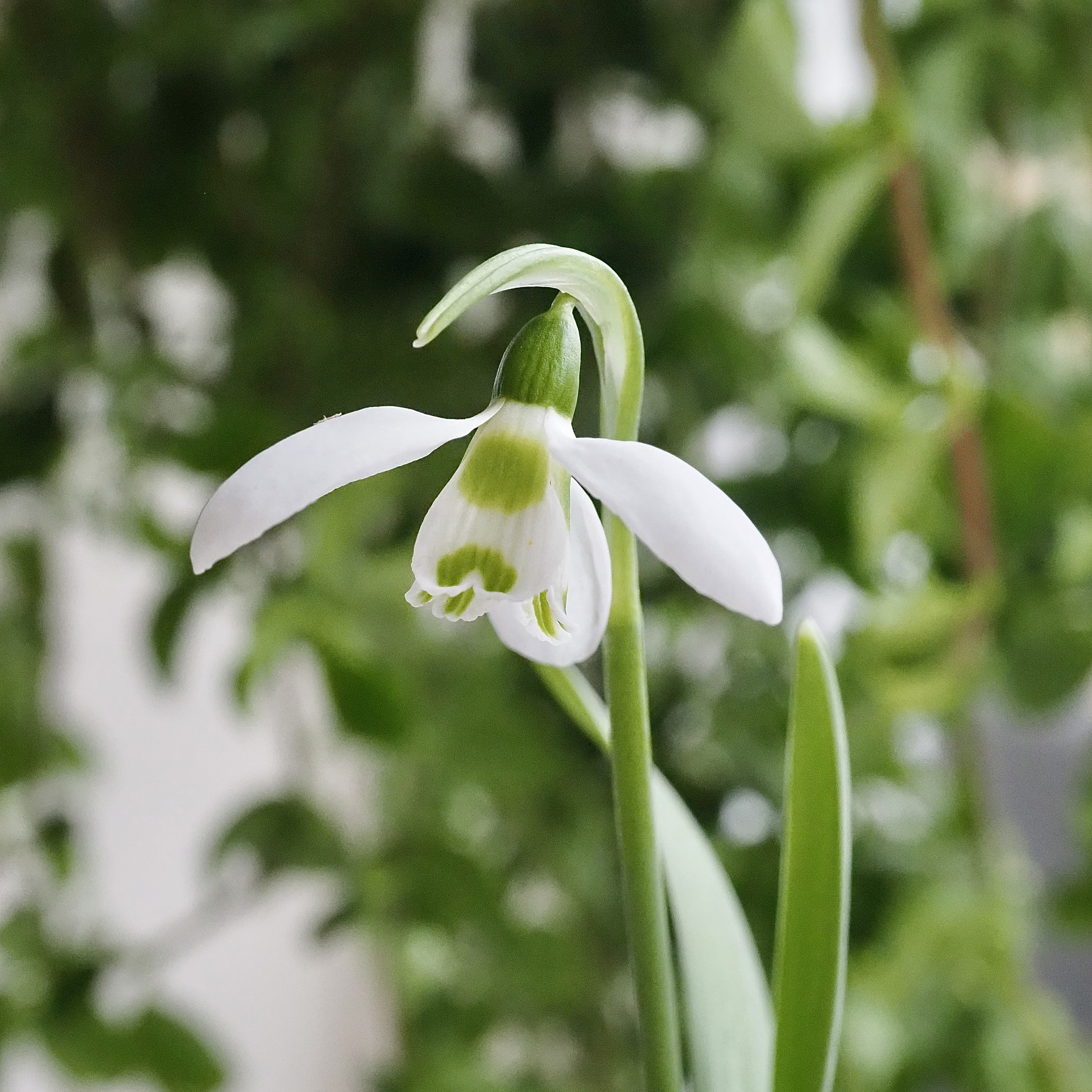
Second is to go forest bathing, aka walking in local woodland. February in England, we get to see the first shoots of wild garlic, while heavenly drifts of snowdrops are at their peak. If you’re looking for walking companions, The Ramblers are a good resource across the UK.
Third is to apply nature’s seasonal messages to yourself, on the basis that we are, of course, as much a part of nature as those early spring flowers. What, in you, is just beginning to bud or unfurl? Perhaps in your heart of hearts there’s something you’d love to create, but self-doubt has held you back? According to nature’s calendar, now is the perfect time to take that vital first step.
Picture: Snowdrop, Galanthus elwesii
Wellbeing notes: Dainty dose of colour therapy
01/06/2024 at 11:12 am | Posted in Wellbeing notes | Leave a commentTags: colour therapy, Fox-and-cubs, gardening, nature inspiration, orange, summer, wild flowers
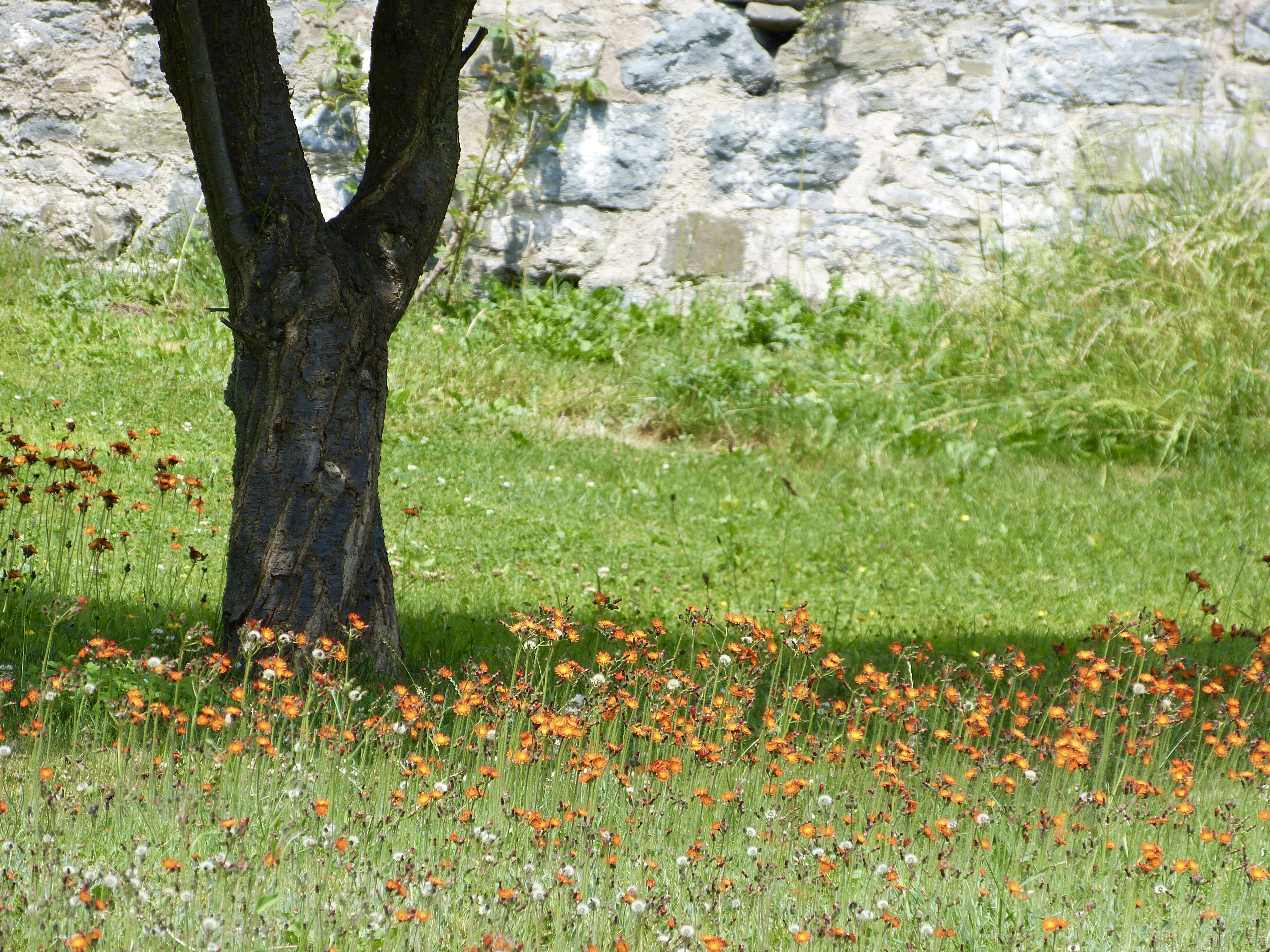
“Just look!” said my dad. “Fox-and-cubs – the wind must have blown the seeds in.” He was pointing to a wild patch of lawn in his Wiltshire garden. Here and there were little dabs of orange, waving on fine stalks. There was something unusual and pleasing about the vivid colour. Right then, I fell in love with Pilosella aurantiaca, to give the Latin name. And nowadays, in June and July, I seem to see them everywhere.
These vibrant flowers are so called because individual blooms are said to resemble foxes; the buds, their young. Native to Europe and a few other places, they’re naturalised here in the UK. You can grow them in borders. However they are especially lovely in lush wildflower lawns.
Once considered a medicinal plant, their most important contribution nowadays may be to bring much needed colour therapy to balance mind and spirit. Orange is often associated with emotional wellbeing – perfect for anyone who considers their life to be somewhat grey. And yet too much orange can have the opposite effect, overwhelming a sensitive disposition. That’s possibly why Pilosella aurantiaca is so pleasing to the eye: visually, the plant is dainty, never completely dominating its green surroundings.
Maybe there’s a place in your life for Fox-and-cubs, or perhaps you can think of another flower that brings a similar sort of joy. Whatever the case, I wish you the perfect degree of nature’s colour therapy to enhance your life this summer.
Wellbeing notes: The meaning of dragonflies
01/08/2023 at 9:31 am | Posted in Uncategorized, Wellbeing notes | 4 CommentsTags: dragonflies, garden musings, mindfulness, nature inspiration, nature meditation, Nature's oracle, world in my garden
One of the nicest things about my garden in the summer is the presence of dragonflies. These iridescent, winged creatures waft and whirr around in fast motion, and they always leave me feeling uplifted.
I read recently that dragonfly numbers are increasing in the UK, refugees from hotter landmasses where freshwater habitats are unfortunately drying out.
Despite (or because of) their delicate build, these fairy-like creatures are proven survivors. Dragonflies have been around for an extraordinary 300 million years; their gigantic ancestors were among the first of the flying insects. Today, they’re found in every culture of the world and have an unrivalled place in folklore.
When you see, or dream of, a dragonfly, it is often said to be a sign of change and self-transformation. The dragonfly’s own journey embodies that truth: it may begin life as a dull, water-bound creature – but it becomes a miniature master of the air.
This remarkable transformation is a reminder that change is our own natural state. We are always moving into an airy and unknown future – an ultimately comforting truth during difficult times. The dragonfly’s message is optimistic: when the time is right, you will soar.
Wellbeing notes: Creating room for the wild
01/04/2022 at 8:00 am | Posted in Uncategorized | 1 CommentTags: meditation, nature inspiration, wellbeing
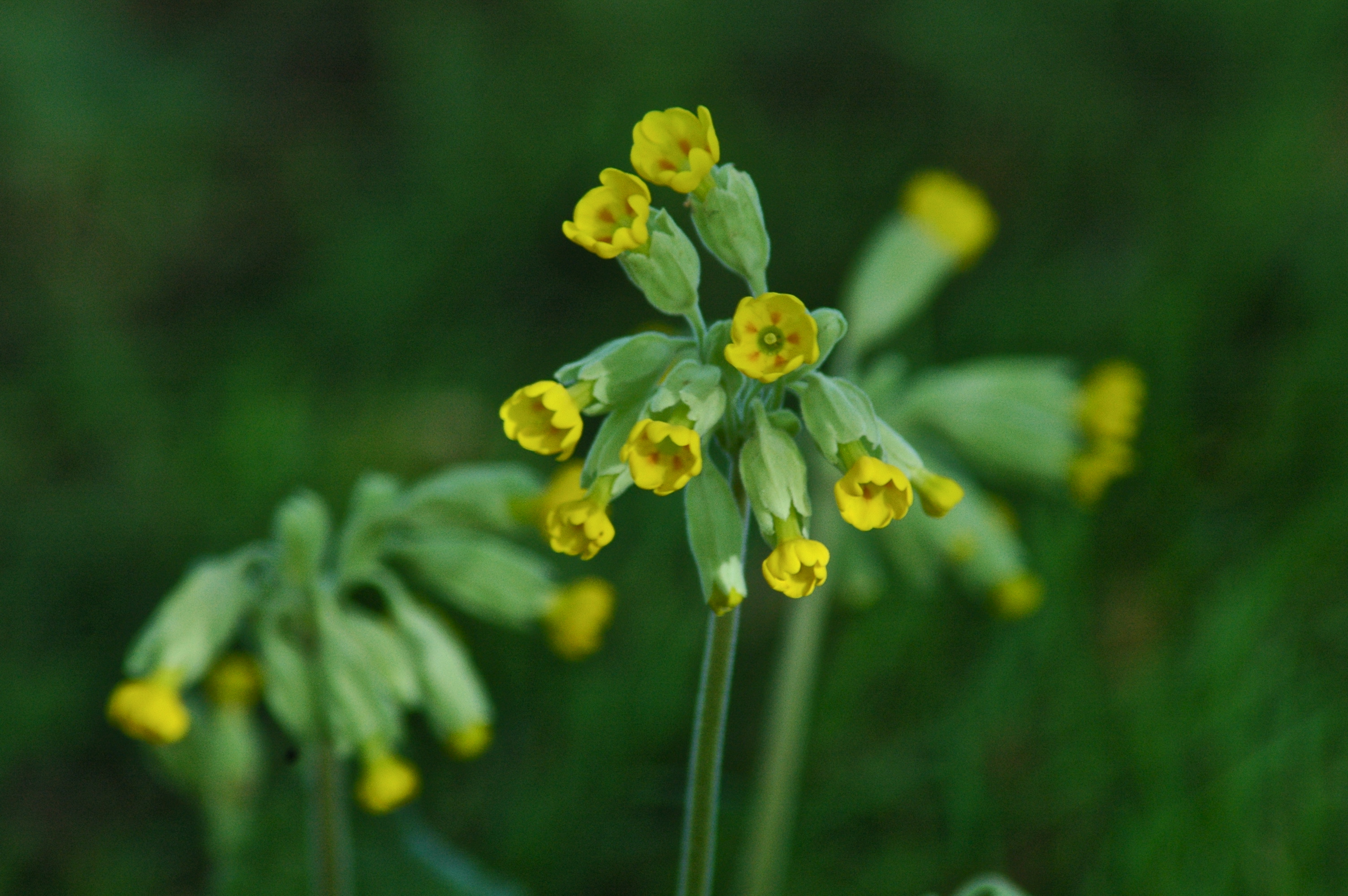
One spring, a cowslip appeared in the garden. We studied it carefully. Soft, velvety green sepals cupped yellow heart-shaped petals. Their fragrance seemed like the essence of the season. Year after year, more cowslips grew. We began to add the edible flowers to green salads, and to herbal teas. We agreed they were pretty, and a little citrusy, and they added a subtle freshness to our meals.
I believe that every garden benefits from some wildness. Perhaps every person does too. In a world where people try hard to control outcomes, the touch of wildness that arrives uninvited can be just what people need, by way of respite from all their striving and hard work. It’s a special gift when a flower is brought by the wind, though helping nature along with a packet of native seeds is also a lovely thing to do. Native flowers will never be the biggest or showiest in the garden, but they bring a grace and lightness – maybe, a reminder to take ourselves lightly too.
So, while tending our gardens and our lives, it can make sense to leave a little corner, here and there, just to see what starts growing in it. If nothing else, this policy can create idyllic landscapes, vibrant with bees and butterflies. As Robert Burns writes, “And wild-scatter’d cowslips bedeck the green dale.”
May cowslips bedeck all those places that might need a little extra love and beauty at this time.
Wellbeing notes: Like calls to like
01/03/2022 at 10:00 am | Posted in Inspiration, Uncategorized, Wellbeing | Leave a commentTags: be true to youself, nature, nature inspiration, nature's oracle, wellbeing

A male woodpecker lives in my garden. Every morning he goes to the wild cherry tree and drills against the trunk, using his beak to beat a loud tattoo. He drums away, then flies to the uppermost branch. From there, he looks all around, searching the landscape for incoming female woodpeckers – potential mates. Then, he goes back to drilling again. Sometimes he flutters down to the ground for a tasty insect, or heads to the bird feeder, where his relative size makes him one of the dominant diners. He gets all the best treats, the ones that the bossy squirrels don’t manage to purloin.
Day after day the woodpecker repeats his routine. Utterly dedicated to the task, he embodies the old saying, ‘Like calls to like’. If there’s a female within half a mile, she will hear him.
The woodpecker can teach us a wonderful principle for life: be who you are, and speak that truth clearly. Kindred spirits will hear your call. The woodpecker has never attempted to be some other, more colourful bird, like a jay or a parakeet or even a peacock. He is simply his own glorious self – surely the best way to attract the right mate for him.
When we are true to ourselves, we are also, I believe, more likely to respect other people’s differences. Those differences make the world a fascinating and beautiful place.
So my question for you is this: what do you choose to broadcast to the world today?
Photo: Unsplash
Wellbeing notes: message from a stream
01/02/2021 at 10:00 am | Posted in Uncategorized | 3 CommentsTags: inspiration, meditation, Michael Tippett, nature inspiration, stream, wellbeing
There’s a simple walk near my home that takes you over a brook. If you were to follow the brook’s flow you might discover that all the interlacing streams in the neighbourhood bear the same name, Cocklemore Brook, and you would eventually find that the water from the many branches of Cocklemore Brook flows into the River Avon. And the Avon would carry you through the cities of Bath and Bristol until you reached the sea.
On this particular morning I am walking beside the brook thinking about various personal projects – things relating to work and family and home. And suddenly I see that the interlacing flow of these projects is somehow the same in principle as the flow of tiny tributaries that join together into a river leading eventually to the sea. The details of my life are small and insignificant. And yet when combined with the countless tributaries of other people’s endeavours, an ocean is maintained.
What we collectively put into the ocean of our endeavours matters. If I approach my day with kindness, creativity and love, then that is what I contribute to the ocean of humanity.
The name ‘Cocklemore’ comes from the old English words ‘ock’ or oak tree, and ‘more’– a wild, unfarmed place. There are many oak trees here, and the brook flows through boggy, unfarmable land. Like its name, the insights I receive from the brook appear wild, eternal and true.
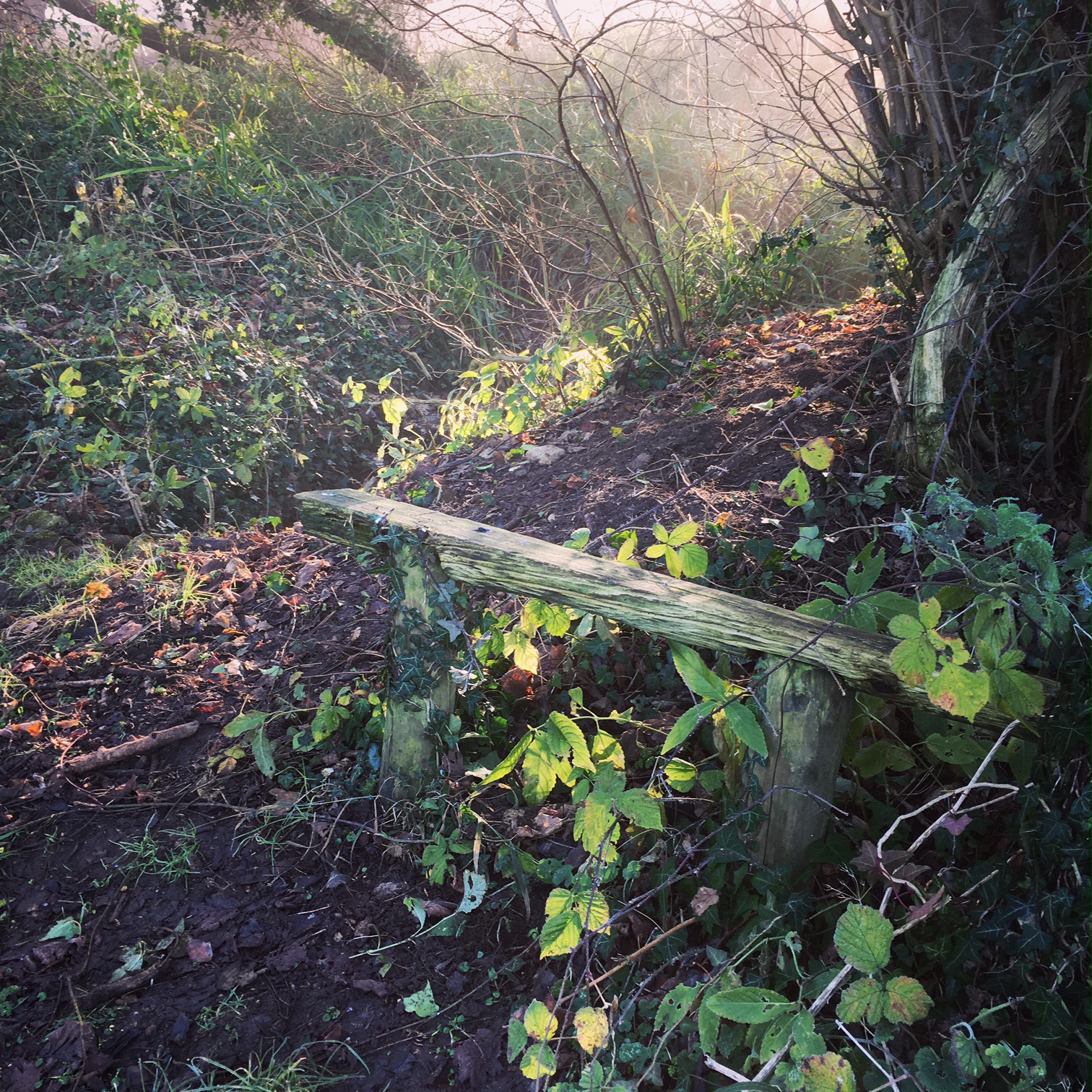
Photo: renowned composer Sir Michael Tippett used to sit on this humble bench by Cocklemore Brook, creating his later works such as ‘The Rose Lake’. It’s amazing to listen to this shimmering music while visiting the stream today.
Haiku – a (free) audio meditation
14/04/2020 at 5:40 pm | Posted in Uncategorized | 1 CommentTags: dealing with change, free meditation, haiku, meditation, nature inspiration, reflections, Spirituality, visualisation

Here is your meditation for this week. I must admit I thoroughly enjoyed immersing myself in this one (although listening to my own voice is always going to be a little odd!)
This one is called ‘Haiku Meditation’. It’s from the Studio seven years back. It was inspired by possibly the world’s most famous haiku, a three-line poem written by the 17th Century Japanese poet Basho. Like all the best haiku, it references nature, and the messages that nature may bring us. The pond succinctly described in the first line can be viewed as the ‘old order’, stagnant and in need of the oxygen of change, which is brought about by frogs jumping in, creating sound and movement. The frogs produce a splash, leading to the widening ripples of change. Here is Basho’s haiku:
Old pond
Frogs jumped in
Sound of water
And here is the meditation. I hope it brings you peace and relaxation, and perhaps even a serene acceptance of the sudden nature of change. As always, I will join you in listening to this meditation at 1 pm on Thursday, or any time to suit you.
Website Built with WordPress.com.
Entries and comments feeds.
 Suzanne Askham