Mindfulness and cupcakes at the Women’s Refuge
08/03/2016 at 6:33 pm | Posted in Uncategorized | Leave a commentTags: International Women's Day, life skills, meditation, mindfulness, mp3, parenting, self-development, visualization, wellbeing

Ghossiya brought the cupcakes, and she came up with the idea too. How can mindfulness help mothers? How can it help young children? She was planning to put her findings into a dissertation for a degree course in early childhood studies which she is soon to complete at Oxford Brooks University.
A group of us – mothers, children, refuge key workers, Ghossiya and I – looked at three principles:
• Be here now
• Notice what you notice
• Be kind to yourself.
We ate cupcakes mindfully, using our senses, and discovered that the experts at this were the young children present. They explored with fingers in icing, and fingers in mouths. What happens, thought one, when you drop an icing flower into a glass of water? (Answer: it sinks to the bottom of the glass, where it stains the water a delicate pink.)
Afterwards, we did a body scan relaxation exercise, focusing on our breath, then toes and feet and legs, and so on, upwards through our bodies. We visualised a golden white light, spreading outwards from our heart, filling our whole body with light, giving every cell the chance to pause, and rest, and renew.
When we opened our eyes again, after the exercise, everyone in the room seemed visibly more relaxed. Even the very young children had noticed the change in atmosphere, and were contented. One was stroking the soft shiny hair of a toddler friend sitting nearby: mindfulness in action.
During our session, we also talked about the fact that mindfulness meditation has been shown to improve health and slow down ageing. And we discussed how a body scan visualisation is ideal for young children, especially at bedtime, to help them to calm and slow down.
Free body scan audio
We discussed how the mums could talk their children through this. Or, if they preferred, they could play the audio that’s available to all who’d like it, through this blog (please just contact me, putting BODY SCAN in the comment box).
Ghossiya shared a cupcake recipe (see below). Cooking, it was agreed, it a great way of being in the zone, along with walking in the countryside, relaxing in a candle-lit bath, doing yoga … and any other enjoyable activity in which we are fully present, using our senses. And if we are ever in any doubt, all we ever have to do is enter the world of a young child. They know how to explore this moment now better than anyone else on the planet. They are not rushing on to the next activity. They are masters of the present moment. We can learn so much from them.
Mindful cupcake recipe
115 g caster sugar
115 g self-raising flour
115 g margarine (at room temperature)
2 eggs (at room temperature)
Any one of the following optional flavourings: 100 g sultanas or raisins; 100-150 g chocolate chips; 1 tsp vanilla extract; 1 tsp cinnamon.
- Set the oven to 150º C/Gas 2.
- Put caster sugar, flour, margarine and eggs in a bowl and mix thoroughly until smooth.
- If using optional flavouring, add to the bowl and mix in gently yet thoroughly.
- Place cupcake cases in a muffin tin and spoon in the cake mixture.
- Bake in preheated oven until risen and golden brown.
Decorate as liked with icing or simply lightly sprinkle with icing sugar though a sieve.
A rose for hard times
31/03/2015 at 7:52 am | Posted in Uncategorized | 4 CommentsTags: flowers, happiness, healing, inspiration, life skills, meditation, nature, parenting, positive thinking, special needs, visualization, wellbeing
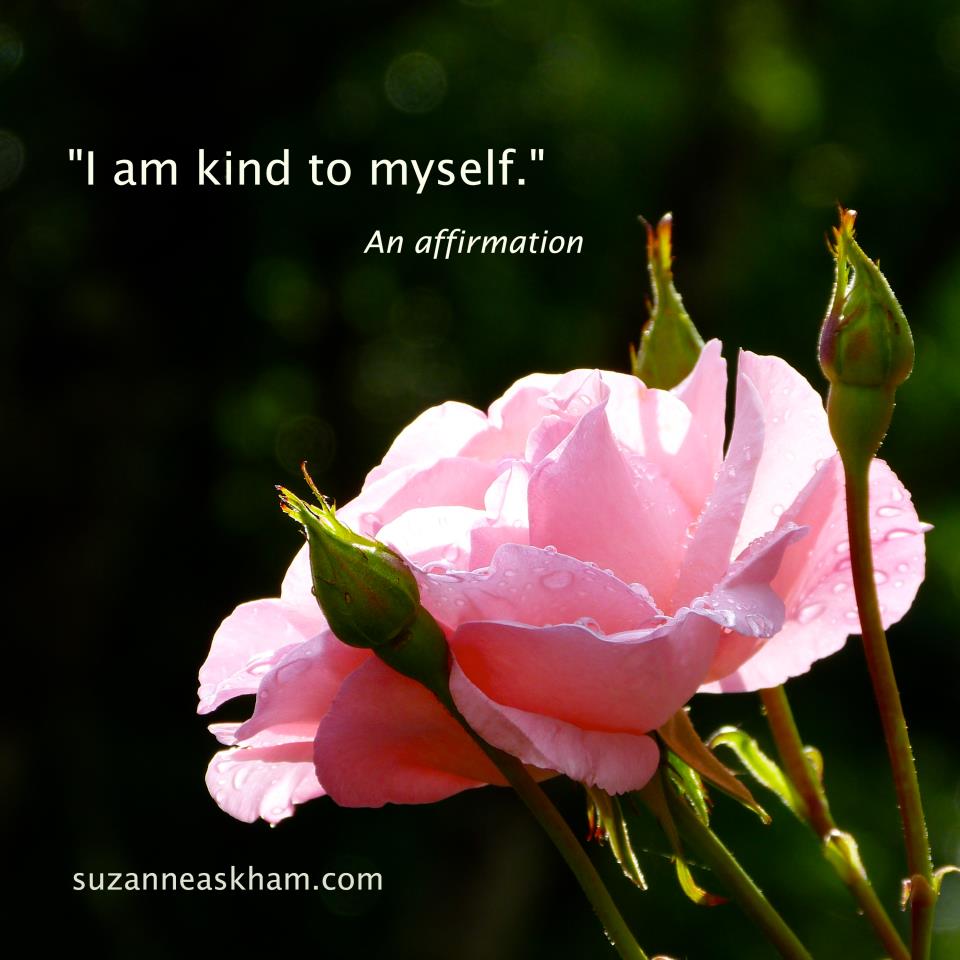
There’s a simple meditative technique we can use in hard times. I call it the Rose Meditation. You can do this anywhere: cleaning the house, ploughing through work, undergoing medical treatment, in a high-voltage meeting….
All you do is this: focus, in your mind’s eye, on a rose. The example shown here was photographed after rain, in the sunshine of the Dordogne.
Picture the feather-light, velvety smoothness of the petals. Imagine yourself miniaturised, resting between the scented petals as though they are the softest bed in the world. Breathe in their heavenly fragrance.
Notice the variations in colour between the inner and outer petals. Absorb the beautiful colours with every cell of your body.
Touch the raindrops; taste their sweetness.
Explore the petals, going inward towards the nectar, and outwards again towards the sun and fresh air.
Do this visualisation any time you feel the need. The rose contains powerful therapy, and simply thinking about it in this way can be soothing, and healing.
How to meditate the EASY way
21/08/2013 at 11:31 am | Posted in Meditation | 5 CommentsTags: Guidance, inspiration, life skills, meditation, personal growth, positive thinking, self-development, special needs, visualization
Meditation is the easiest way I know to feel better fast. During challenging times, meditation can be really helpful. During good times, meditation can create a sense of bliss. It calms the mind. It stops the cycle of negative thinking. And it creates a space for hope and happiness to enter.
I aim to meditate for 20 minutes a day, early in the morning. I don’t always succeed. Sometimes I miss a few days, or even weeks. But when I catch myself feeling low, I’m quick to start meditating again – because, quite simply, it works.
Here is the EASY method that works for me and many of the people who attend my meditation studio.
Establish a routine.
Accept that it won’t go perfectly.
Sit still in silence.
Yield to the process.
Let’s take each of those steps in more detail…
Establish a routine
You’re more likely to meditate if it’s booked into your diary. Find an ideal time of day for you. You might try 20 minutes at the start of every day, or in the evening; or both those times.
Aim to meditate at the same time every day. Choose a length of time that will work for you. Anything from 15 minutes to half an hour is good. However, it’s better to do ten minutes, or even five, rather than none. Aim to meditate in the same place, and make it pleasant and uncluttered, the way you’d like your mind to be. You might like a shawl or blanket over you, so you feel warm and comfortable. It’s helpful to set a timer to let you know, gently, when the meditation has finished. You can use your phone, as long as you’ve switched off incoming calls. There are also some lovely meditation timers around, but keep it simple. A brilliant low-tech alternative which I use for my own morning practice is to meditate with beads.
Accept that it won’t go perfectly
Sometimes we try to create the perfect, calm environment, and then feel fazed if a fly enters the room and buzzes around, or building work starts up outside. Accept that life isn’t perfect. If anything disturbs your concentration during your meditation, simply witness it. It may well be a reflection of your own mind, which may be buzzing like a fly, or in a state of change and renewal, like a building that is being restored.
Sit still in silence
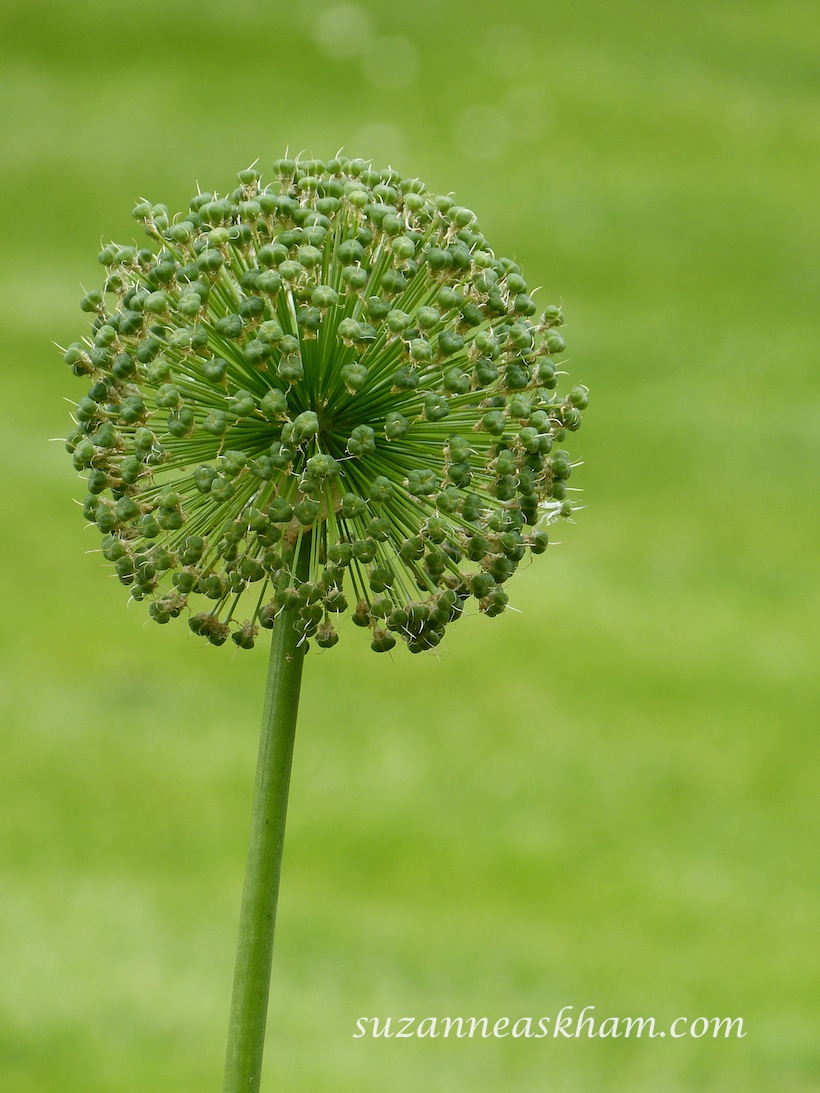
It’s helpful to focus on a single thing in your imagination, and to keep focusing on that during your meditation. An object from nature, such as the flower pictured above, makes a fantastic subject for meditation, because it has shape, pattern, texture, colour, scent and depth that you can dwell on in your imagination.
Or you might simply witness your breath, noticing every detail of it.
Or you might count up to four, one number per breath, and start again, counting up to four each time.
Or you might repeat certain words, silently to yourself. Breathe in “I am”, and breathe out an uplifting word that you have chosen. It might be “peace” or “love” or “leaf” or “flow”. This is the method we use during twice-weekly meditation sessions that I run in my Wiltshire studio.
In the studio, we typically combine more than one of the above. For example, breathe in “I am”, breathe out “tree” and visualise that you are a flexible willow tree, bending gracefully in the breeze. Or a tall, strong oak tree with rough bark and spreading branches.
Whenever you notice that your mind has wandered, simply remind yourself that you are here to meditate, and go back to the object that you are focusing on, or your breath, or counting.
Yield to the process
There’s a sort of ‘giving up’ that goes on when we meditate. We’re letting go of that list of things to do that seems to have permanent residence in our head. We’re giving up trying to control anything. We’re giving up, sitting down and being still. That is when the magic happens. You may experience colours that aren’t there, voices of people you can’t see, shafts of sunlight, and sudden insights. Simply witness these. Keep witnessing. Keep returning to counting breaths, or noticing your breath, or whatever you have decided to do to still your mind. And at some point, you may well experience bliss. Let yourself bathe in that bliss.
Afterwards, don’t try to recreate what happened. Don’t worry that you’ll never manage to achieve it again. Remind yourself that you meditate in order to meditate, that’s all. There is no goal. Bliss is… well, blissful, but it is not a goal. Follow the EASY steps, and simply witness all that happens.
I wish you a calm mind, peace and happiness.
The healing power of swimming
16/03/2013 at 4:49 pm | Posted in Exercise, Happiness, Inspiration, Uncategorized, Wellbeing | 6 CommentsTags: affirmation, healing, inspiration, positive thinking, self-development, visualization, wellbeing
 A few days ago I went back to my local pool after a long absence. As I glided through the water, reflections of blue sky danced over the surface. I could feel myself relaxing, letting the water support me. And I remembered the joy of swimming.
We know that water can be kind to the human body: whatever the level of fitness, water provides a small but significant resistance that increases the overall benefit.
Less talked about, it does something equally interesting to the psyche: it connects us an earlier, more aquatic stage of life: the womb… and even, more distantly, our evolutionary past.
When I am in water, I feel different. The hard angular surfaces of modern life give way to a fluid world in which I feel safe, held, and simply more inclined to go with the flow. There is something inherently fun about the experience, and I feel zingy and cleansed.
As I swam, I started an internal chant, and this is how it went:
“I am beautiful… I am one… I am beautiful”… I am one…”
Each phrase corresponded to a swimming stroke. When I reached the end of the pool and turned around, the chant had become: “I am beautiful… I am two… I am beautiful… I am two…”
With each new length, the number went up. I was counting lengths, and throwing in an affirmation too.
And then I realized I was actually imagining myself at the age of one, two, and so on. Not only that, I was feeling the dominant emotions of that age, in connection with beauty and self-worth. As I continued to swim up and down the pool, the happy self-belief of young childhood gave way to the huge, wobbly uncertainty of my teens, and a growing feeling of confidence in adulthood. As I remembered sad times, it felt as though the water was washing the pain away.
Effectively, I was healing each stage of my life’s journey with the help of water, and affirmations. My adult self was sending love and support back through the years to all my younger selves who were still there, it seemed to me, in the memories held within my body. The process felt deeply restorative and I recommend it to you.
Next time you’re in the pool, you might like to affirm “I am beautiful… I am one” and so on, all the way through your teens, twenties – all the way up to your present age. You can spread the exercise over more than one swim session, if you choose. But when you have swum a length for every year you’ve lived, you can start all over again with a new word. “I am strong”, and “I am well” both have great healing potential. What affirmation would you choose?
Website Built with WordPress.com.
Entries and comments feeds.
 Suzanne Askham