Lonely no more, hello friends
17/06/2018 at 11:07 am | Posted in Uncategorized | Leave a commentTags: Friends, healing, Loneliness, Relationships, self-care, wellbeing
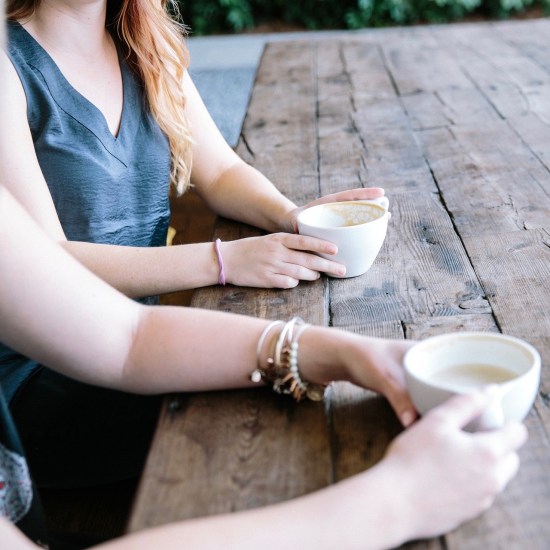
This week, 18th to 22nd June, is Loneliness Awareness Week. Organised by Marmalade Trust, it aims to lift the lid on an uncomfortable subject. Show me someone who has never been lonely, and I will show you someone with a poor memory. Just look at this video of children talking about loneliness. Their words are touching and universal.
There is no one way of feeling lonely. There is no one age that is exempt. Almost half of all UK adults admit to feeling lonely at least some of the time. You can be lonely because you live on your own and don’t see many people. You can be lonely because you feel excluded from a social group.
Renting a flat with strangers can be a lonely feeling. So can dropping your child off at school and going home to an empty house. And it’s easy to feel lonely in a busy workplace, when you’d rather be with people you love.
Brief periods of loneliness are ok. They teach us to appreciate friends. But a long period of isolation can seem like solitary confinement. It eats into self-confidence. It erodes that all-important feeling that we are loved, and lovable.
This week, while the national focus is on loneliness, there are some valuable things that you can do.
Be aware of loneliness
Notice the emotion within yourself. Notice it in others. Don’t dismiss it, or call it by another name. Loneliness, like all emotions, is an honest feeling and can serve a purpose in creating change for the better.
Address your own loneliness
A simple step is this: each morning, write down a short list of achievable things to do that day. Include at least one item that is important to you: an interest of yours that perhaps has fallen by the wayside; or a cause you feel passionately about. Prioritise that item. Do whatever you can to complete it during your day. The chances are that doing so will include life-enhancing interactions with like-minded people.
Address the loneliness of others
Take a step to alleviate other people’s isolation. Make a point of talking to them in a friendly way, without any agenda. Create a sociable activity that will include local isolated people. Then follow up after that event. From time to time, have a friendly conversation with them. Start noticing, and caring about their wellbeing. In short, be a friend.
Make new connections
Here are some small steps that can help to banish loneliness: put your phone down to talk to someone on the bus, train, in the cafe or waiting room. Invite your colleagues to share the lunch break, share a smile with someone, ring an old friend or relative… what else might you add to that list?
Why this is a great time to become more serene
23/08/2017 at 6:39 pm | Posted in Uncategorized | 3 CommentsTags: meditation, reflections, Scotland, serenity, travel, wellbeing

When I saw this photo I couldn’t resist asking to ‘borrow’ it. It’s an image of my niece, Sophie, canoeing along a tributary to Loch Morlich in Scotland’s Cairngorm National Park.
For me, this image sums up the best of serenity.
To make progress, there’s generally some effort involved. There are always bound to be a few rocks along the route. But the best approach is to cultivate a calm manner – to do your best to remain balanced whatever lies in your path.
It’s good to see distractions for what they are: side shows that are not and never will be your true path. That way we don’t become over-reactive, or allow ourselves to be carried along by events.
At the same time, it’s important to be prepared, yet not overly so. It’s wise to take a few useful items with you for your safety and wellbeing, and to help you move forwards. However, it’s also ok to trust that your needs will be met, and to travel light.
I’ve been meditating on serenity daily since the start of the summer. Through busy times it’s frankly been a life-saver. This regular practice actually appears to make life’s challenges… well, less challenging. Which is why this moment, right now, is a great time for you to focus on being serene. Try it and see what happens.
Recipe: summer flower cordial
24/06/2016 at 6:20 pm | Posted in Uncategorized | 1 CommentTags: nature, nature recipes, naturecraft, recipe, wellbeing
This delicious summer drink is prepared over two fragrant, flower-filled days. It makes approx 2.5 litres.
Day One
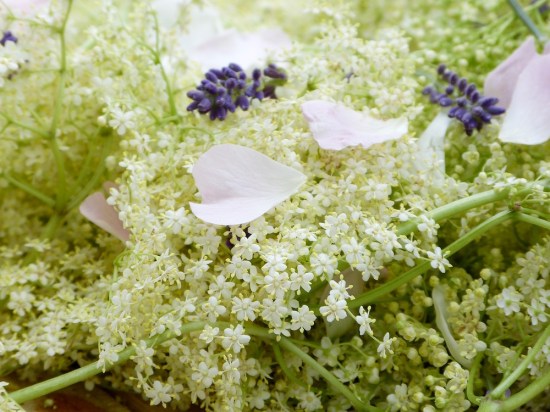
Take 20 or so elderflower heads with thick stalks removed, add a handful of rose petals (I used a mix of wild roses with some fragrant garden ones), seven sprigs of lavender, two sliced lemons and two handfuls of wild or cultivated strawberries. Meanwhile, add 1.3 kg sugar to 1.8 kg just boiled water in a big bowl. Stir to dissolve, creating syrupy water.
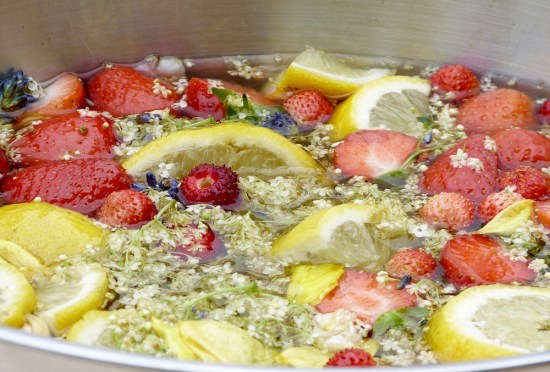
Add all ingredients to the bowl of syrupy water, cover with a cloth and leave for 24 hours.
Day Two
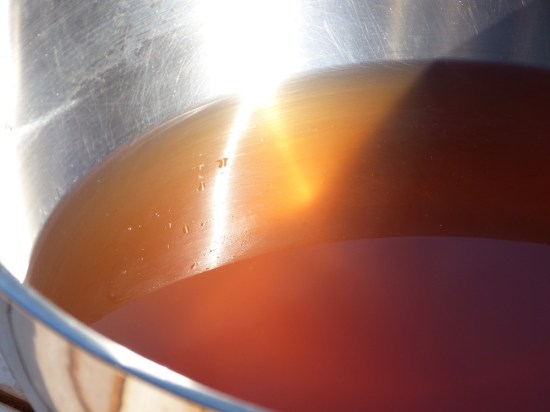
Strain mixture through a clean muslin cloth or old clean pillow case. Squeeze well to extract the juice. Pour the fragrant cordial into bottles.
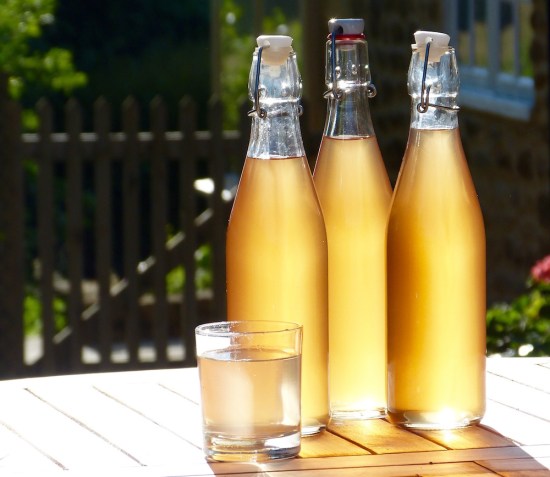
Drink diluted with water. Delicious! Also goes well with sparkling water, tonic water or even ginger ale.
Feel free to vary the flowers and fruit according to what you can find. That’s all part of the fun.
Breathing mindfully the ocean way
08/04/2016 at 6:04 pm | Posted in Uncategorized | Leave a commentTags: Guidance, happiness, inspiration, meditation, mindfulness, nature, wellbeing

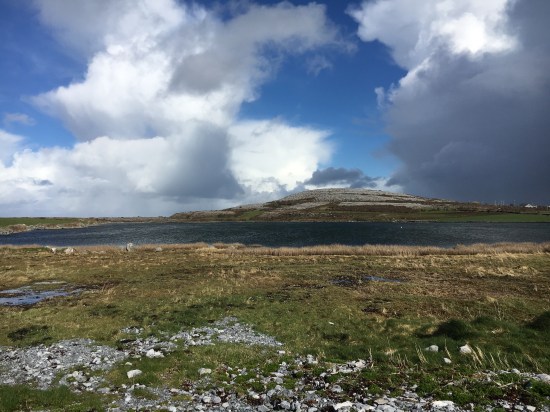
I stood on a bumpy shore in Galway, Ireland and breathed in salty cool Atlantic air. Suddenly, my lungs were filled with fresh ocean breezes. Each in-breath came with an excitement of Atlantic energy. Each out-breath took with it a thousand everyday stresses.
In a situation like that, you can’t help but be fully present. My mind wasn’t about to wander, because the experience was so vivid.
All my senses were engaged with savouring this moment. I could taste the salt in the air, feel the wind speed-weaving my hair into maritime knots, see the sunlight dancing through fast moving clouds, breathe in the tangy scent of seaweed, and hear the waves lapping against pebbles. Additionally, the wind was chilling!
The challenge is to breathe equally mindfully in familiar situations – in our everyday life. In fact, this is one of the very best meditations to practise regularly. Simply sit in silence once a day – first thing in the morning is perfect – and focus on your breathing for 20 minutes or so. And notice what you notice.
Here are three techniques that can be helpful.
1. Treat every mindful breathing session as though it’s the first time. You are a traveller, newly arrived at this shoreline of your breathing. Witness the air entering you as though it’s the most amazing newcomer in your life. Witness it leaving you like the life-long friend it is.
2. Focus on a particular point: such as the nostrils, the lungs or the abdomen. Notice the sensation of the air as it enters and leaves you. Witness how your muscles expand and contract rhythmically. Mindfulness pioneer Jon Kabat-Zinn suggests focusing on the belly, and likens it to the deeper, slower moving currents of the ocean: “When we focus on our breathing down in the belly,” he writes in Full Catastrophe Living, “we are tuning into a region of the body that is far from the head and thus far below the agitations of our thinking mind. It is intrinsically calmer.”
3. At intervals during your day, whenever you remember to, briefly observe your breathing. When you next feel stressed, make a point of noticing what is happening to your breath. Focus on the belly, as it rises with the in-breath and falls with the out-breath. Sometimes this movement is subtle. In the time you take to witness it, the stress or surface agitation has often lessened. It’s as if that pause creates a tiny gap in the stressfully woven fabric of your life, and loosens every thing up so new options can emerge.
Mindfulness and cupcakes at the Women’s Refuge
08/03/2016 at 6:33 pm | Posted in Uncategorized | Leave a commentTags: International Women's Day, life skills, meditation, mindfulness, mp3, parenting, self-development, visualization, wellbeing
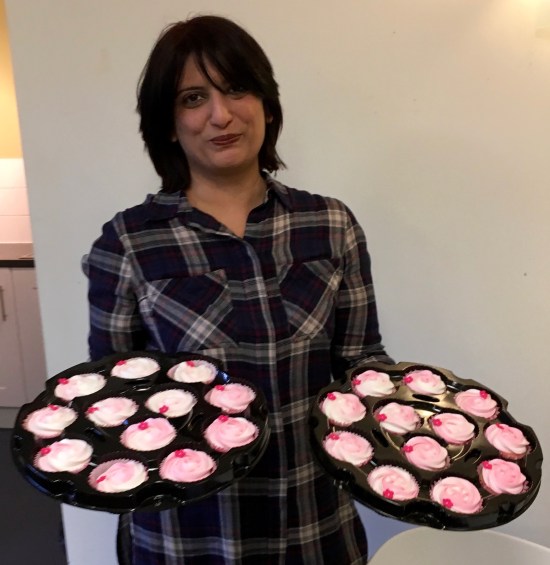
Ghossiya brought the cupcakes, and she came up with the idea too. How can mindfulness help mothers? How can it help young children? She was planning to put her findings into a dissertation for a degree course in early childhood studies which she is soon to complete at Oxford Brooks University.
A group of us – mothers, children, refuge key workers, Ghossiya and I – looked at three principles:
• Be here now
• Notice what you notice
• Be kind to yourself.
We ate cupcakes mindfully, using our senses, and discovered that the experts at this were the young children present. They explored with fingers in icing, and fingers in mouths. What happens, thought one, when you drop an icing flower into a glass of water? (Answer: it sinks to the bottom of the glass, where it stains the water a delicate pink.)
Afterwards, we did a body scan relaxation exercise, focusing on our breath, then toes and feet and legs, and so on, upwards through our bodies. We visualised a golden white light, spreading outwards from our heart, filling our whole body with light, giving every cell the chance to pause, and rest, and renew.
When we opened our eyes again, after the exercise, everyone in the room seemed visibly more relaxed. Even the very young children had noticed the change in atmosphere, and were contented. One was stroking the soft shiny hair of a toddler friend sitting nearby: mindfulness in action.
During our session, we also talked about the fact that mindfulness meditation has been shown to improve health and slow down ageing. And we discussed how a body scan visualisation is ideal for young children, especially at bedtime, to help them to calm and slow down.
Free body scan audio
We discussed how the mums could talk their children through this. Or, if they preferred, they could play the audio that’s available to all who’d like it, through this blog (please just contact me, putting BODY SCAN in the comment box).
Ghossiya shared a cupcake recipe (see below). Cooking, it was agreed, it a great way of being in the zone, along with walking in the countryside, relaxing in a candle-lit bath, doing yoga … and any other enjoyable activity in which we are fully present, using our senses. And if we are ever in any doubt, all we ever have to do is enter the world of a young child. They know how to explore this moment now better than anyone else on the planet. They are not rushing on to the next activity. They are masters of the present moment. We can learn so much from them.
Mindful cupcake recipe
115 g caster sugar
115 g self-raising flour
115 g margarine (at room temperature)
2 eggs (at room temperature)
Any one of the following optional flavourings: 100 g sultanas or raisins; 100-150 g chocolate chips; 1 tsp vanilla extract; 1 tsp cinnamon.
- Set the oven to 150º C/Gas 2.
- Put caster sugar, flour, margarine and eggs in a bowl and mix thoroughly until smooth.
- If using optional flavouring, add to the bowl and mix in gently yet thoroughly.
- Place cupcake cases in a muffin tin and spoon in the cake mixture.
- Bake in preheated oven until risen and golden brown.
Decorate as liked with icing or simply lightly sprinkle with icing sugar though a sieve.
How to achieve balance in your life
03/02/2016 at 1:38 pm | Posted in Uncategorized | 5 CommentsTags: healing, life skills, mindfulness, personal growth, self-development, wellbeing
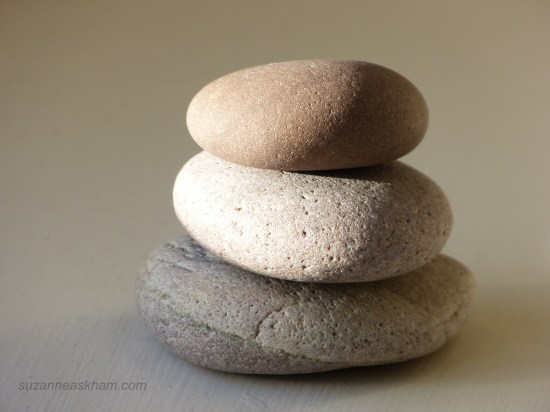
Here is a picture of three perfectly balanced stones.
It is also a symbol of how we humans can lead a balanced life.
Imagine, now, that you consist of three stones, one on top of the next.
Get your base right
The base stone, the biggest, is all important – nothing’s going to happen without it. This represents your physical needs: income, security, survival. We need to spend solid time every day ensuring that physically we are thriving. Are you exercising every day? Do you care for your body? Do you eat healthy foods, maybe even grow some of what you eat? Do you have a steady income, however humble? The message of the base stone is a simple one: take time to look after your physical body.
Keep heart at the centre of all that you do
The middle stone is the heart stone. This represents our feelings for others, and ourselves. Do you have plenty of healthy interactions with others: good friends, colleagues, family members? Do you nurture your relationships and spend solid time catching up with family and old friends, and meeting new friends by building your interests and activities?
At the very centre of the heart stone there is a special place devoted to your relationship with yourself. You are the friend who is always with you, every minute of your life. It may as well be a great friendship. Do you spend solid time checking in with yourself, seeing how you really feel, and caring about the answer? Do you give yourself praise when you’ve done well? Do you give yourself encouragement when you’re flagging? Do you, above all, love and accept yourself just as you are, while also being open about change? The message of the heart stone is this: take time to care about yourself and others. Value your feelings.
Do not be afraid to think
The top stone is the head or crown stone. This represents our mental and spiritual life. The crown stone, being that much higher than the other stones, can see the big picture. It prevents us being overtaken by our feelings. It introduces a note of caution when we fall in love with a person, or a project, that ultimately looks likely to harm us. The crown stone is the aspect of us that is wise, calm and measured. It is our intelligence.
The crown stone is the smallest stone. This reminds us that a little thinking goes a long way. Intelligence is a valuable gift. But without the heart and the base, it can easily get unbalanced. The connection between head and heart needs to be really stable. Otherwise, we can develop delusions and other mental illnesses. We might also invent things that do not serve the highest interests of humankind.
The crown stone, alone of the stones, has air above it. This reminds us that there are links between us and the invisible. Thus, it also represents our spiritual life.
The message of the crown stone is this: it is our birthright to be able to think for ourselves, to see things as they really are, and to be bold enough to speak the truth.
Keep these three aspects of yourself in balance, and you will lead a balanced life.
How to visualise during meditation
27/01/2016 at 6:44 pm | Posted in Uncategorized | 7 CommentsTags: affirmation, Guidance, inspiration, meditation, nature, positive thinking, self-development, visualisation, wellbeing
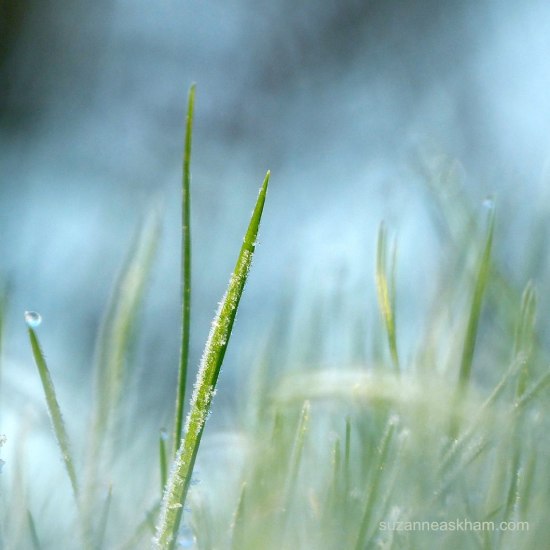
Here is a photo taken on a recent sunny, frosty day…
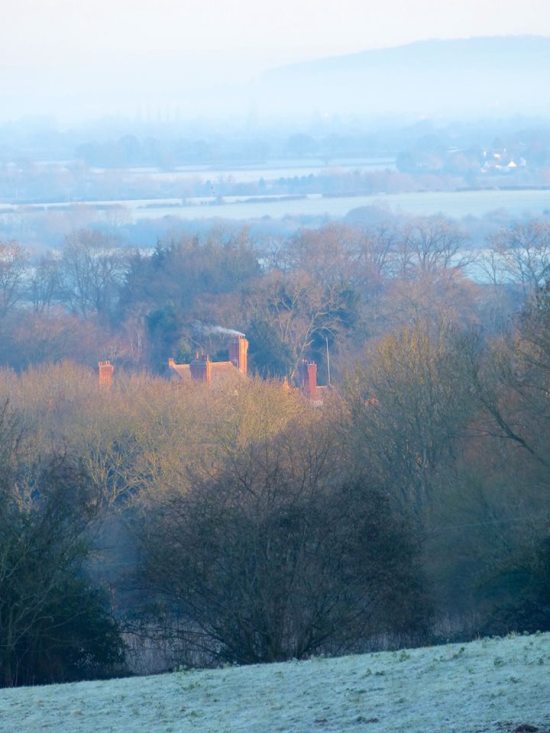
And here is another photo taken from the exact same spot…
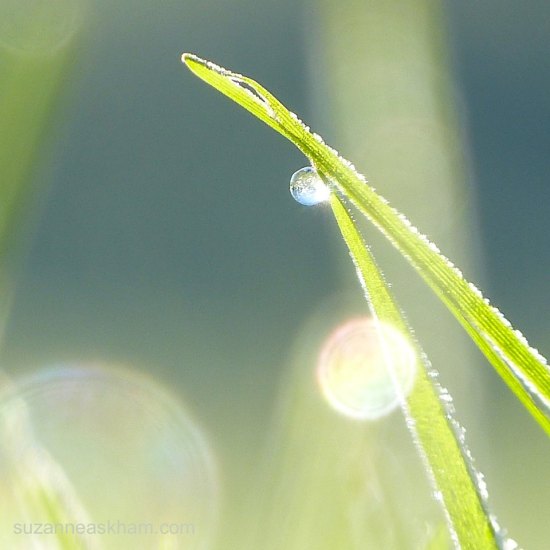
The only real difference between them is that in one, I decided to focus on the big picture. In the other, I zoomed into a tiny, beautiful detail.
Visualisation during meditation is exactly like that. We choose what to think about – focus on – in our mind’s eye. Then we close our eyes and reconstruct our chosen image in our mind.
It’s not always easy. Sometimes it can seem really hard. But if that’s the case, stick with it, as you are building up new ‘muscles’ in your mind. It gets easier with practice.
It helps a lot if you study a real image first…
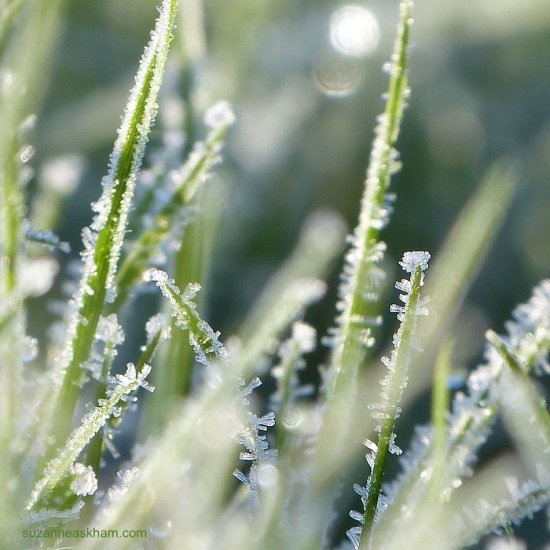
Notice all the tiny details that you can, then close your eyes and imagine them all over again. Pretty quickly, this process can feel calming and restful. This is the first gift of visualisation.
The second gift of visualisation is that you can use it to imagine things you’d like to have in your life. The rambling house in the country; the fulfilling work; the happy family….
Practise visualisation in meditation because it feels good, lowers your blood pressure, calms and revives you. Then, if you choose, practise visualisation with things you haven’t yet seen, but would like to. Imagine them as though they are as real and detailed as the images on this page. Allow meditative feelings of calm and happiness fill you as you do so.
In time, you will reduce the time you worry about what you don’t have, and increase the time you spend enjoying what you do have, which will encourage the good things to proliferate in your life, and increase your wellbeing, one meditative step at a time.
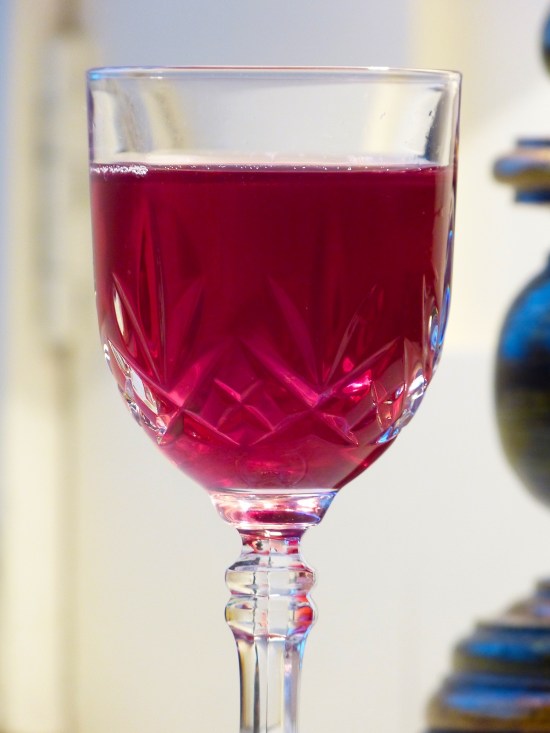
Saying ‘cheers’ with elderberry cordial
30/12/2015 at 4:37 pm | Posted in Uncategorized | 3 CommentsTags: gratitude, nature recipes, success, wellbeing
My blog was viewed 19,000 times in 2015. WordPress worked it out. “If it were a concert at Sydney Opera House,” they write, “it would take about seven sold-out performances for that many people to see it.”
For a not-very-frequent blogger, the numbers are amazing. I’m grateful that these pages have been viewed, and commented on, so many times. Thank you!
The subjects of these pages include meditation, healing, intuition and nature. It’s about living an authentic life. Many of us have a real thirst for that – and it often takes a practical turn. The most popular posts here are often recipes of one sort or another.
So in 2016, when I gather wild food for the cooking pot, make soaps from the hedgerows and blend fresh herbal teas from the garden, I will share these activities with you.
The most viewed post in 2015 has been a recipe for elderberry cordial. I adore elderberries, from their vibrant colour to their delicious, healthy juiciness.
One of the best things about writing that post has been the many comments from readers who have tried out the recipe and/or come up with their own variations. When that happens, there’s a special magic between WordPress, blogger and reader/commentator.
To all who have visited over the past year… I’m drinking to your good health, with a glass of elderberry cordial.
Be of good heart with hawthorn blossom tea
14/05/2015 at 5:00 pm | Posted in Uncategorized | Leave a commentTags: healing, herbal tea, herbs, nature recipes, naturecraft, wellbeing
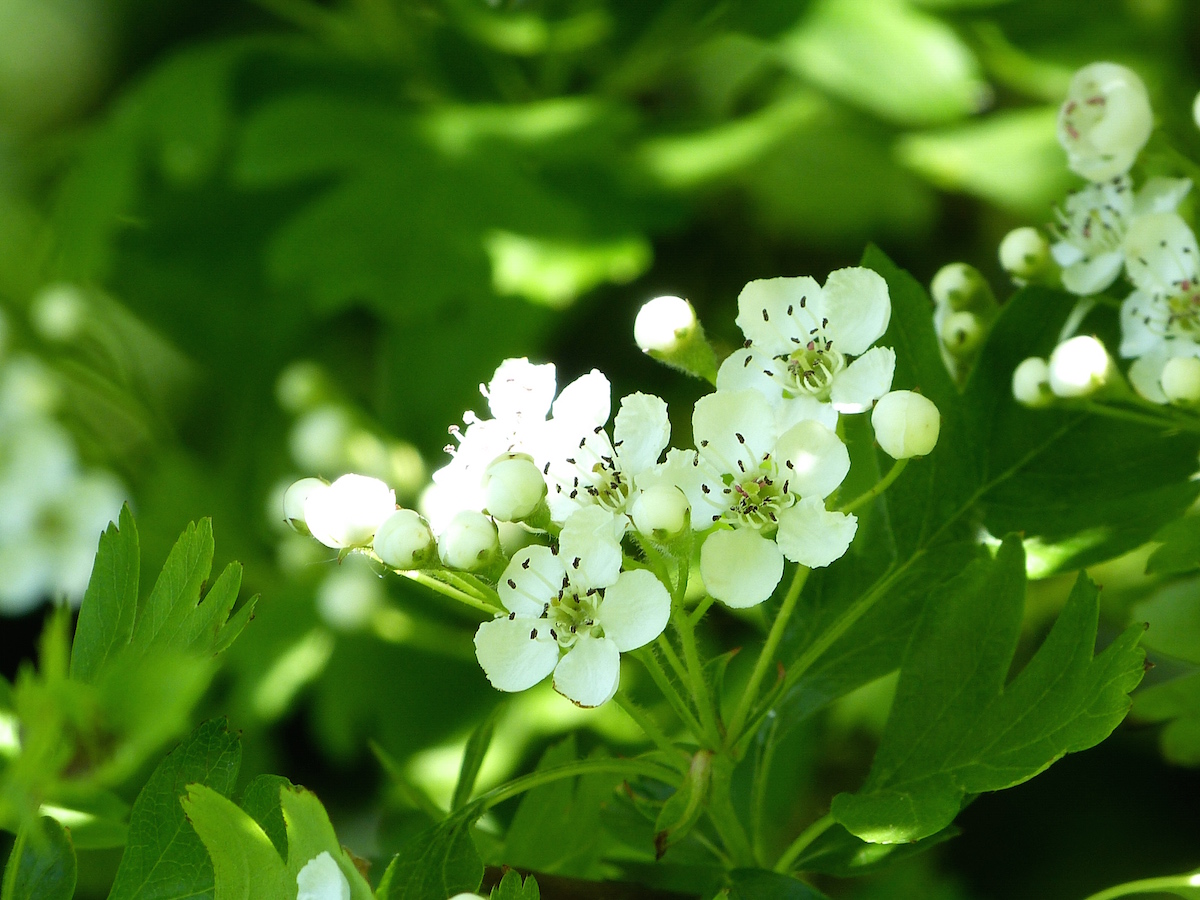
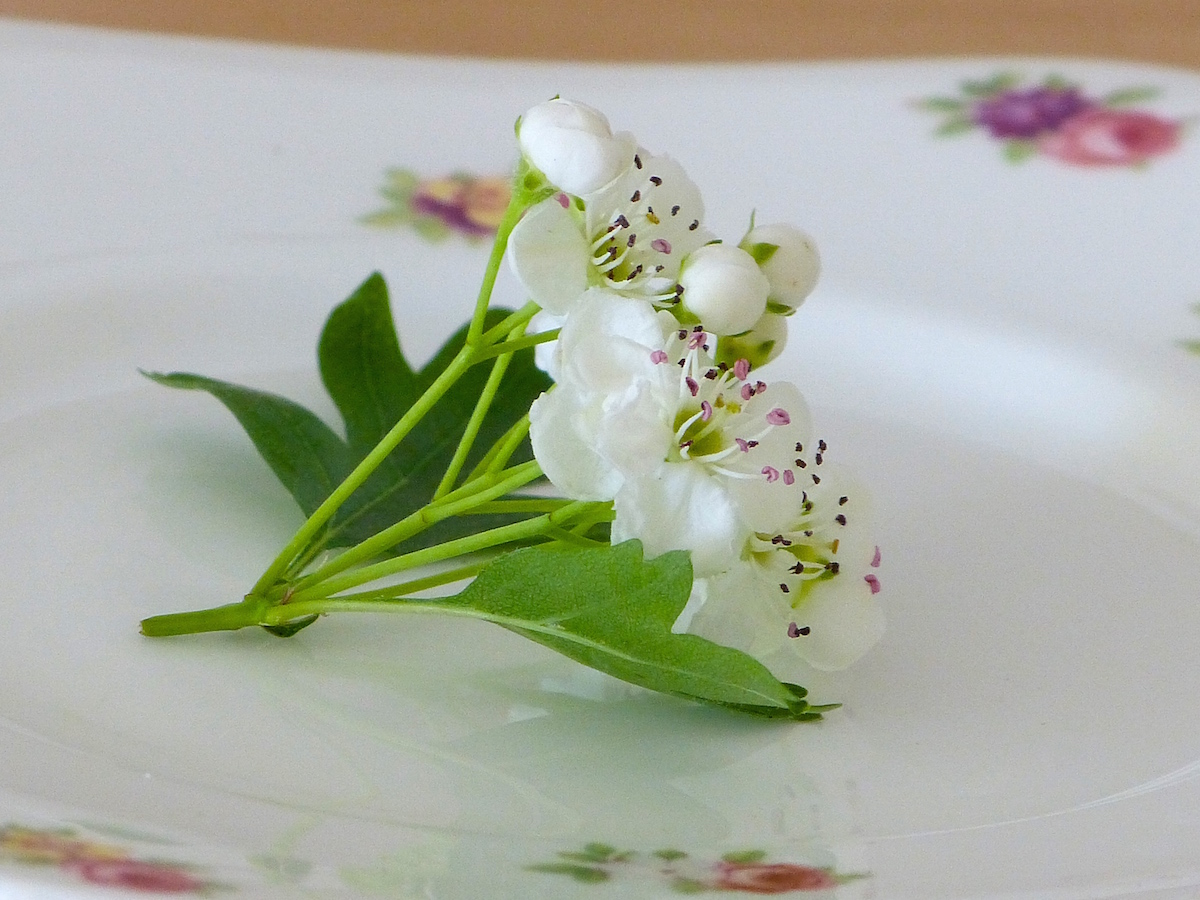
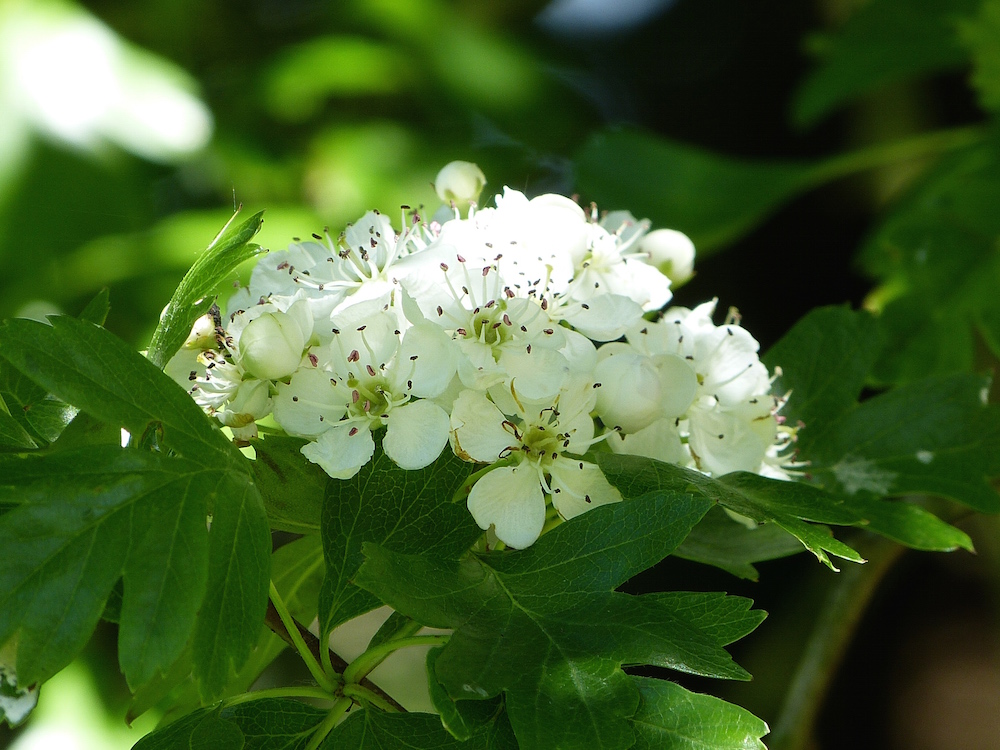
In late spring there’s a plentiful blossom in the hedgerows that makes an unusual health-giving tea. Hawthorn blossom and leaves alike are good for all aspects of the heart. Rich in tannins and bioflavonoids, it’s a great alternative to green tea. But harvest it wrongly, and you may never want to touch it again.
Hawthorn fragrance is an intriguing mix of sweet and… well, not so sweet. When it’s ultra-fresh, the sweetness prevails. When it’s wilted, there’s a lingering whiff of something rank.
And yet when hawthorn has completely dried, it becomes again a delightful, drinkable tea – rather like a lightly fermented green China tea.
Simply collecting the blossoms on a dappled sunlit day is therapy in itself. I like to follow Lucinda Warner of Whispering Earth’s advice and pick miniature sprigs of young flowers surrounded by a few leaves. You have to watch out for the thorns, but they’re easy to avoid.
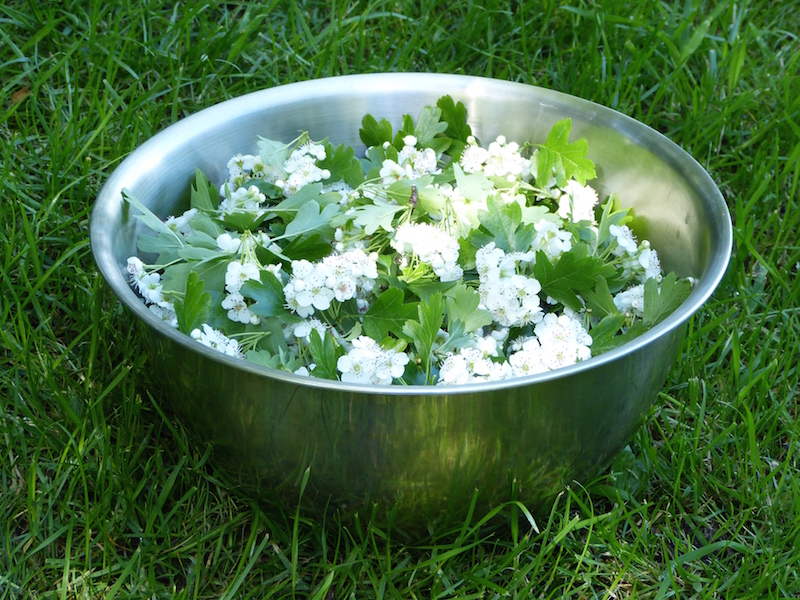
To drink hawthorn blossom fresh
A single fresh sprig, plucked straight from the tree, makes a lovely cup of tea for one. Place one fresh sprig in a cup of boiled water, and brew for a few minutes. It’s fun to drink while the sprig is still in the cup. If wished, add a squeeze of lemon and a small teaspoon of honey.
To drink hawthorn blossom dried
Place your sprigs of hawthorn blossom complete with their leaves on a tray in a well-ventilated place to dry. Cover with paper if you need to protect your harvest. Sometimes I simply place them so they can lie in a single layer inside a large paper bag, then leave them on a shelf in a warm and airy place. If you have a dehydrator, you can speed up the process dramatically and produce dried sprigs on a gentle setting in just a few hours.
To drink, place one to three dried sprigs in a tea filter, inside a cup of boiled water, and brew for a few minutes. Remove filter and enjoy.
Why it’s good for you
Hawthorn blossom, leaves and berries have all been long used as a tonic for the heart, helping with irregular heart beats, tiredness associated with poor heart function, and lowering of blood pressure. It’s also helpful for the whole circulatory system. And it’s been used as a tonic for the emotional heart, helping alleviate anxiety and bring calm. The feeling after drinking is as if your heart is basking in a warm, reassuring glow of wellbeing – that’s how it always feels to me.
Herbalist Nina Nissen suggests that it’s best drunk daily in small dosages over a period of 2-3 months, but it can safely be taken continuously if required.
If you are taking other medicines, particularly heart pressure ones, check with your doctor before drinking hawthorn infusions.
Hawthorn, a member of the rose family, has been viewed as a sacred medicinal plant for millennia. It’s a plant of many dimensions, endlessly fascinating to those who take the time to hear its teachings. The blossom is a wise and beautiful addition to any tea collection – and it’s free.
A rose for hard times
31/03/2015 at 7:52 am | Posted in Uncategorized | 4 CommentsTags: flowers, happiness, healing, inspiration, life skills, meditation, nature, parenting, positive thinking, special needs, visualization, wellbeing
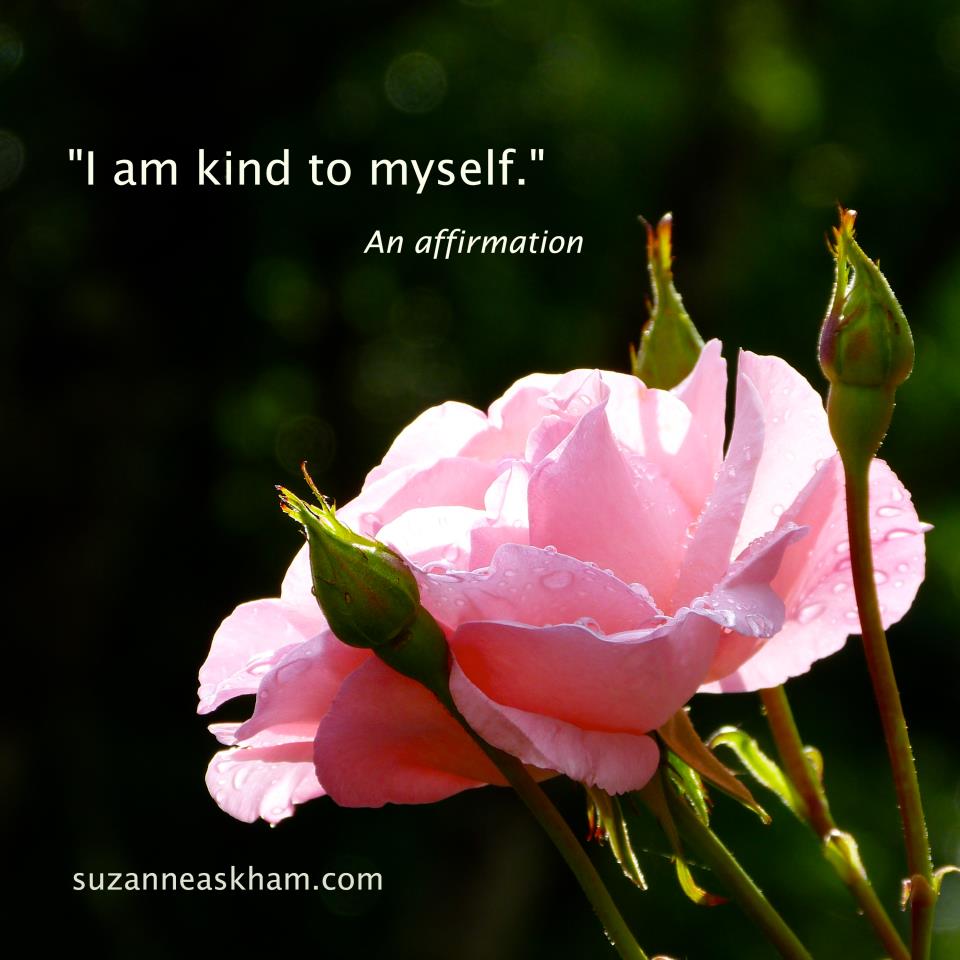
There’s a simple meditative technique we can use in hard times. I call it the Rose Meditation. You can do this anywhere: cleaning the house, ploughing through work, undergoing medical treatment, in a high-voltage meeting….
All you do is this: focus, in your mind’s eye, on a rose. The example shown here was photographed after rain, in the sunshine of the Dordogne.
Picture the feather-light, velvety smoothness of the petals. Imagine yourself miniaturised, resting between the scented petals as though they are the softest bed in the world. Breathe in their heavenly fragrance.
Notice the variations in colour between the inner and outer petals. Absorb the beautiful colours with every cell of your body.
Touch the raindrops; taste their sweetness.
Explore the petals, going inward towards the nectar, and outwards again towards the sun and fresh air.
Do this visualisation any time you feel the need. The rose contains powerful therapy, and simply thinking about it in this way can be soothing, and healing.
Website Built with WordPress.com.
Entries and comments feeds.
 Suzanne Askham