The real meaning of ‘aura’
13/03/2017 at 10:30 am | Posted in Uncategorized | Leave a commentTags: aura, healing, intuitive healing, origins, psychic development, Relationships

Photo courtesy of Christopher Campbell/Unsplash
This week, in my meditation studio, we’re focusing on the word ‘aura’. But what does that actually mean?
The Cambridge Dictionary is a good starting point. Aura is defined there as ‘a feeling or character that a person or place seems to have’ and also as ’a type of light that some people say they can see around people and animals’.
To get a truly authentic sense of the word, however, we need to go back in time.
Aura was a Greek goddess, a personification of the breeze, breath and fresh, cool air. Her name came from an ancient seed word meaning breeze, or fresh air.
So ‘aura’ evokes a presence. It can encapsulate the spirit of an individual, or a community, or a place. It has a freshness about it, a sense of movement: new ideas and invigorating air arrive; old energies and air depart.
When healers and other energy therapists use the word ‘aura’, they’re generally referring to the energy field of a person, or other living being. Healers talk about sensing ‘stuck’ energy, a lack of flow in certain parts of a human energy field that can be associated with areas of pain or discomfort. Linked with the physical discomfort may well be emotional issues that have not been fully processed – that have been ‘stuck’ in some way. The healing process enables flow to return to these areas. Physical symptoms can improve. Emotional wellbeing can return.
In this context it makes perfect sense that Aura, the classical personification of fresh air and breezes, is meant to be a gently dynamic force. When a person is fit and healthy there seems to be a glow and vibrancy about them – in some immensely subtle way, they shimmer. Likewise, when a person is very happy they glow. Think about a young couple who are about to marry, for example. Or think about a woman when she is expecting a baby. In contrast, when someone has clinical depression, it can feel as though they are stuck in their sad emotions.
We notice auras without always realising it. Someone is ‘full of hot air’. Someone else has a quietly menacing air. Yet another person has a reassuring presence.
Being aware of auras in this way helps us choose wisely how we deal with situations and people. The truth is that noticing auras is a good life skill for all of us.
Aquamarine bliss
14/11/2016 at 5:18 pm | Posted in Uncategorized | Leave a commentTags: healing, Health, inspiration, meditation, nature
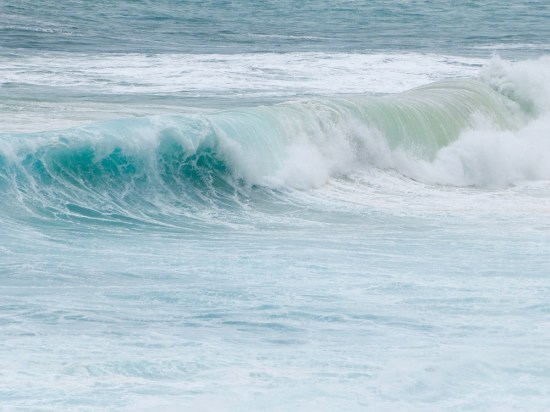
The theme this week in my studio is ‘Aquamarine’. I invite you to focus on the beautiful green-blue colour of the sea. You know, the way it looks when waves rise up and daylight filters through the water…
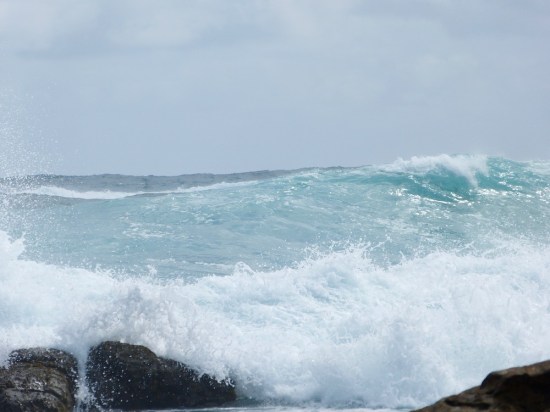
Here is a wellbeing exercise for you. Imagine you are made up entirely of this sea-glass colour. These pictures taken at Surfer’s Point in Western Australia may help you.
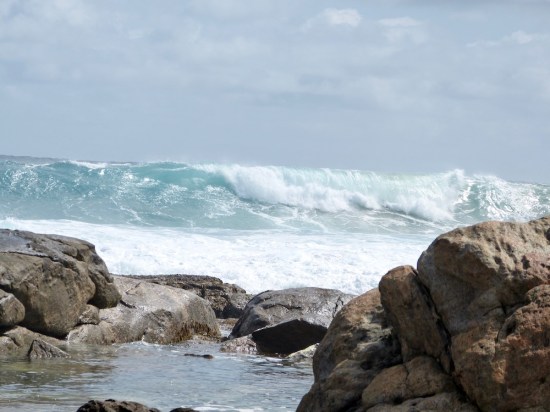
Visualise that any areas of pain or illness in your body are being washed away by the cleansing aquamarine light. Picture your body becoming more and more like aquamarine sea glass, as if lit from within. You might imagine that areas of pain are dark and dense, or sticky and gluey. As the water keeps washing through, these become dislodged until the whole of you is simply aquamarine: healthy; radiating with good health, and speaking with your own authentic voice. Enjoy the feeling!
What an ice mountain can tell you
30/07/2016 at 8:52 pm | Posted in Uncategorized | 1 CommentTags: Guidance, healing, insight, inspiration, meditation, nature, personal development, sacred site, travel
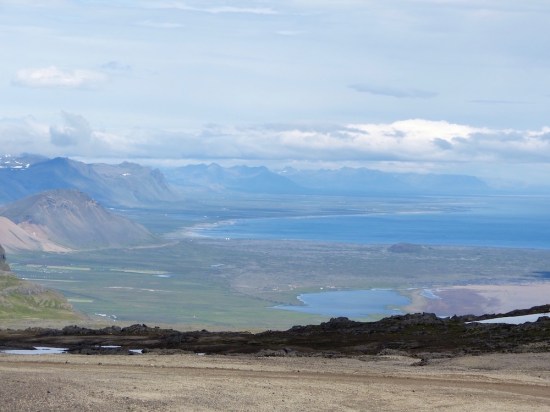
Some places feel special, in ways we don’t fully understand. One such I visited recently is Snaefellsjokull. This ice-capped volcanic mountain rises from a remote Western peninsula in Iceland. Its name translates as ‘Snow-fell glacier’.

Perhaps it feels remarkable because of the near-Arctic juxtaposition of ancient fire and eternal ice, enhanced by the mystery of ocean clouds.
Or maybe it’s because the myriad volcanic peaks in this region take on their own fierce presence in a stark landscape created by the slow separation of two major continental plates.

On the slopes of the glacier itself, the sense of presence grows stronger, along with a distinct chill. It’s easy to see why Jules Verne chose Snaefellsjokull as the entrance to the earth’s core in his novel, Journey to the Centre of the Earth.
There’s a purity and absolute freshness to the air, as though all human preconceptions have been frozen or blasted away.

The ancient volcano brings gifts to the watchful. My daughter found a piece of obsidian – black fire glass. And I discovered what I fancied to be the subtle, changing image of a fire sprite on a smooth piece of basalt.
Snaefellsjokull is said to be one of the sacred centres of the earth, a portal to other realms.

Standing on the glacier, it’s possible to see things differently… to recognise the true landscape of our own lives.
An ice mountain can tell you much about yourself.
Each of us carries within us the qualities of Snaefellsjokull: the ice and fire, the mystery and the deep, all held within a shimmering equilibrium that is subject to disruption when inner or outer forces overturn the state of balance.
Witnessing this in nature is to witness it in ourselves. We can open up to these qualities, and allow them to flow through the meridians, our own subtle energy channels.
There are four burning questions an ice mountain draws out of us:
• What in you is ready to be expressed?
• Look deeper now. What are you suppressing?
• Do you always recognise your own inner promptings towards action?
• And, above all, do you honour the passions and visions that ignite you?
Take time to answer these questions. They are a recipe for life-long wellbeing.

This is what I learned, living in an Intensive Care Unit
23/05/2016 at 7:21 am | Posted in Uncategorized | 5 CommentsTags: healing, intensive care, life skills, meditation, mindfulness, personal growth, special needs
This post has also been published on the Huffington Post.
Recently I had the rare and shocking privilege of living in an Intensive Care Unit, or ICU, for three months. I was not a patient, nor a member of staff. I was there because my teenaged son became critically ill. Tim’s learning difficulties meant that he needed his dad or me to be with him virtually all the time. I stayed every night for the first month, and then around five nights a week thereafter.
It had happened with frightening speed. We had been at home, about to eat supper, when Tim collapsed with breathing difficulties and an ambulance was called. Tim’s resourceful younger sister speed-packed overnight bags while the paramedics administered huge amounts of oxygen.
By the time we reached the hospital, Tim was drifting away. He was put on a ventilator, then transferred to the ICU. Tim’s dad and I sat in the waiting room. Fear. Waiting. Fear. And so, although I didn’t know it then, our three-month sojourn began.
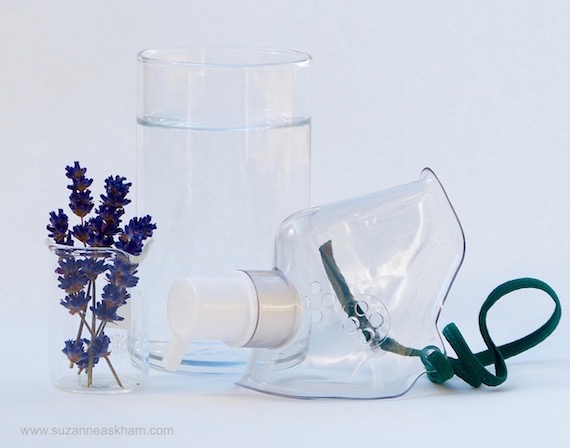
In this life and death situation, my choice, as a mother, was binary. I could choose love or fear. Love meant seeing the good in every particle of this unwanted experience. Fear meant resisting it. Fear would drain me of energy. Love would enable me to channel all my energy into helping my son.
I resolved to choose love. That didn’t mean I wasn’t frightened. It’s just that at every point of awareness, I chose love. I decided to view the experience as a retreat, in which I would learn from the kindness of nurses and the alchemical wisdom of doctors.
During those three months, I learned that crisis means looking after yourself as well as doing your best to help others. Specifically, I learned the following five insights.
1. Appreciate and care for your body.
Of the three groups of people who passed through the ICU – patients, relatives and medical staff – the fittest group were the medical staff. They drank lots of water. In their spare time, they went to the gym, did yoga, meditated, cycled, danced, played tennis, rode horses, ran marathons…. They weren’t obsessive. Chocolate and crisps were regular treats, especially during long working shifts. However, there was a belief that exercise was important, and that it might help them to avoid ending up in a hospital bed on life support.
2. Pause, breathe. Sit still in silence every day.
Meditation can be done among beeping machines, and it calms turbulent emotions like nothing else. Even in extremis, the mind can become clear and calm, like a deep mountain pool.
The first night, sitting with my son, I found it helpful to breathe in a silent ‘I am here’, and breathe out a silent, ‘now’. It enabled me to ground myself in the shock of this new situation – to accept it. Consequently, I became a calmer presence for Tim.
Meditation enables us to pause before we blindly follow external voices of authority. I felt that, deep down, Tim resolutely believed that he could recover, even though the medical staff had little hope. So his dad and I chose to support him assertively in his belief.
3. Give healing when you are drawn to do so.
Call it what you will: healing, prayers, love. Just do it. You’ll be in good company. A recent Gallop survey showed that nearly 90% of Americans have prayed for healing for others. A quarter have practised laying on of hands. Every day in the ICU, I sensed the presence of major disturbances in Tim caused by pain, drugs and fear. When I consciously directed love to him, it seemed to me that the disturbances lessened. At the same time, I sensed that many other people were praying for him and sending healing.
I massaged my son’s limbs with lavender and sweet almond oil, and visualised golden white light entering my son’s inert body, energising and healing every cell.
4. Choose uplifting language.
On Day 3, a time of minimum hope, I drew a good health mandala picture for my son, with encouraging words among brightly coloured flower petals and leaves. I wrote a note below it: `Deep down, you are healthy and well, and have the energy, determination and love that you need to thrive. I love you very much, always’.
5. Adopt a mindset of wellness.
As Tim thankfully began to recover, he was keen to leave his room and explore the hospital by wheelchair. We visited the maternity ward’s pretty garden. We went painting in the children’s ward. We danced with dementia patients. We circled a small peaceful lake in the grounds. One day, ten family members went for a walk around the hospital, with Tim frail but determined at the front. We also discovered a rehab gym, and Tim developed a reputation among the doctors for visiting the gym every day.
All these deeds created an impression around Tim that he was on his way to being fit and well. The collective thinking around him changed, from scarcely any hope to cautious optimism. In turn, that spurred him on to become more adventurous. In short, he was acting like a young man who, despite his disabilities, was used to leading an active, even sporty life.
On Day 96, Tim was discharged from hospital. Our family was so thankful. I now understand that crisis is a natural part of life. Sooner or later, stuff happens. Our challenge is to choose those moments, as much as the long calm periods in between, to live life to the full – however long it lasts.
How to achieve balance in your life
03/02/2016 at 1:38 pm | Posted in Uncategorized | 5 CommentsTags: healing, life skills, mindfulness, personal growth, self-development, wellbeing
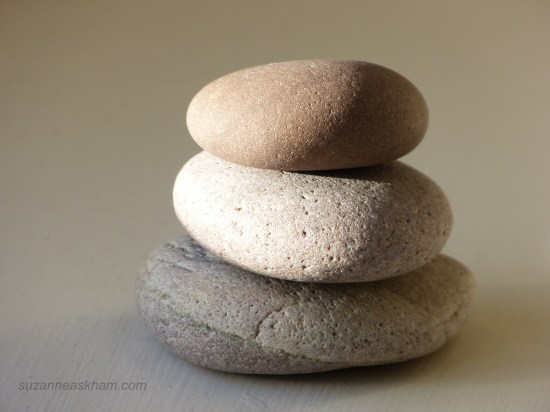
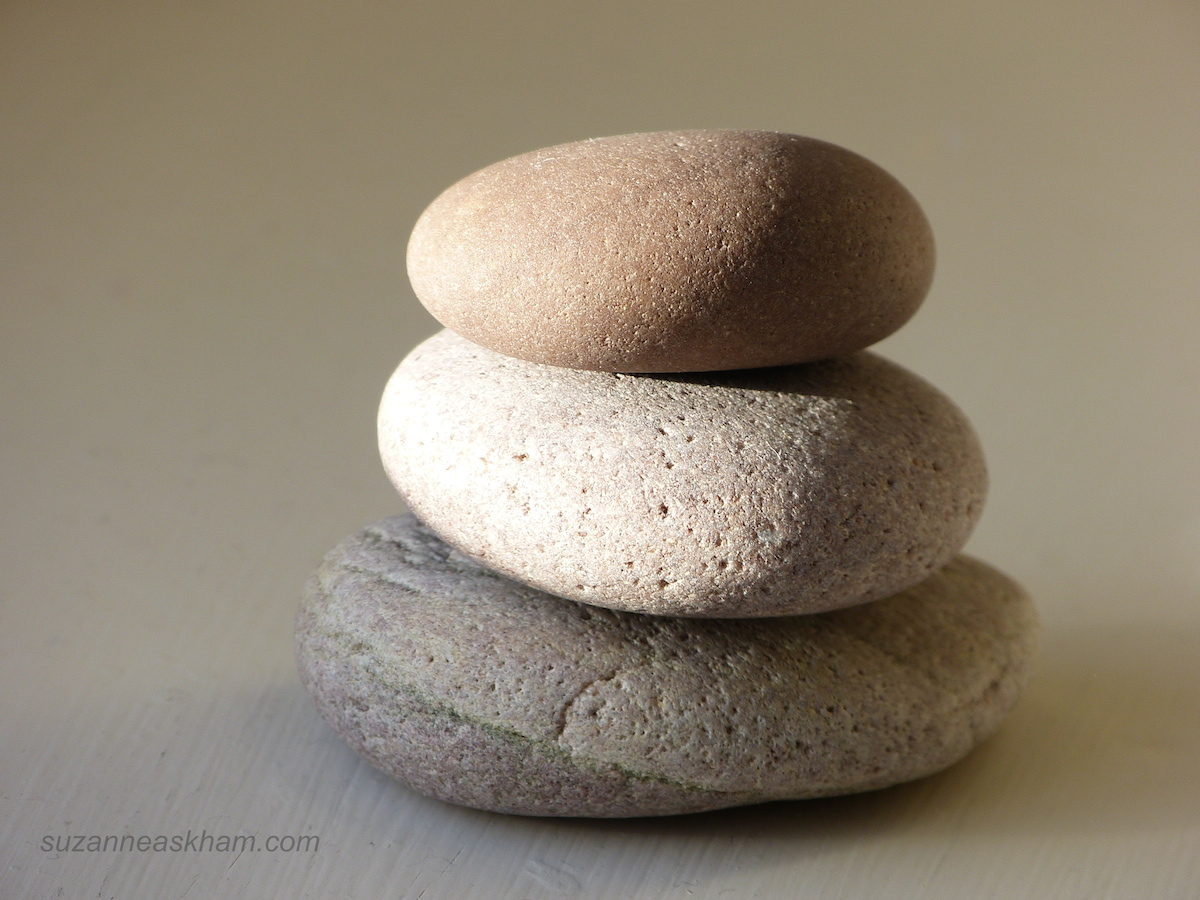
Here is a picture of three perfectly balanced stones.
It is also a symbol of how we humans can lead a balanced life.
Imagine, now, that you consist of three stones, one on top of the next.
Get your base right
The base stone, the biggest, is all important – nothing’s going to happen without it. This represents your physical needs: income, security, survival. We need to spend solid time every day ensuring that physically we are thriving. Are you exercising every day? Do you care for your body? Do you eat healthy foods, maybe even grow some of what you eat? Do you have a steady income, however humble? The message of the base stone is a simple one: take time to look after your physical body.
Keep heart at the centre of all that you do
The middle stone is the heart stone. This represents our feelings for others, and ourselves. Do you have plenty of healthy interactions with others: good friends, colleagues, family members? Do you nurture your relationships and spend solid time catching up with family and old friends, and meeting new friends by building your interests and activities?
At the very centre of the heart stone there is a special place devoted to your relationship with yourself. You are the friend who is always with you, every minute of your life. It may as well be a great friendship. Do you spend solid time checking in with yourself, seeing how you really feel, and caring about the answer? Do you give yourself praise when you’ve done well? Do you give yourself encouragement when you’re flagging? Do you, above all, love and accept yourself just as you are, while also being open about change? The message of the heart stone is this: take time to care about yourself and others. Value your feelings.
Do not be afraid to think
The top stone is the head or crown stone. This represents our mental and spiritual life. The crown stone, being that much higher than the other stones, can see the big picture. It prevents us being overtaken by our feelings. It introduces a note of caution when we fall in love with a person, or a project, that ultimately looks likely to harm us. The crown stone is the aspect of us that is wise, calm and measured. It is our intelligence.
The crown stone is the smallest stone. This reminds us that a little thinking goes a long way. Intelligence is a valuable gift. But without the heart and the base, it can easily get unbalanced. The connection between head and heart needs to be really stable. Otherwise, we can develop delusions and other mental illnesses. We might also invent things that do not serve the highest interests of humankind.
The crown stone, alone of the stones, has air above it. This reminds us that there are links between us and the invisible. Thus, it also represents our spiritual life.
The message of the crown stone is this: it is our birthright to be able to think for ourselves, to see things as they really are, and to be bold enough to speak the truth.
Keep these three aspects of yourself in balance, and you will lead a balanced life.
A young hare’s guide to peace
03/07/2015 at 4:26 pm | Posted in Uncategorized | 6 CommentsTags: Guidance, happiness, healing, inspiration, mindfulness, nature, peace, personal development
When we are peaceful in nature, nature comes peacefully to us. Last spring, collecting wild garlic in the woods, I was delighted when a deer came to graze nearby. We continued to crop the spring greens, each in our own way. It was companionable. I was the one who moved away first, when my basket was full.

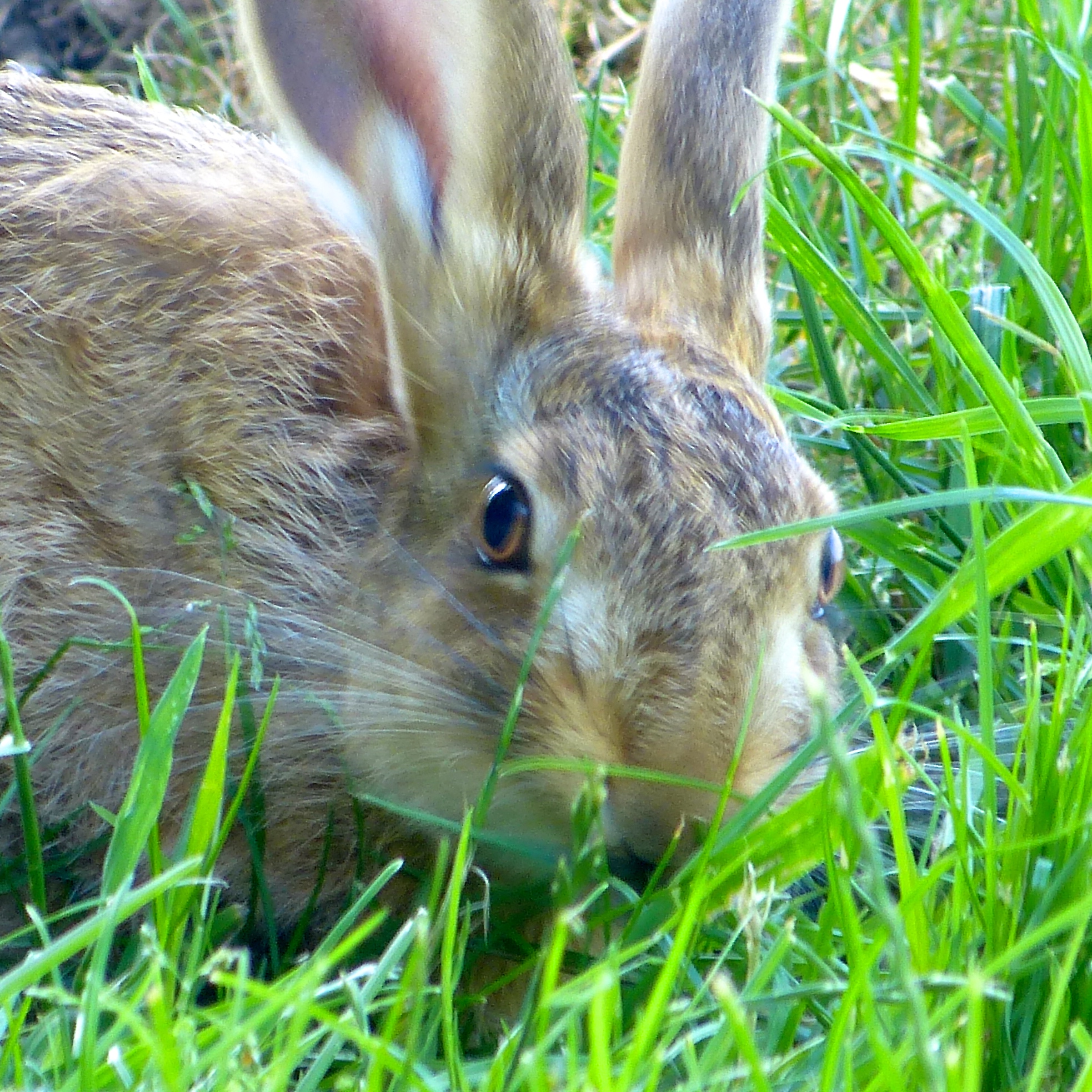
Then, ten days ago, a young hare came to live in our garden. He wasn’t distant; he was frequently under our heels. Although we startled him, he didn’t move far away. He ate some carrots I left out for him. One day, I sat on a stone step, drinking green tea, and he sat nearby, eating grass in the sunlight. Ears upright and contented. I chatted. He listened. I loved the way his ears swivelled attentively when I spoke. If you want to learn the art of true listening, watch a hare.
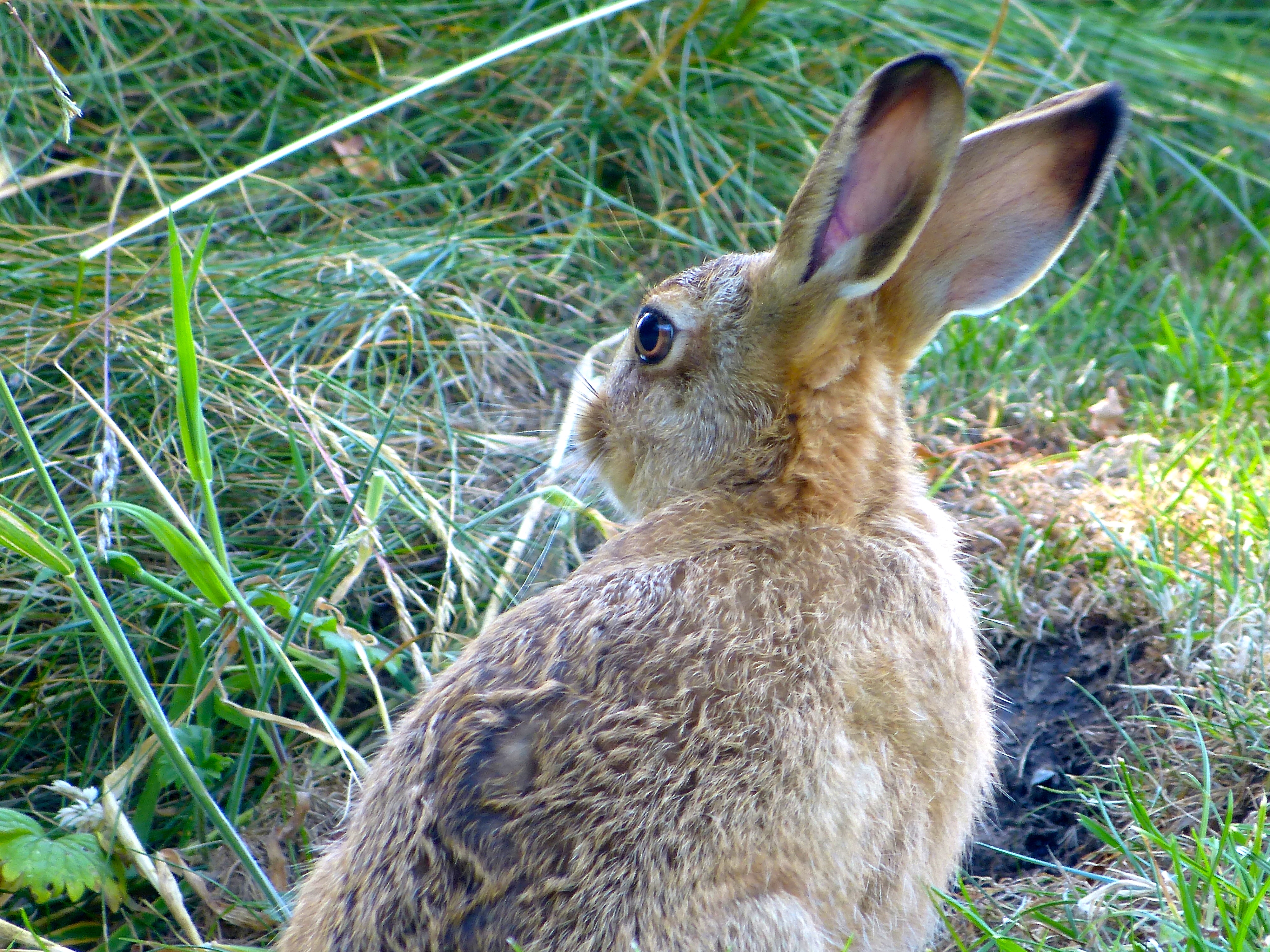
When a being so wild and natural is happy in your company, it is a wonderful feeling. Again, I was the one who eventually moved away. My human schedule beckoned. His precocial nature allowed him to simply be.
Our hare is now spending more time in the field next door. But he still visits our garden. Two nights ago, I saw him in the silver light of the full moon, grazing on the lawn.
Hares and people have a lot in common. When we are peaceful, others around us are more likely to be calm and contented. Maybe that is how we will eventually create a more tranquil world: not by telling others that they are wrong and we are right, but by experiencing a deep, numinous peace within ourselves. It’s a feeling that others can’t help but respond to.
Be of good heart with hawthorn blossom tea
14/05/2015 at 5:00 pm | Posted in Uncategorized | Leave a commentTags: healing, herbal tea, herbs, nature recipes, naturecraft, wellbeing
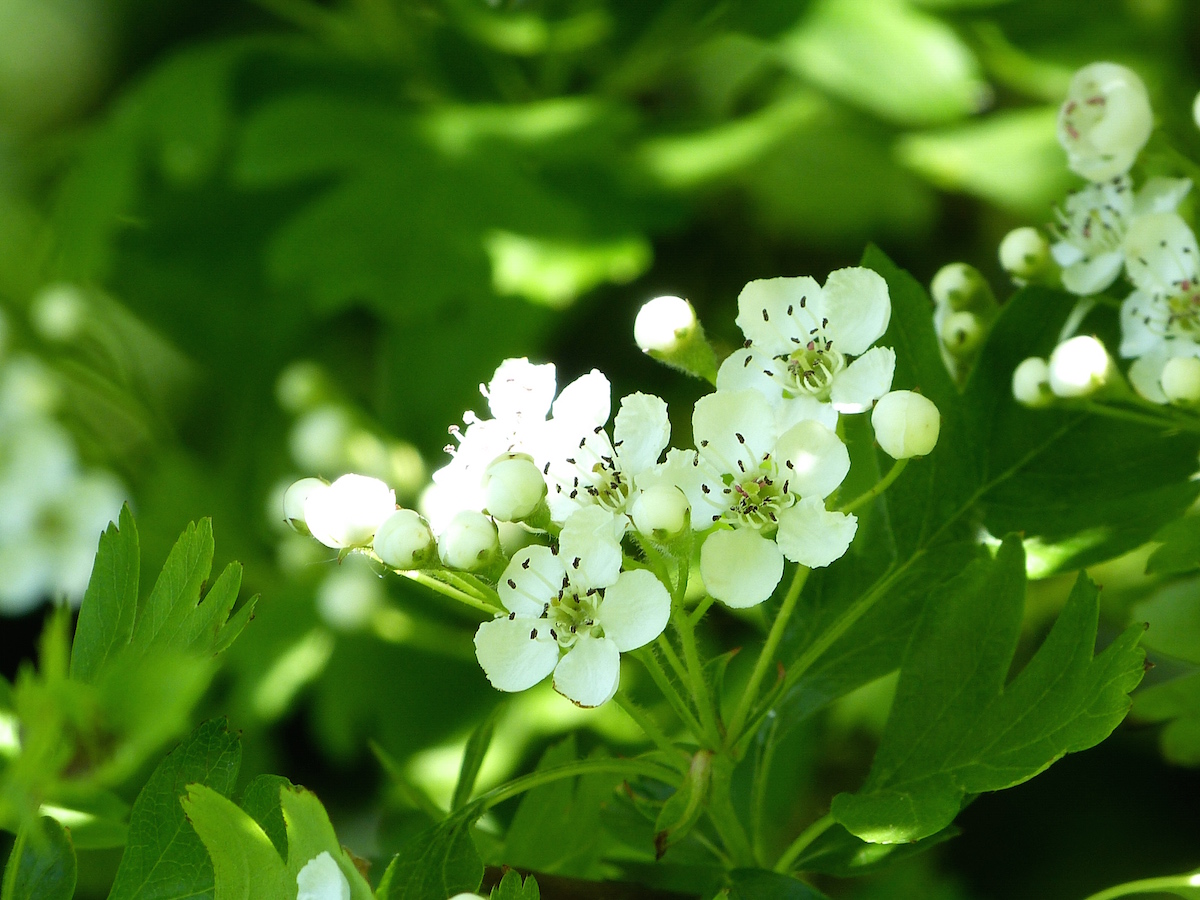
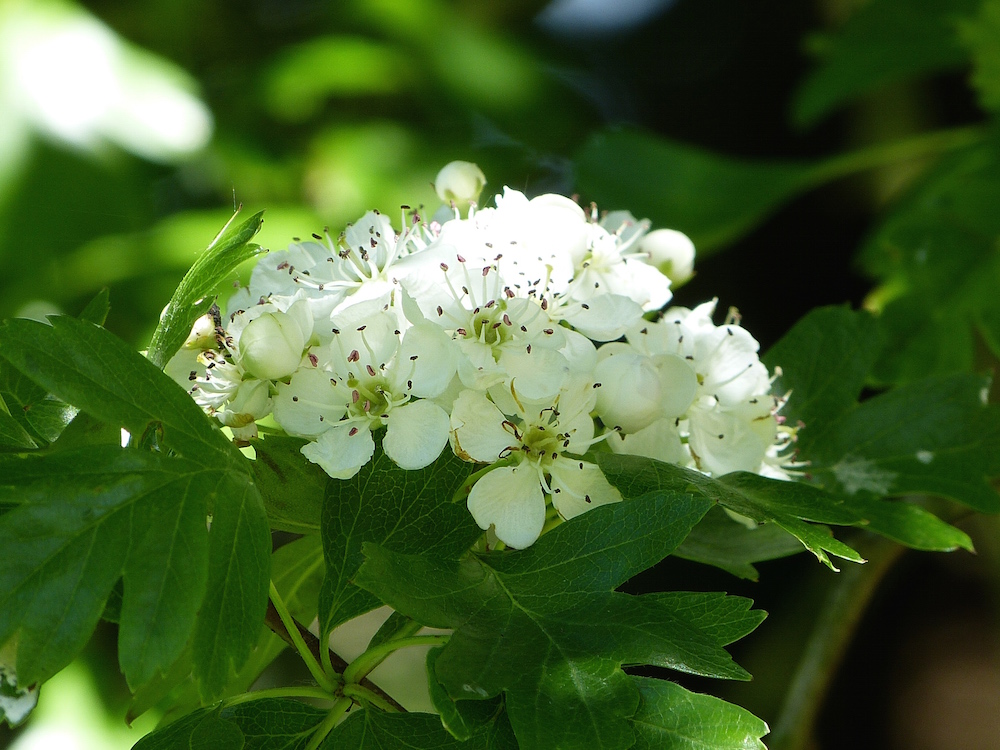
In late spring there’s a plentiful blossom in the hedgerows that makes an unusual health-giving tea. Hawthorn blossom and leaves alike are good for all aspects of the heart. Rich in tannins and bioflavonoids, it’s a great alternative to green tea. But harvest it wrongly, and you may never want to touch it again.
Hawthorn fragrance is an intriguing mix of sweet and… well, not so sweet. When it’s ultra-fresh, the sweetness prevails. When it’s wilted, there’s a lingering whiff of something rank.
And yet when hawthorn has completely dried, it becomes again a delightful, drinkable tea – rather like a lightly fermented green China tea.
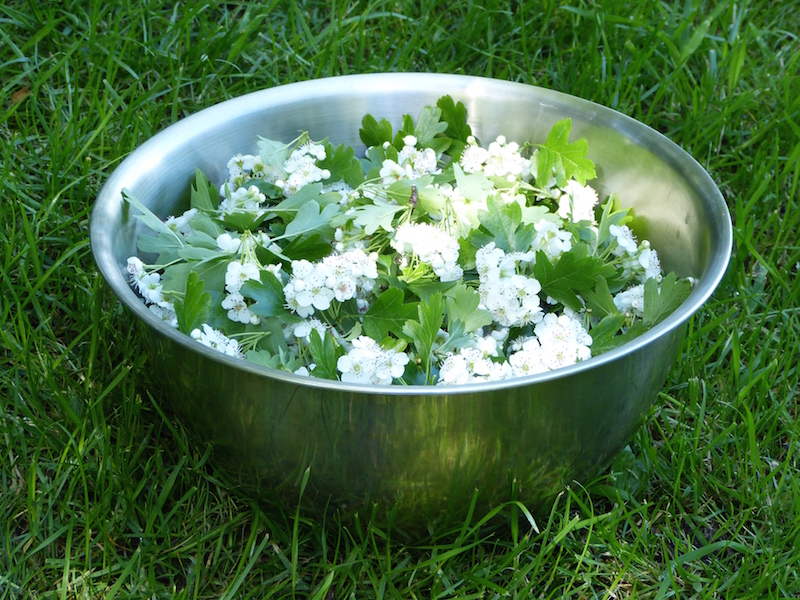
Simply collecting the blossoms on a dappled sunlit day is therapy in itself. I like to follow Lucinda Warner of Whispering Earth’s advice and pick miniature sprigs of young flowers surrounded by a few leaves. You have to watch out for the thorns, but they’re easy to avoid.
To drink hawthorn blossom fresh
A single fresh sprig, plucked straight from the tree, makes a lovely cup of tea for one. Place one fresh sprig in a cup of boiled water, and brew for a few minutes. It’s fun to drink while the sprig is still in the cup. If wished, add a squeeze of lemon and a small teaspoon of honey.
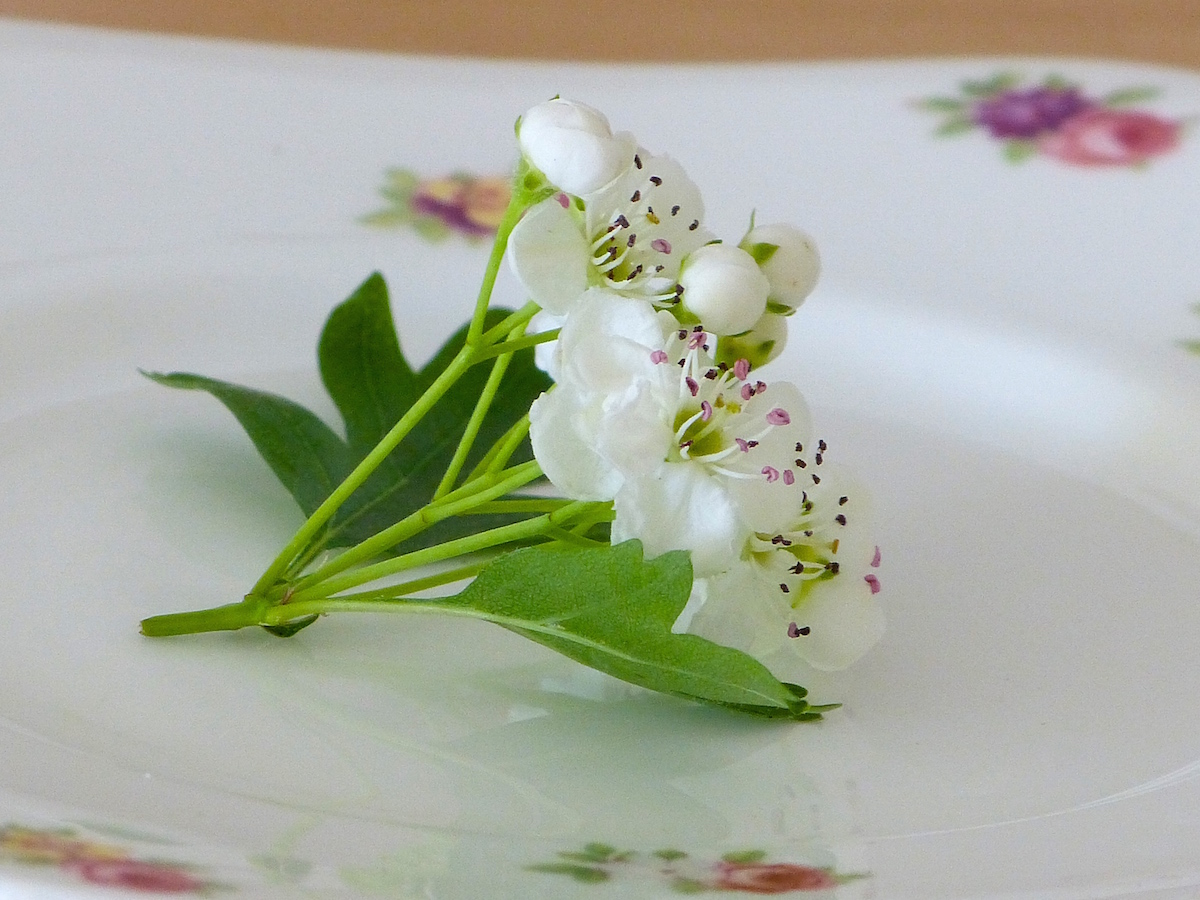
To drink hawthorn blossom dried
Place your sprigs of hawthorn blossom complete with their leaves on a tray in a well-ventilated place to dry. Cover with paper if you need to protect your harvest. Sometimes I simply place them so they can lie in a single layer inside a large paper bag, then leave them on a shelf in a warm and airy place. If you have a dehydrator, you can speed up the process dramatically and produce dried sprigs on a gentle setting in just a few hours.
To drink, place one to three dried sprigs in a tea filter, inside a cup of boiled water, and brew for a few minutes. Remove filter and enjoy.
Why it’s good for you
Hawthorn blossom, leaves and berries have all been long used as a tonic for the heart, helping with irregular heart beats, tiredness associated with poor heart function, and lowering of blood pressure. It’s also helpful for the whole circulatory system. And it’s been used as a tonic for the emotional heart, helping alleviate anxiety and bring calm. The feeling after drinking is as if your heart is basking in a warm, reassuring glow of wellbeing – that’s how it always feels to me.
Herbalist Nina Nissen suggests that it’s best drunk daily in small dosages over a period of 2-3 months, but it can safely be taken continuously if required.
If you are taking other medicines, particularly heart pressure ones, check with your doctor before drinking hawthorn infusions.
Hawthorn, a member of the rose family, has been viewed as a sacred medicinal plant for millennia. It’s a plant of many dimensions, endlessly fascinating to those who take the time to hear its teachings. The blossom is a wise and beautiful addition to any tea collection – and it’s free.
How to gather and cook wild garlic
01/05/2015 at 10:50 am | Posted in Uncategorized | 4 CommentsTags: flowers, healing, Health, herbs, nature, nature recipes, naturecraft
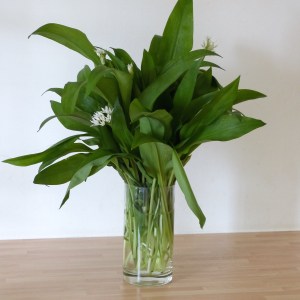
 Wild garlic grows in vast, natural fields in damp woodlands in the spring. It’s just waiting for you to harvest it and if the buds are looking like this one above, the perfect time to harvest is right now. Here are some guidelines for you.
Be sure to identify it correctly
Wild garlic, or Allium ursinum, has long very pale green stems. Its leaves are arrowhead-shaped, one per stem. Its buds grow one per stem, and opens out into a loose tuft of pretty white flowers. Every part of the flower has a pungent garlicky fragrance which is best experienced by crushing a leaf lightly between your fingers. There are two toxic plants that must never be confused with wild garlic. Lily of the valley has similar leaves but purple stems, and its flowers grow in a long spray. Lord and Ladies, an arum, has different shaped leaves but grows among the wild garlic and could be scooped up by an over-hasty picker.
Only gather what you need
One spring I went out with relatives and we all went a bit crazy, picking as much garlic as we could carry. Of course it was next to impossible to process all that food, and I’m sorry to say some of the surplus ended up in the compost. It’s a plant that is best eaten fresh, so just gather what you need. If you’re intending to cook wild garlic as a side dish, 20 leaves per person makes a generous portion.
Pick the stems low to the ground
The stems have a more delicate taste and pleasant texture, so be sure to collect them as well as the green leaves. Don’t unearth the bulbs which are very small. The goodness we want is in the aerial part of the plant: the part above the ground.
 Process it early
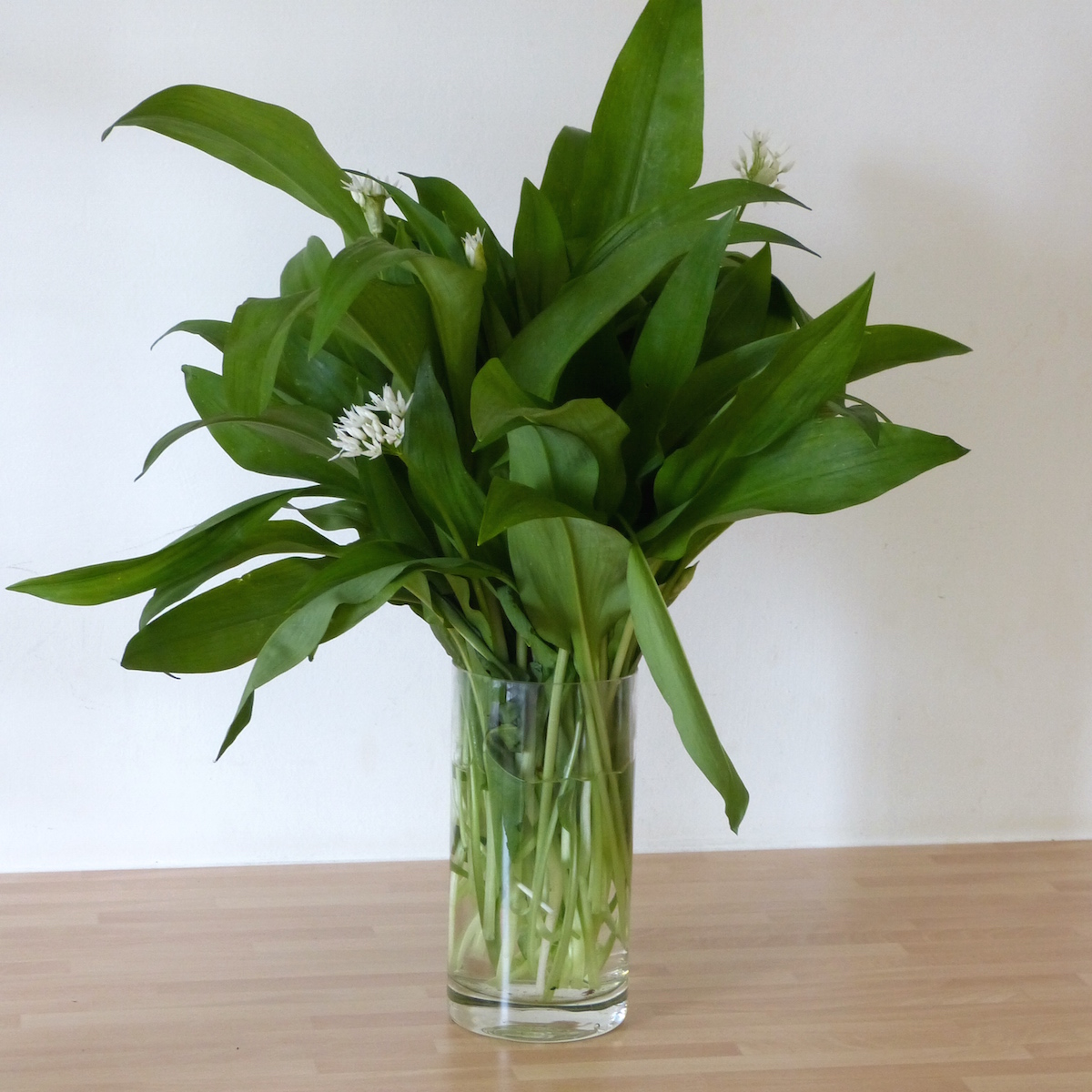
It will keep for two or three days in your kitchen, either in a loose bag in the fridge, or in water as shown here.
Eat it raw
Wash, chop roughly and add in small quantities to salads. The open flowers can also be added to salads, contributing beauty and an amazing peppery taste. 
Create a pesto
There are many recipes on the internet. My favourites don’t copy the classic basil pesto, but blend ingredients that perfectly suit garlic’s distinctive taste. This is a great example by Hugh Fearnley Whittingstall. Blend 50 g of lightly toasted and cooled walnuts in a food processor with around 75 g of washed and chopped garlic leaves, 35 g parmesan cheese, finely grated zest and juice from half an unwaxed lemon and around 130 ml of olive oil. Add sea salt and black pepper to taste. Spoon into a clean empty jar, and store in the fridge. It will keep for several days, but probably won’t last that long – too yummy! You can also freeze portions for up to six months, in my experience. Mix it with pasta or spread on crisp bread.
Cook it as a spring green
Wash and roughly chop leaves and stems, and simmer for a few minutes in a little water until soft and wilted. Make sure the pan doesn’t boil dry. The flavour when cooked is remarkably mild, making it a perfect spring vegetable. You can also add the washed, chopped leaves to a casserole for the last few minutes of cooking. You can create a soup with onion, a little potato, and lots of wild garlic with seasoning and a swirl of cream. Or you can simply add a single raw garlic bud to the centre of any soup as a peppery garnish.
Give a truly fragrant gift
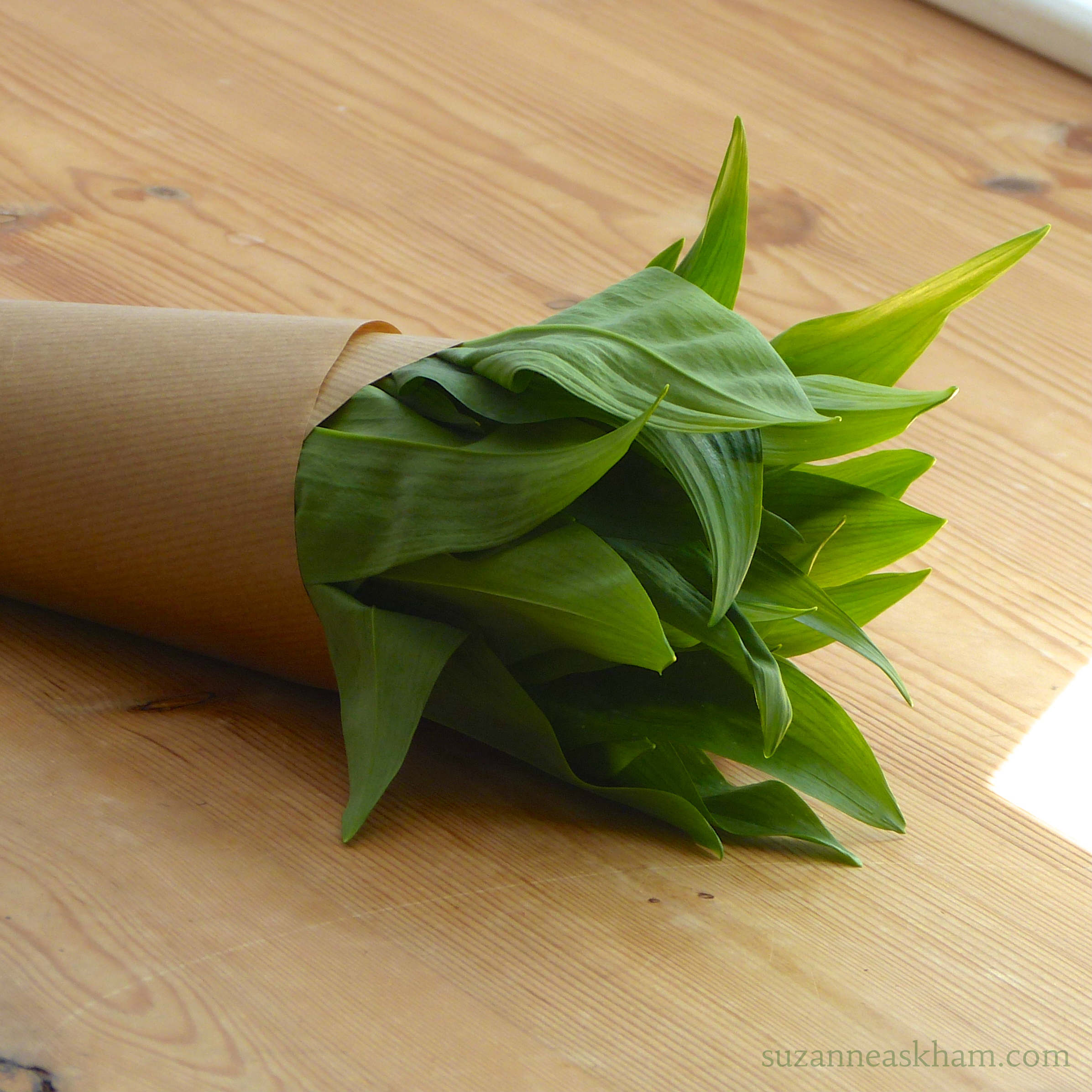
Wrap some wild garlic up in some brown paper and write some simple instructions on the paper. As gifts go, it’s a definite talking point, and you may even be introducing someone to a great spring ingredient. A jar of wild garlic pesto is another popular foodie gift.
Bask in the health benefits
Wild garlic is antibacterial and antiviral, and of all the allium family it is particularly good at lowering blood pressure. So it’s helpful for your immunity and your heart.
A rose for hard times
31/03/2015 at 7:52 am | Posted in Uncategorized | 4 CommentsTags: flowers, happiness, healing, inspiration, life skills, meditation, nature, parenting, positive thinking, special needs, visualization, wellbeing
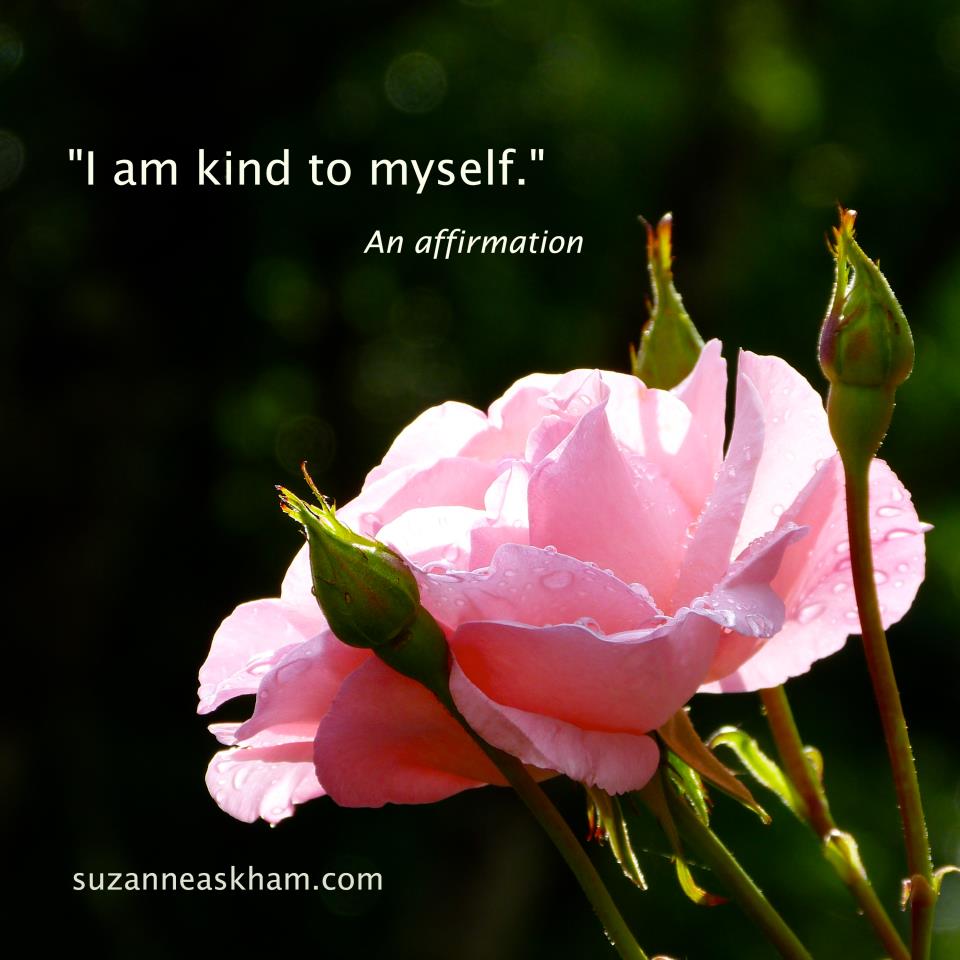
There’s a simple meditative technique we can use in hard times. I call it the Rose Meditation. You can do this anywhere: cleaning the house, ploughing through work, undergoing medical treatment, in a high-voltage meeting….
All you do is this: focus, in your mind’s eye, on a rose. The example shown here was photographed after rain, in the sunshine of the Dordogne.
Picture the feather-light, velvety smoothness of the petals. Imagine yourself miniaturised, resting between the scented petals as though they are the softest bed in the world. Breathe in their heavenly fragrance.
Notice the variations in colour between the inner and outer petals. Absorb the beautiful colours with every cell of your body.
Touch the raindrops; taste their sweetness.
Explore the petals, going inward towards the nectar, and outwards again towards the sun and fresh air.
Do this visualisation any time you feel the need. The rose contains powerful therapy, and simply thinking about it in this way can be soothing, and healing.
Can calm thoughts create a calmer life?
28/05/2014 at 5:59 pm | Posted in Uncategorized | 7 CommentsTags: gratitude, healing, life skills, meditation, mindfulness, personal growth, Spirituality, wellbeing
In a couple of weeks’ time, I’m running a meditation workshop on The Healing Power of Calm. A few months back, I decided to be rather organised. I decided to meditate regularly on the word ‘calm’ for 30 days. There was a question I wanted to answer. Could meditating on the word ‘calm’ actually create a calmer life for oneself? Here are some extracts from my diary.
Day 1. There begins to be a sense, with every out breath, of every cell in the body releasing stuff it has been hanging on to: letting it go. No longer trying to control, hold on or sit on top of stuff. Just letting it go… Outside, wood doves coo and blackbirds sing, and the mild winter air feels fresh and sweet.
Day 2. I realise that the cells as I visualise them are faithfully taking on the colour of the air outside. Today it is that time just before dawn, so my cells are night-dark, with early glimmerings of light.
Day 4. It seems to me that each day is like a mandala: a circular or perhaps spherical pattern. The mandala begins at the very centre of me with a seed thought: ‘calm’. And as the day and the mandala expand, the seed’s qualities of calm permeate and manifest. This happens in ways that perfectly reflect my seed intention.
Day 5. Now I understand that what has stood between ‘calm’ and me is a need to control. I have been trying to control life itself by building a house of cards, to protect those I love, and myself, from the inchoate chaos that lies beyond all things. Yet there is only one thing that can save me: I need to surrender. I cannot hold back chaos. That is impossible. Instead, I need to step into the abyss, with a sense of trust. As I realise this, my whole body relaxes. A tingling makes itself felt at the top of my head. I feel myself beginning to grow, like a flower. But not too far, not yet. And the moment of growing passes, and is gone. But I have glimpsed it.
Day 6. After yesterday’s brief sensation of surrender, today’s meditation brings sadness – a sense of regret, of what might have been. It feels good to let the emotions flow. I realise that is all I need to do: let it flow, let it go. I understand that to experience calm, we do need to travel through our bottled-up emotions. There is no other way. Beneath, beyond and through the sadness lies that deep, infinite calm.
Day 13. Things have been busy lately. My son turned 18 (true cause to celebrate: it was never a given). A party. Many overnight guests. A welcome time of celebration and gratitude. I notice, unsurprisingly, that my meditation sessions have been patchy: ten minutes here, five minutes there. When I do succeed in calming my mind, I learn that it is necessary to value oneself in order to maintain one’s calm. If I am constantly available to all, I am present for none, least of all myself. I need to reconnect with the stillness within me in order to make sense of a busy world.
Day 24. I have been able to reach a point where my days do not feel pressured. Many of my commitments seem to have melted away. For example, out of the blue, the school run is now being handled largely by others. This liberates extra hours in my days. Life has become more spacious – a beautiful word. I feel as though I haven’t experienced this since becoming a mother, 18 years ago.
Day 30. I notice that I have become more ordered in my life. I am better at completing one project before starting the next. There continues to be more space in my days, and in the ‘to do’ list in my mind.
For the first time in many years I feel as though I am one with the rhythms of my life and of the wider world – not all the time, but more often.
Conclusion:
In one month, the outer world around me did seem to rearrange itself to reflect the calm that I was focusing on. Some of the changes were initiated by me. But many, such as the lighter school run commitment, were initiated by changes in the outer world. And that change made a big difference!
I notice from the diary entries that just as I was beginning to get real breakthroughs – expressed through the sadness flowing – I got busy. On some level it seems to me that I decided that I had dealt with enough bottled-up emotions for the time being. After that point, the practice felt like more a consolidation of new habits. It felt ok to do that. But I wonder what would have happened if I had, for example, gone on a longer retreat and effectively forced myself to go into the subject more fully. However, the beauty of this daily system was that I could make changes at a comfortable pace. Over all, I liked it a lot. I will do it again, perhaps soon.
PS The pebbles photographed above were three that I picked up on Brey Beach on the Island of Alderney last summer, and placed on a window sill. I have discovered that calm lies in such simple, sunlit moments.
Website Built with WordPress.com.
Entries and comments feeds.
 Suzanne Askham