Avebury vision: gateway to the Universe
01/09/2013 at 9:56 pm | Posted in Uncategorized | 10 CommentsTags: Guidance, healing, Intuition, meditation, psychic development, sacred site, Spirituality

John Wilding lives with his family in the centre of Avebury Stone Circle. It must be a little like living in a fairy tale, full of myth and magic. Do you know Avebury? It’s a picturesque Wiltshire village which contains the largest stone circle in the world. (Or maybe, even, the stone circle contains the village).
John runs the Henge Shop, which is full of delightful mystic gems and esoteric books. It’s a hub for spiritual travellers from all around the world.
To help the visitors, John is setting up a new website, to be called Visit Avebury. Last week he asked me to write 200 words on sacred sites and meditation for the new website. “I’d love to,” I emailed back.
It then occurred to me that I can’t remember the last time I meditated at Avebury. How can that be? I only live 15 minutes’ drive away. So I decided to get up early at the weekend and do my usual morning meditation there, within the circle…
First, I share a quick breakfast with my nine-year-old daughter, who usually loves a trip. She wants to know why I am going to Avebury. She doesn’t look impressed when I explain.
“Are you definitely going to meditate at the stones?” she asks.
“I am.”
“Then I’m definitely not coming,” she decides.
I smile. It appears that my daughter has just started to understand that parents can be Seriously Embarrassing.
As I walk down to the garage, I happen to glance into our front yard. I see the words ‘hope’, ‘joy’ and ‘love’ chalked onto the stone slabs in a childish hand. I smile again. Maybe she and I are not so different after all.
At Avebury, I walk over to my favourite part of the circle, the quieter north semi-circle. There are no people here, just sheep. I go up to several of the stones and place the palms of my hands against their rough surface. It feels like a form of greeting, a ‘signing in’ as it were. I study the patterns of rock and lichen. I am tuning in.
I notice that I am feeling distinctly light-headed, and the feeling persists.
Carefully, I choose a stone in the outer circle to sit by – then walk to an entirely different one. I sit on the ground and lean back. The stone supports my back so well, it almost feels soft.

The sun is warm in front of me. The stone is cool behind me.
A gentle wind brushes a few hairs against my face. I hear wood pigeons cooing placidly high in the trees.
I decide to do a listening meditation. Simply breathe, and listen, and feel, and listen.
Meanwhile, my mind has decided to do its bit to unlock the mysteries of the circle. No one really knows why Avebury Stone Circle is here, and there are countless theories. My mind is intrigued by the fact that there are two smaller inner circles within the outer circle. Within the best surviving inner circle, near where I’m sitting, there are two giant stones which many people call a female and a male stone. Guess which is which…
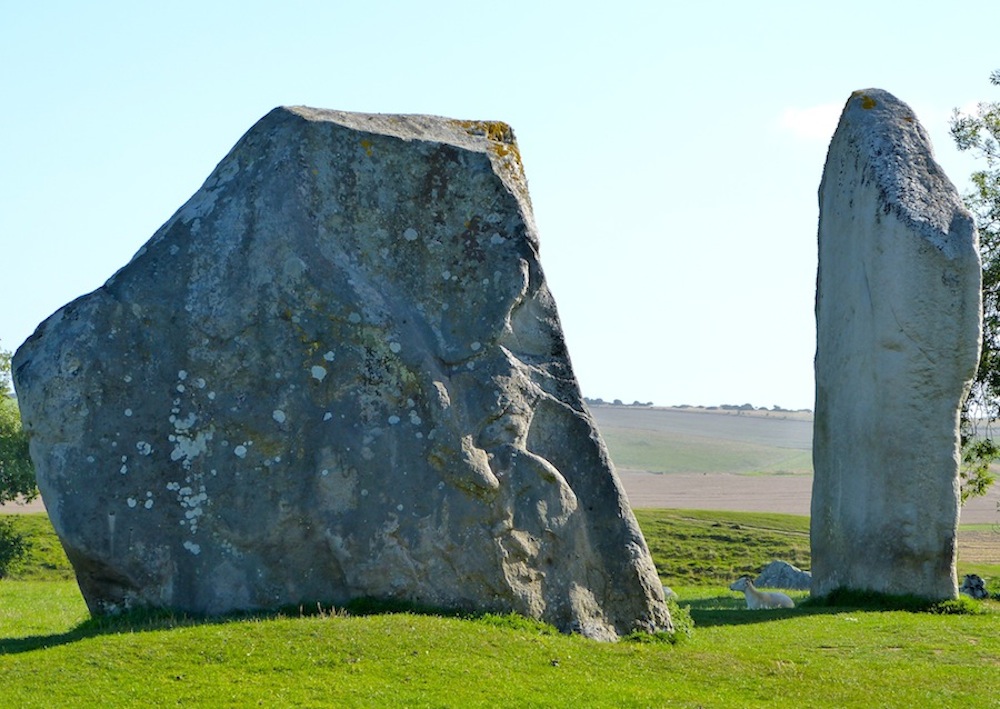
And then I remember that I am here to meditate. I am here to breathe, listen and feel…
Maybe, my mind points out, the stone circle is a Neolithic depiction of Yin and Yang? All physical matter is composed of binary opposites: sun and moon, male and female, hot and cold and so on… surely Avebury is a beautiful representation of that?
And then I remember, once more, that I am here to meditate…
The area around my heart begins to feel warm: a spreading, pleasant glow.
It’s then that I notice that a particular, unusual word keeps popping up in my mind:
“Locus. The circle is a locus.”
Just in case there is any doubt, the voice repeats itself.
“Locus.”
And then… it happens.
I hear these words:
“It is not the stones themselves that matter. It’s the spaces in between. “
Without any warning, there is a whoosh!
I see a gateway to the All That Is. The stones are the gateway. Through them, I can see the Universe.
And on my right side, between the stones, laughing, I can see women, very like those I have seen before. Maybe they are the same. Natural, lean and bare-limbed, they are laughing at me, though not unkindly.
“At least you are beginning to get it,” they are saying.
And then I am through the gateway and I am dancing between the particles of matter.
I am bigger than the stars and smaller than the atoms.
My previous light-headed feeling has gone, because I am now in the space in which I am meant to be. This is my normal state of being, I realise. The rest is just a crammed up, box-like dream.
This is real life. This is reality.
I am in bliss.
I am bliss.
There is only bliss… bliss stretching out to infinity….
Gradually, as if from above, I become aware of the pattern of the stones again. I understand now how they act as a locus. The circular structure is helpful for returning back to your body.
We can think it, perhaps, as a Neolithic landing pad for the soul.
And then I am back again, sitting on baked bare earth, the sun on my face, cool stone behind my back. My heart area still feels pleasantly warm and glowing.
I am happy.
I return home via Silbury Hill, the tallest prehistoric human-made mound in Europe.
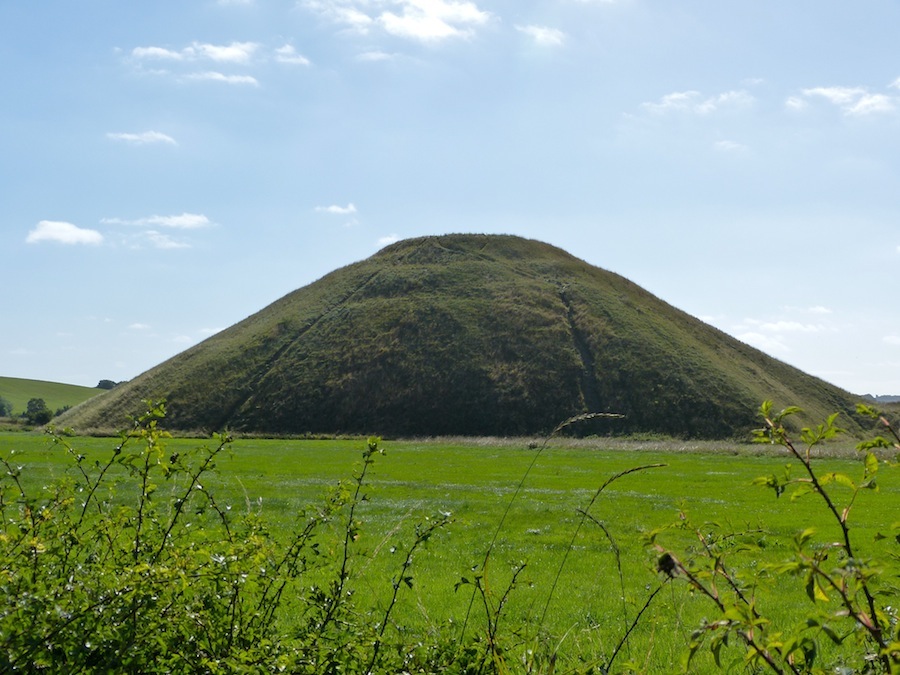
In my psychically open state, I can see a man directing others in front of a younger and smaller mound. A wise woman, well-regarded, is behind him. She is in the light. Younger men are asking why they are building up the sky.
The old man says, “It will remind them.
“The time of forgetting will come.
“The time of forgetting is necessary.
But then, the time of remembering will come. “
This is fascinating, and I want to stay, to learn more. But I am feeling a growing pressure. At home, my family are waiting for my return. So Silbury must be a story for another day.

What did you do today?
07/07/2013 at 10:36 pm | Posted in Happiness, Inspiration, Nature, Uncategorized | 11 CommentsTags: happiness, healing, inspiration, meditation, nature, positive thinking, Spirituality, wellbeing
 “What did you do today?”
I breathed. I lived. I put my bare feet on the earth.
“Yes, but what did you do?”
I’ve just told you what I did.
“What else did you do?”
I had a laugh with ones I love. I ate almonds under a wild cherry tree. I breathed the sweet scent of a pure white rose.
“Sounds nice. Anything else?”
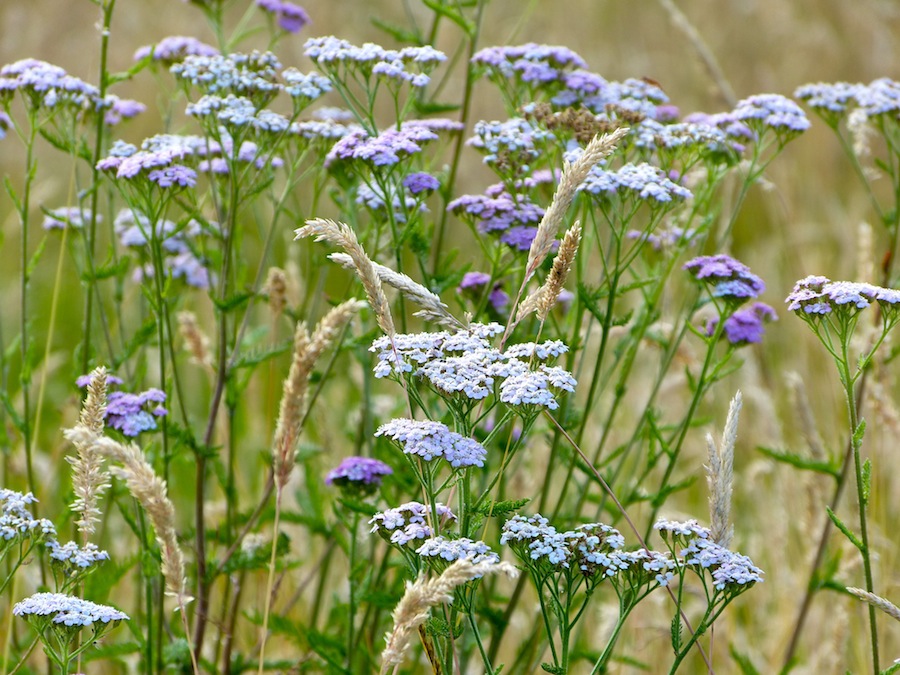
Yes, now that you come to mention it, I gathered yarrow under a cloudless sky. I touched a silver birch whose leaves were shimmering in the breeze. And I watched the red sun go down, while a handsome man held me close…
That’s what I did today. And what about you; what did you do? Don’t tell me the stuff you didn’t really care about. Tell me what mattered to you.
The healing power of swimming
16/03/2013 at 4:49 pm | Posted in Exercise, Happiness, Inspiration, Uncategorized, Wellbeing | 6 CommentsTags: affirmation, healing, inspiration, positive thinking, self-development, visualization, wellbeing
 A few days ago I went back to my local pool after a long absence. As I glided through the water, reflections of blue sky danced over the surface. I could feel myself relaxing, letting the water support me. And I remembered the joy of swimming.
We know that water can be kind to the human body: whatever the level of fitness, water provides a small but significant resistance that increases the overall benefit.
Less talked about, it does something equally interesting to the psyche: it connects us an earlier, more aquatic stage of life: the womb… and even, more distantly, our evolutionary past.
When I am in water, I feel different. The hard angular surfaces of modern life give way to a fluid world in which I feel safe, held, and simply more inclined to go with the flow. There is something inherently fun about the experience, and I feel zingy and cleansed.
As I swam, I started an internal chant, and this is how it went:
“I am beautiful… I am one… I am beautiful”… I am one…”
Each phrase corresponded to a swimming stroke. When I reached the end of the pool and turned around, the chant had become: “I am beautiful… I am two… I am beautiful… I am two…”
With each new length, the number went up. I was counting lengths, and throwing in an affirmation too.
And then I realized I was actually imagining myself at the age of one, two, and so on. Not only that, I was feeling the dominant emotions of that age, in connection with beauty and self-worth. As I continued to swim up and down the pool, the happy self-belief of young childhood gave way to the huge, wobbly uncertainty of my teens, and a growing feeling of confidence in adulthood. As I remembered sad times, it felt as though the water was washing the pain away.
Effectively, I was healing each stage of my life’s journey with the help of water, and affirmations. My adult self was sending love and support back through the years to all my younger selves who were still there, it seemed to me, in the memories held within my body. The process felt deeply restorative and I recommend it to you.
Next time you’re in the pool, you might like to affirm “I am beautiful… I am one” and so on, all the way through your teens, twenties – all the way up to your present age. You can spread the exercise over more than one swim session, if you choose. But when you have swum a length for every year you’ve lived, you can start all over again with a new word. “I am strong”, and “I am well” both have great healing potential. What affirmation would you choose?
The healing power of envy
22/02/2013 at 11:17 am | Posted in Healing, Inspiration, Uncategorized | 12 CommentsTags: healing, innermost feelings, inspiration, life skills, positive thinking
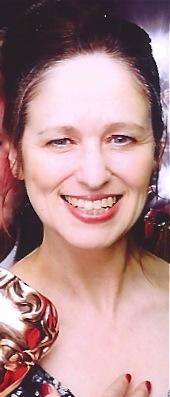 Earlier this month I was lucky enough to tread the red carpet at the BAFTAs – the British version of the Oscars. I was there simply because my partner was invited. However much I like to think of myself as immune to star-spotting, I am not. It was huge fun to share a rain-soaked red carpet with George Clooney, Ben Affleck, Dame Helen Mirren and Marion Cottillard, among many others. It was fun when guests grabbed a spare BAFTA trophy and we posed for the camera. And sharing the photographs afterwards was all part of the pleasure.
A week later, I was sitting in my Wiltshire studio, facilitating a meditation group. We were focusing on the theme of forgiveness. After half an hour of silence, we swapped notes. A writer friend in the group, Claire, said something endearing. “I found it very hard to focus on forgiveness at the beginning of the meditation, because I just kept thinking how envious I was of Suzanne for going to the BAFTAs,” she confessed.
Everyone in the group laughed – it was a sweetly funny moment. But afterwards, it got me thinking.
The truth is, Claire and I are alike. Whenever I hear of someone’s good fortune, there is often some envy mixed up with delight. I am happy for them, of course. But there can also be a sense of being left out, like not receiving an invitation to a friend’s party.
Envy is said to be one of the Seven Deadly Sins; it’s an emotion we’re traditionally not supposed to feel. But we do feel it, so there must be some purpose to it. What purpose does envy serve?
After the meditation session, I decided to watch out for my next experience of envy, to see what I might learn. I didn’t have long to wait: it arrived with the morning post. Among the envelopes there was a programme for the upcoming Mind Body Spirit Festival in London. My eyes went straight to the workshops, and straight to the names of the facilitators. And then, I felt stirrings of envy.
The envy could only mean one thing: I would like to run a workshop at a large event like the Mind Body Spirit festival. But mixed up with the envy were stomach-churning feelings of inadequacy and fear. There was a mouse-like element to the fear that seemed to be saying in a firm yet squeaky voice: “It’s safer to stay at home.”
The wisdom of envy
I focused in on the envy again. And deep within its energy I found these words: “Remember who you are.” And then I realised that the spiritual purpose of envy is to help us to stay on our own unique path. That path does, for sure, take us out of our comfort zone. It may be a hard path, and the only way we can do it is one step at a time. I realised that envy was telling me to quit dreaming and start doing what was required – one step at a time.
It occurred to me that many of the speakers at the Mind Body Spirit Festival workshops have written books on their subject – some of my envy lay in that direction. I am indeed in the process of writing one, on the brand of intuitive meditation that I share with others – but progress is slow. And then I realised that I need to schedule regular, daily time to my project. It’s the only way I will complete it.
In a few weeks’ time I’m doing a talk on intuitive meditation in a local town. Someone has mentioned another great local group I might get in touch with. Each small step leads to the next. With the divine help of envy, I’m starting to follow my bliss.
Now it’s your turn. What do you, perhaps, feel envy about, and what might envy’s message be for you?
The real meaning of home
28/09/2012 at 3:02 pm | Posted in Happiness, Meditation, Nature, Wellbeing | 12 CommentsTags: Guidance, happiness, healing, inspiration, Intuition, meditation, nature, pre-history, Spirituality, wellbeing
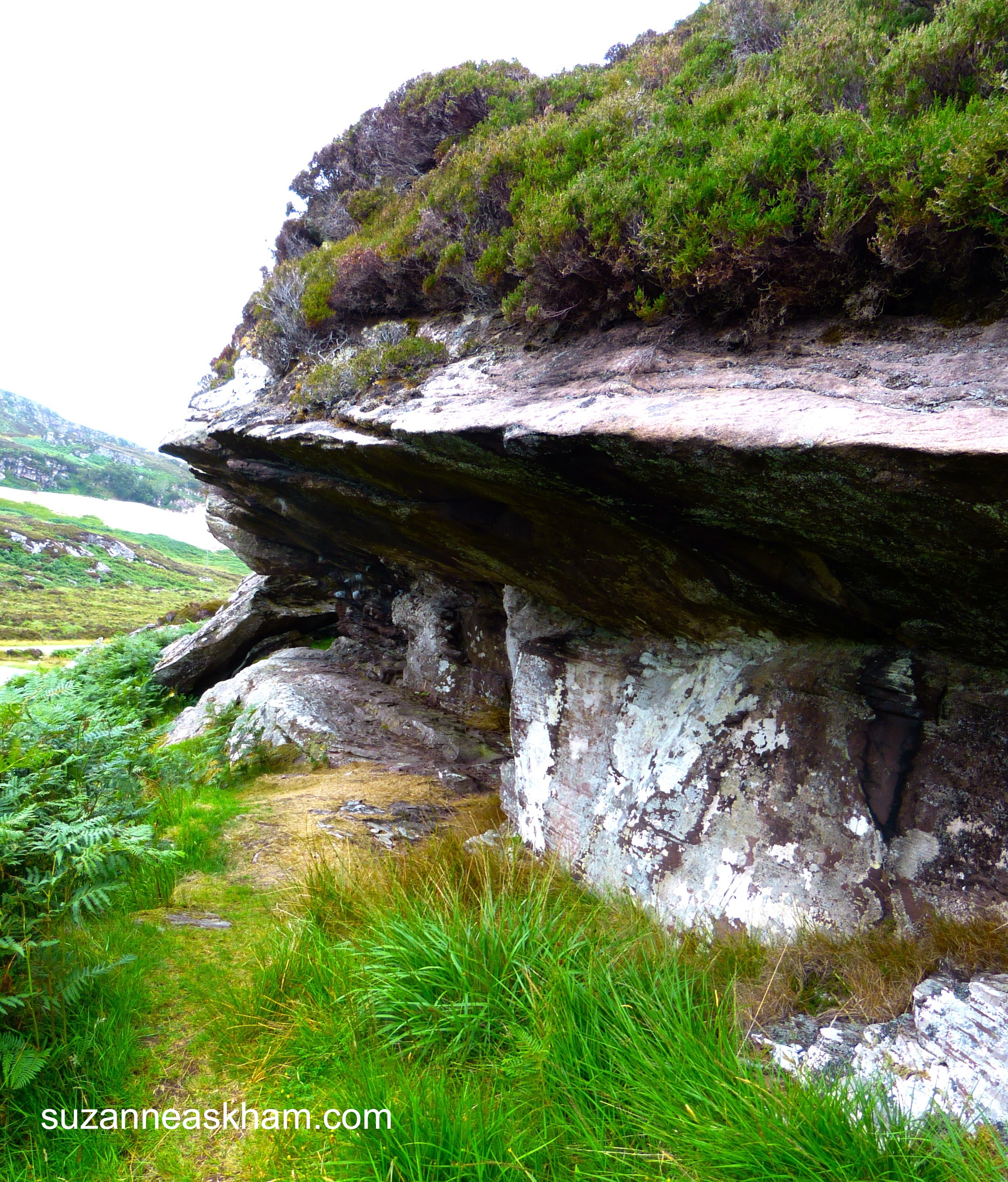 In our distant nomadic past, home was where we settled for the night: it was shelter, a place we lay down – a place of rest. Recently, on the West Coast of Scotland, I came across a perfect example of home at its simplest. This stone outcrop at Sand provided shelter for our ancestors nearly 10,000 years ago. It was their bedroom, and also their kitchen: there is evidence that they collected limpets from the sea shore and boiled them up in water before eating them.
My daughter led me up and onto the roof of the shelter. “There’s a place I’ve got to show you,” she said. “You’re going to love it; it’s really special.” And she was right. On the heather-clad roof there were several broad stones: slabs of natural paving. One, in particular, was a perfect meditation seat. It was easy to sit there, gaze out to sea and simply let your thoughts drift into that in-between place – the other realm.
When I did so, I found myself talking to the inhabitants of that time. We weren’t using words, exactly, but we were communicating. To my surprise, I found they were admiring my build: the fact that compared with them I looked immensely well fed. I was aware of their lightness and slimness and superb fitness, and found myself wishing that I exercised more.
Self-acceptance
They were surprised at my lack of self-acceptance on this matter. They reminded me of the goodness of Mother Earth, or the Mother as they called her. She provided what we needed, and it made no sense to disparage her gifts. Abundance was a blessing. Each of us was a creation of the Mother. Each of us was divine. How could we criticise ourselves in that context? Criticism was utterly meaningless.
I actually had the sense they were laughing at me, as if I were a child who didn’t quite understand. And yet there was also respect. It was as if they saw wisdom in me, as I saw wisdom in them. And the wisdom wasn’t individual wisdom; it was collective. We all shared knowledge… and this knowledge was infinite awareness.
And then I understood the true meaning of home. It is unconditional love, and it is acceptance. When you are at home – truly at home – you are loved, you are accepted. During the many times we find ourselves on our own, we can still feel unconditional love and acceptance towards ourselves. And when we are with others – however distant in terms of culture, or the passage of time – we can feel that exact same connection. As I did on that rock.
Down below, a car horn was sounding. I was being summoned back to the 21st Century. I clambered down the heather slopes, sea breeze in my hair, aware that the bliss I was feeling is our natural birthright.
It’s your birthright; it truly is.
The good nurturing guide
09/03/2012 at 6:48 pm | Posted in Happiness, Healing, Parenting, Wellbeing | 9 CommentsTags: healing, life skills, nature, positive thinking, wellbeing

The author and youngest child, in baby-wearing days.
‘Nurturing’ is a very ancient word, and we all know what it means… don’t we? It’s about being loving, caring, helping young ones to grow and develop. But remove centuries of common usage, and we get a much simpler concept. This is it.
‘Nurture’, ‘nutrient’, ‘nourish’ and ‘nurse’ all come from the same ancient Proto-Indo-European root: ‘nu’, or ‘snu’. That root means, quite simply, ‘to flow, to let flow, to suckle’. The Sanskrit word is very similar: ‘snauti’ means ‘she drips, gives milk’. The ancient Greek is ‘nao’, meaning: ‘I flow’.
So to nurture means, literally, the act of giving milk to an infant. That is it – nothing else.
Why does this matter?
When you give milk to an infant, you give the milk, and that is it. True, you also look after the infant – the love and practical care you give them is extraordinarily important, and makes the difference between thriving and just surviving. It is right that we include that sense of loving care within our modern definition of nurturing.
But the actual act of giving milk – the ‘nu’ or nourishment – is one of letting go. The milk is an unconditional gift. You don’t expect the infant to do anything in particular with it. You anticipate that they will grow. But the way they do this is not in your control. Their own particular combination of genes and psyche will blend with environment to create a unique human being.
Nowadays, arguably too often, the concept of nurturing includes a sense of sculpting and shaping the young individual so that they grow up to be a properly socialised human. Parents feel a sense of responsibility to get this right. Well-meaning manuals and playground conversations collude to create the pressured sense that parents have an awfully big role which we are highly likely, regularly, to get wrong. As the English poet Philip Larkin put it so memorably in This Be the Verse: “They fuck you up, your mum and dad/ They may not mean to, but they do/They fill you with the faults they had/And add some extra just for you.”
These past weeks I’ve been working on the theme of nurturing with students and clients in my meditation studio. The pickle humans collectively get ourselves into over this word has become obvious to me. I have found two basic sub-themes.
One is a sense of not having being nurtured – emotionally and perhaps also nutritionally – as a child.
The other is a well-meaning and futile impulse to shape and sculpt young people who are way past the infant stage.
If we take ‘nurturing’ back to its original meaning, of giving milk – or sustenance, if you will – to an infant, then these two themes of profound human disappointment take on a different colour.
When we understand that the sustenance we received – flawed though it may have been – was an unconditional gift, then we realise that our own growth and flowering is ultimately up to ourselves and the laws of nature. We may choose to care for those aspects of ourselves that have been frozen in childhood patterns of trauma, want or need, and bring them to a more enlightened and happier adult reality.
When we understand that other adults do not need to be nurtured by us, it lifts the most enormous burden from our shoulders. Instead of trying to fix or rescue others, we give them the respect of one grown-up for another. And frequently we find that they do flower as a result of that respect.
Nurturing is a simple act that happens in the present moment, and then is gone. Once we have given it, we no longer own it.
Isn’t that a relatively carefree feeling?
Three-minute healing circle
10/12/2011 at 3:48 pm | Posted in Healing, Meditation, Uncategorized | 14 CommentsTags: happiness, healing, inspiration, meditation, Spirituality, wellbeing
 Ideally, do this after a daily practice of meditation, when the mind is still and calm, and the body rested, yet alert.
Sit comfortably, with your eyes closed and your back straight, in a peaceful place where you won’t be disturbed. Take a few deep breaths, releasing any thoughts, knowing this time is for you, and for those who may wish for your help…
First minute: create the healing circle.
As you breathe in, picture a white light in the centre of you, glowing and sparkling brightly, like a diamond. As you breathe out, picture the white light radiating outwards from your hands, creating a large white circular space in front of you: a healing space. As you continue to breathe out, send out an invitation to all who may wish for healing, to enter the circle. Each time you breathe in, see the diamond at the centre of you glowing and sparkling ever more brightly. Each time you breathe out, see the healing circle in front of you shining more and more brightly. Continue to send out a general invitation to all who may wish for healing.
Second minute: maintain the healing circle.
As you breathe in, and as you breathe out, continue to maintain the shining white healing circle in front of you. See people enter the circle, and stand in it, soaking up the healing white light. You may recognise people; you may see strangers; you may see a mixture of both. You may see nothing; just trust in the process and continue. The people do not see you. They simply approach the circle and stand inside it, soaking up the light. As you continue to breathe in and out, be aware that the whole of you, too, is glowing and sparkling with healing white light.
Third minute: close down the healing circle.
Send out a thank you to all who have entered the circle, and watch them begin to leave. As you continue to breathe in and out, gradually let the light settle down, fade, and return to normal levels. As it does so, the last people leave the circle, and then the circle itself vanishes.
The minutes don’t have to be exact. They’re just a rough guide.
Recipes: elderflower cordial, elderflower tea
26/05/2011 at 10:01 pm | Posted in Uncategorized | 3 CommentsTags: healing, Health, nature, nature recipes, naturecraft, wellbeing
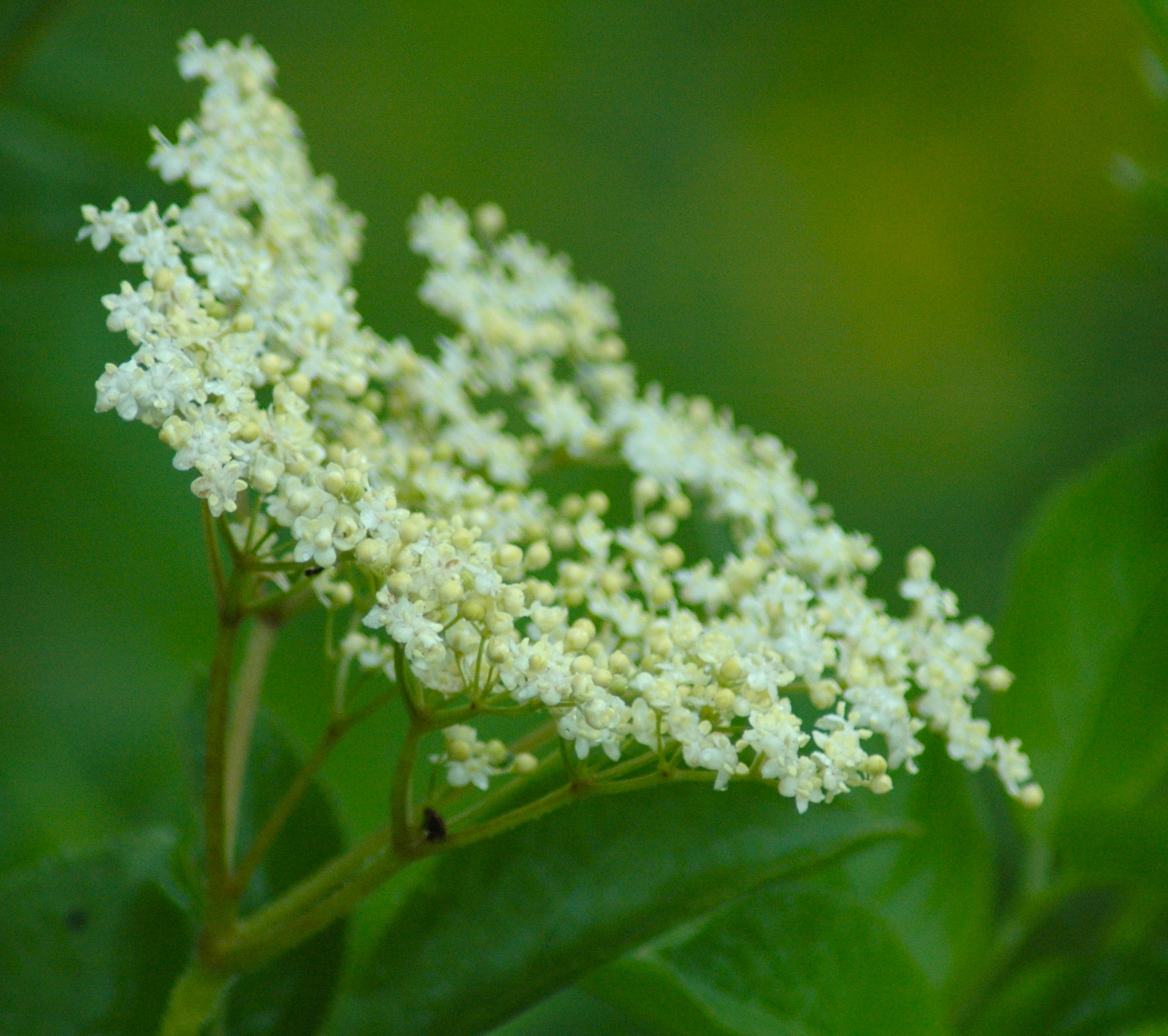
Elderflowers: fragrant and good for you
We are busy gathering elderflowers for cordial right now. The fragrant flowers are all around us in the hedgerows, and easy to collect. Each head is a frothy summer’s bowl of wellbeing.
Elderflowers have been used for centuries for their health benefits. Elderflower water is mildly astringent and has traditionally been valued for the complexion. Make your own fresh elderflower toner by steeping a head or two of the fresh flowers – remove the pungent stalks first – in half a cup of boiled water, then straining. Apply on cotton wool, or spritz on to your skin. You can use it over a couple of days if kept in the fridge.
Elderflower cordial is an uplifting summer tonic – delicious with still or sparkling water on a hot summer’s day. If you have a cold or flu or feel run down, a hot drink of it in the evening is comforting and healing. Elderflowers are diaphoretic – they help the body during a fever by inducing sweating.
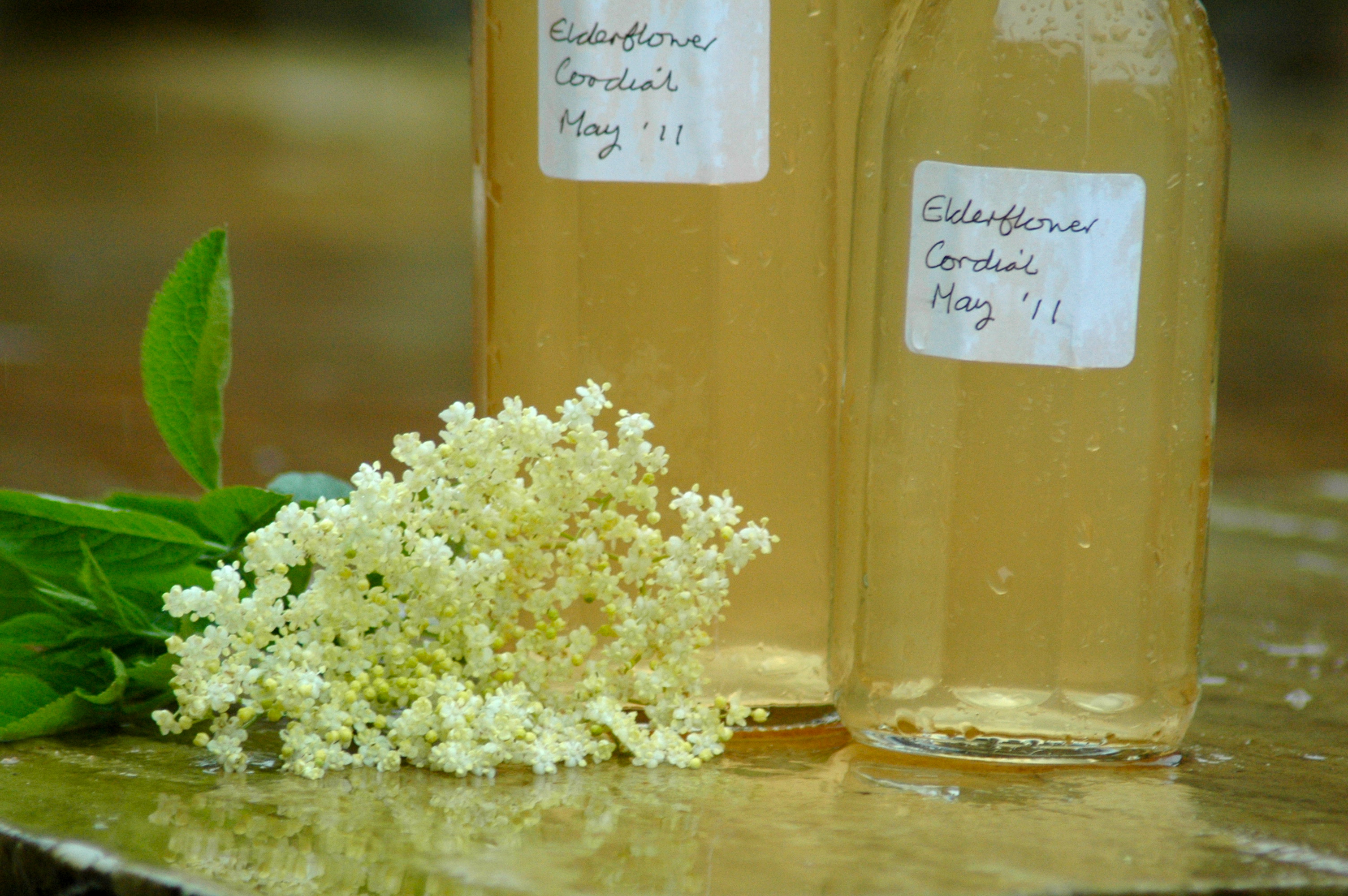
The recipe: take around 25 elderflower heads, with the stalks removed, and add them to a big bowl in which 1.3 kg of sugar has been dissolved in 1.8 litres of just boiled water. Add a couples of lemons, sliced, and a couple of oranges (or limes, for a more sharply refreshing summer drink). We mix the whole thing up, cover and leave for 24 hours.
After 24 hours, strain the liquid through a muslin cloth. It’s ok to give the cloth a good squeeze to get out more of the juices. Then decant into clean, sterile bottles (You can sterilise bottles by putting them through a dishwasher, or by gently simmering in a big pan of water.) The cordial will keep for at least a month in the fridge. I have kept it for up to six months, though it usually gets drunk long before that! You can also pour it into washed plastic bottles – leave space at the top as it will expand once frozen – and store it in the freezer.
We also gather the flowers to make herbal tea, which has all the health benefits of cordial, without the sugar. Discard the thick stalks, and leave the flower heads to dry. When dry, crumble the flower heads, discarding more stems as you spot them and place in an airtight container. This will keep for a year, until the next elderflower harvest. To make your tea, put one teaspoon of flowers in a cup of boiled water, brew for three to five minutes, then drink. You can add a slice of lemon or orange and maybe a spoonful of honey…. You can also make fresh elderflower tea by steeping some of the florets (without the thicker stalks) in hot water for around 5 minutes.
Website Built with WordPress.com.
Entries and comments feeds.
 Suzanne Askham