This is what I learned, living in an Intensive Care Unit
23/05/2016 at 7:21 am | Posted in Uncategorized | 5 CommentsTags: healing, intensive care, life skills, meditation, mindfulness, personal growth, special needs
This post has also been published on the Huffington Post.
Recently I had the rare and shocking privilege of living in an Intensive Care Unit, or ICU, for three months. I was not a patient, nor a member of staff. I was there because my teenaged son became critically ill. Tim’s learning difficulties meant that he needed his dad or me to be with him virtually all the time. I stayed every night for the first month, and then around five nights a week thereafter.
It had happened with frightening speed. We had been at home, about to eat supper, when Tim collapsed with breathing difficulties and an ambulance was called. Tim’s resourceful younger sister speed-packed overnight bags while the paramedics administered huge amounts of oxygen.
By the time we reached the hospital, Tim was drifting away. He was put on a ventilator, then transferred to the ICU. Tim’s dad and I sat in the waiting room. Fear. Waiting. Fear. And so, although I didn’t know it then, our three-month sojourn began.
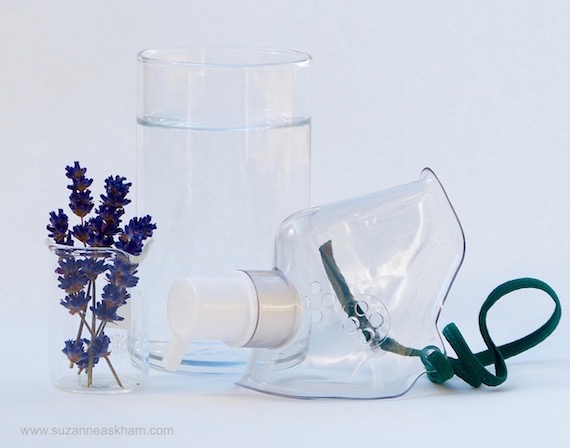
In this life and death situation, my choice, as a mother, was binary. I could choose love or fear. Love meant seeing the good in every particle of this unwanted experience. Fear meant resisting it. Fear would drain me of energy. Love would enable me to channel all my energy into helping my son.
I resolved to choose love. That didn’t mean I wasn’t frightened. It’s just that at every point of awareness, I chose love. I decided to view the experience as a retreat, in which I would learn from the kindness of nurses and the alchemical wisdom of doctors.
During those three months, I learned that crisis means looking after yourself as well as doing your best to help others. Specifically, I learned the following five insights.
1. Appreciate and care for your body.
Of the three groups of people who passed through the ICU – patients, relatives and medical staff – the fittest group were the medical staff. They drank lots of water. In their spare time, they went to the gym, did yoga, meditated, cycled, danced, played tennis, rode horses, ran marathons…. They weren’t obsessive. Chocolate and crisps were regular treats, especially during long working shifts. However, there was a belief that exercise was important, and that it might help them to avoid ending up in a hospital bed on life support.
2. Pause, breathe. Sit still in silence every day.
Meditation can be done among beeping machines, and it calms turbulent emotions like nothing else. Even in extremis, the mind can become clear and calm, like a deep mountain pool.
The first night, sitting with my son, I found it helpful to breathe in a silent ‘I am here’, and breathe out a silent, ‘now’. It enabled me to ground myself in the shock of this new situation – to accept it. Consequently, I became a calmer presence for Tim.
Meditation enables us to pause before we blindly follow external voices of authority. I felt that, deep down, Tim resolutely believed that he could recover, even though the medical staff had little hope. So his dad and I chose to support him assertively in his belief.
3. Give healing when you are drawn to do so.
Call it what you will: healing, prayers, love. Just do it. You’ll be in good company. A recent Gallop survey showed that nearly 90% of Americans have prayed for healing for others. A quarter have practised laying on of hands. Every day in the ICU, I sensed the presence of major disturbances in Tim caused by pain, drugs and fear. When I consciously directed love to him, it seemed to me that the disturbances lessened. At the same time, I sensed that many other people were praying for him and sending healing.
I massaged my son’s limbs with lavender and sweet almond oil, and visualised golden white light entering my son’s inert body, energising and healing every cell.
4. Choose uplifting language.
On Day 3, a time of minimum hope, I drew a good health mandala picture for my son, with encouraging words among brightly coloured flower petals and leaves. I wrote a note below it: `Deep down, you are healthy and well, and have the energy, determination and love that you need to thrive. I love you very much, always’.
5. Adopt a mindset of wellness.
As Tim thankfully began to recover, he was keen to leave his room and explore the hospital by wheelchair. We visited the maternity ward’s pretty garden. We went painting in the children’s ward. We danced with dementia patients. We circled a small peaceful lake in the grounds. One day, ten family members went for a walk around the hospital, with Tim frail but determined at the front. We also discovered a rehab gym, and Tim developed a reputation among the doctors for visiting the gym every day.
All these deeds created an impression around Tim that he was on his way to being fit and well. The collective thinking around him changed, from scarcely any hope to cautious optimism. In turn, that spurred him on to become more adventurous. In short, he was acting like a young man who, despite his disabilities, was used to leading an active, even sporty life.
On Day 96, Tim was discharged from hospital. Our family was so thankful. I now understand that crisis is a natural part of life. Sooner or later, stuff happens. Our challenge is to choose those moments, as much as the long calm periods in between, to live life to the full – however long it lasts.
To be a gardener of the mind
05/05/2016 at 10:17 pm | Posted in Uncategorized | Leave a commentTags: Guidance, life skills, meditation, mindfulness, nature, personal growth, s
 The Studio garden is warming up. Wild cherry blossoms are opening in the sunlight. Cowslips and primroses are mingling with bluebells and forget-me-nots. There’s plenty of gardening to do, even in this semi-wild space. The earth always brings new insights into nature and human nature.
Today I’m removing weeds to create space for cultivated plants. Weeds are ok. Many are edible: dandelions, bramble, chickweed and nettle are harvested elsewhere in the garden for herbal teas, salads, pies and the cooking pot. Others are beautiful: bindweed throws white trumpet flowers over the hedgerow that separates garden from field.
But I’m not letting any wild plants take over the entire garden. I am choosing where they can thrive, and where they cannot.
This choosing of what may grow and what may not is very like the way we tend our minds.
Thoughts we think habitually are like plants with long, tenacious roots.
Thoughts that are more transient are like annual plants, with shallow roots.
The annual plants are easy to pull up, should we wish to. Chickweed pretty well lives on the surface, and can be scooped up for salads. Annual plants resemble topics that grab our attention for a season, and then vanish.
The most established perennial plants, however, are deeply entrenched. Bindweed and bramble have roots that travel horizontally long distances underground. Horsetail has roots that can grow a full two metres deep. These can be likened to long-held family beliefs that have been handed down through many generations.

We can choose to be gardeners of the mind by doing these three things:
• Become aware of our thoughts and beliefs, through techniques such as mindfulness, meditation, and gardening.
• Witness these thoughts with non-judgmental loving kindness.
• Cultivate the thoughts that make sense, that support and nourish us; let go of the thoughts that don’t.
And then we need to keep doing these things, season after season. That’s how we become gardeners of the mind.
Breathing mindfully the ocean way
08/04/2016 at 6:04 pm | Posted in Uncategorized | Leave a commentTags: Guidance, happiness, inspiration, meditation, mindfulness, nature, wellbeing

I stood on a bumpy shore in Galway, Ireland and breathed in salty cool Atlantic air. Suddenly, my lungs were filled with fresh ocean breezes. Each in-breath came with an excitement of Atlantic energy. Each out-breath took with it a thousand everyday stresses.
In a situation like that, you can’t help but be fully present. My mind wasn’t about to wander, because the experience was so vivid.
All my senses were engaged with savouring this moment. I could taste the salt in the air, feel the wind speed-weaving my hair into maritime knots, see the sunlight dancing through fast moving clouds, breathe in the tangy scent of seaweed, and hear the waves lapping against pebbles. Additionally, the wind was chilling!
The challenge is to breathe equally mindfully in familiar situations – in our everyday life. In fact, this is one of the very best meditations to practise regularly. Simply sit in silence once a day – first thing in the morning is perfect – and focus on your breathing for 20 minutes or so. And notice what you notice.
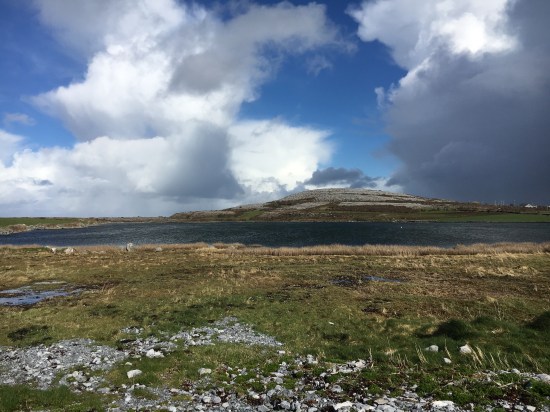
Here are three techniques that can be helpful.
1. Treat every mindful breathing session as though it’s the first time. You are a traveller, newly arrived at this shoreline of your breathing. Witness the air entering you as though it’s the most amazing newcomer in your life. Witness it leaving you like the life-long friend it is.
2. Focus on a particular point: such as the nostrils, the lungs or the abdomen. Notice the sensation of the air as it enters and leaves you. Witness how your muscles expand and contract rhythmically. Mindfulness pioneer Jon Kabat-Zinn suggests focusing on the belly, and likens it to the deeper, slower moving currents of the ocean: “When we focus on our breathing down in the belly,” he writes in Full Catastrophe Living, “we are tuning into a region of the body that is far from the head and thus far below the agitations of our thinking mind. It is intrinsically calmer.”
3. At intervals during your day, whenever you remember to, briefly observe your breathing. When you next feel stressed, make a point of noticing what is happening to your breath. Focus on the belly, as it rises with the in-breath and falls with the out-breath. Sometimes this movement is subtle. In the time you take to witness it, the stress or surface agitation has often lessened. It’s as if that pause creates a tiny gap in the stressfully woven fabric of your life, and loosens every thing up so new options can emerge.
Mindfulness and cupcakes at the Women’s Refuge
08/03/2016 at 6:33 pm | Posted in Uncategorized | Leave a commentTags: International Women's Day, life skills, meditation, mindfulness, mp3, parenting, self-development, visualization, wellbeing
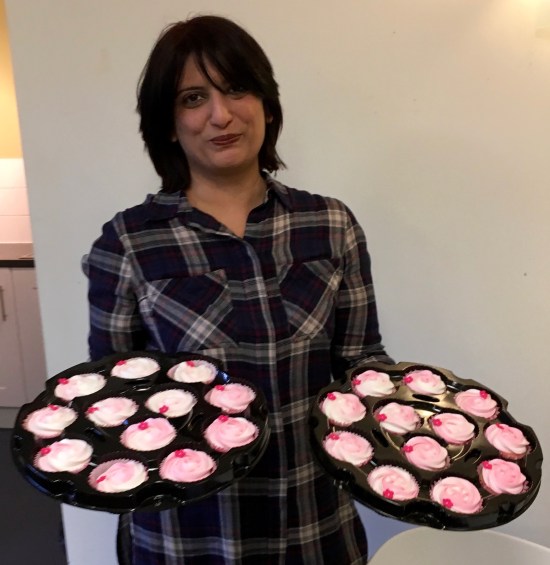
Ghossiya brought the cupcakes, and she came up with the idea too. How can mindfulness help mothers? How can it help young children? She was planning to put her findings into a dissertation for a degree course in early childhood studies which she is soon to complete at Oxford Brooks University.
A group of us – mothers, children, refuge key workers, Ghossiya and I – looked at three principles:
• Be here now
• Notice what you notice
• Be kind to yourself.
We ate cupcakes mindfully, using our senses, and discovered that the experts at this were the young children present. They explored with fingers in icing, and fingers in mouths. What happens, thought one, when you drop an icing flower into a glass of water? (Answer: it sinks to the bottom of the glass, where it stains the water a delicate pink.)
Afterwards, we did a body scan relaxation exercise, focusing on our breath, then toes and feet and legs, and so on, upwards through our bodies. We visualised a golden white light, spreading outwards from our heart, filling our whole body with light, giving every cell the chance to pause, and rest, and renew.
When we opened our eyes again, after the exercise, everyone in the room seemed visibly more relaxed. Even the very young children had noticed the change in atmosphere, and were contented. One was stroking the soft shiny hair of a toddler friend sitting nearby: mindfulness in action.
During our session, we also talked about the fact that mindfulness meditation has been shown to improve health and slow down ageing. And we discussed how a body scan visualisation is ideal for young children, especially at bedtime, to help them to calm and slow down.
Free body scan audio
We discussed how the mums could talk their children through this. Or, if they preferred, they could play the audio that’s available to all who’d like it, through this blog (please just contact me, putting BODY SCAN in the comment box).
Ghossiya shared a cupcake recipe (see below). Cooking, it was agreed, it a great way of being in the zone, along with walking in the countryside, relaxing in a candle-lit bath, doing yoga … and any other enjoyable activity in which we are fully present, using our senses. And if we are ever in any doubt, all we ever have to do is enter the world of a young child. They know how to explore this moment now better than anyone else on the planet. They are not rushing on to the next activity. They are masters of the present moment. We can learn so much from them.
Mindful cupcake recipe
115 g caster sugar
115 g self-raising flour
115 g margarine (at room temperature)
2 eggs (at room temperature)
Any one of the following optional flavourings: 100 g sultanas or raisins; 100-150 g chocolate chips; 1 tsp vanilla extract; 1 tsp cinnamon.
- Set the oven to 150º C/Gas 2.
- Put caster sugar, flour, margarine and eggs in a bowl and mix thoroughly until smooth.
- If using optional flavouring, add to the bowl and mix in gently yet thoroughly.
- Place cupcake cases in a muffin tin and spoon in the cake mixture.
- Bake in preheated oven until risen and golden brown.
Decorate as liked with icing or simply lightly sprinkle with icing sugar though a sieve.
How to visualise during meditation
27/01/2016 at 6:44 pm | Posted in Uncategorized | 7 CommentsTags: affirmation, Guidance, inspiration, meditation, nature, positive thinking, self-development, visualisation, wellbeing
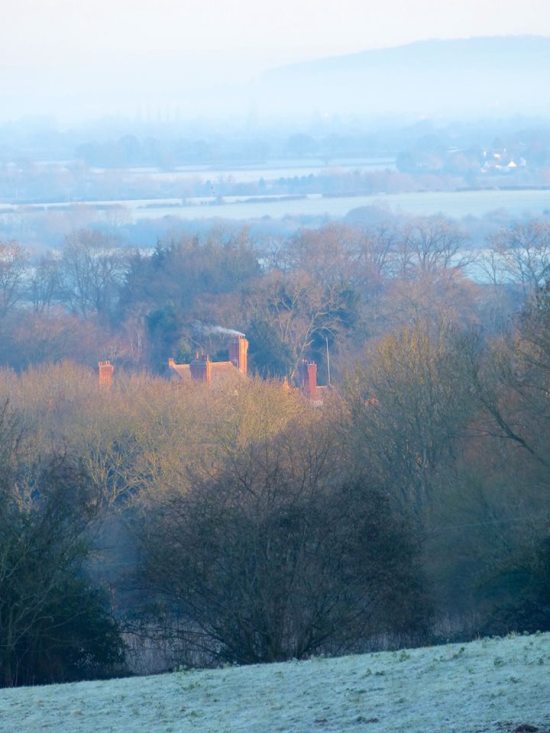
Here is a photo taken on a recent sunny, frosty day…
And here is another photo taken from the exact same spot…
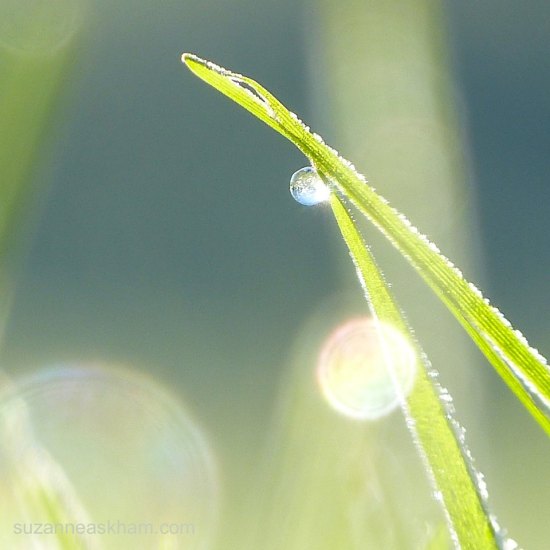
The only real difference between them is that in one, I decided to focus on the big picture. In the other, I zoomed into a tiny, beautiful detail.
Visualisation during meditation is exactly like that. We choose what to think about – focus on – in our mind’s eye. Then we close our eyes and reconstruct our chosen image in our mind.
It’s not always easy. Sometimes it can seem really hard. But if that’s the case, stick with it, as you are building up new ‘muscles’ in your mind. It gets easier with practice.
It helps a lot if you study a real image first…
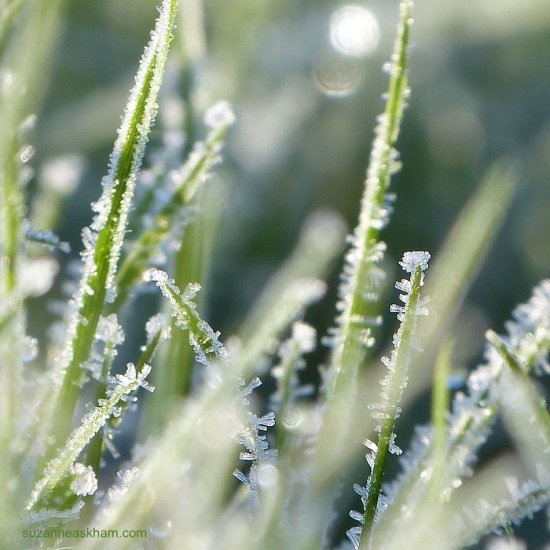
Notice all the tiny details that you can, then close your eyes and imagine them all over again. Pretty quickly, this process can feel calming and restful. This is the first gift of visualisation.
The second gift of visualisation is that you can use it to imagine things you’d like to have in your life. The rambling house in the country; the fulfilling work; the happy family….
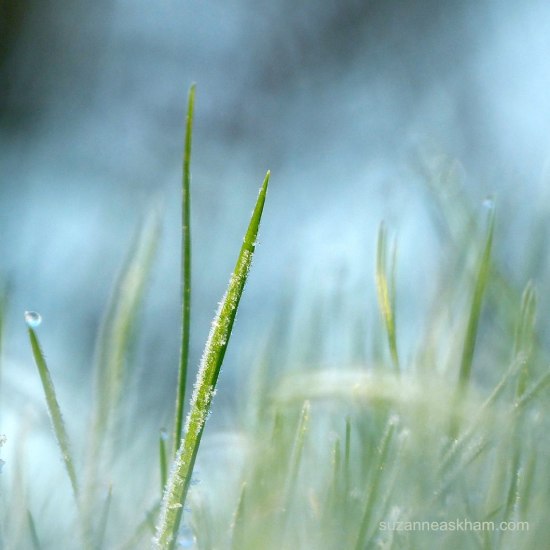
Practise visualisation in meditation because it feels good, lowers your blood pressure, calms and revives you. Then, if you choose, practise visualisation with things you haven’t yet seen, but would like to. Imagine them as though they are as real and detailed as the images on this page. Allow meditative feelings of calm and happiness fill you as you do so.
In time, you will reduce the time you worry about what you don’t have, and increase the time you spend enjoying what you do have, which will encourage the good things to proliferate in your life, and increase your wellbeing, one meditative step at a time.
What sort of meditation do you do?
30/08/2015 at 10:01 am | Posted in Uncategorized | 4 CommentsTags: Dreams, Guidance, inspiration, meditation, nature, Spirituality

People often ask what sort of meditation we practise at the Studio. They expect to hear that we follow a particular school, be it Mindfulness, Christian, Vipassana, Transcendental or possibly following the teachings of a Buddhist leader such as Thich Nhat Hanh.
The truth is, we don’t follow any of these schools, although we do take an interest in them and are inspired by their insights. But our method is much simpler.
I call our practice ‘Intuitive Meditation’, because it came to me in a series of dreams and mystical experiences many years ago, around the time of the birth of my son, Tim. Readers of this blog will know that Tim was born with a complex set of health issues, and a happy, sociable and life-loving personality.
For a period of two years or more, before and after his birth, I experienced some intense dreams and waking visions. Through them I began to understand every human is a unique manifestation of the ‘All That Is’ – apparently separate, yet actually part of the whole.
One morning, as I woke up, I heard a simple yet beautiful song coming apparently from an invisible realm. It was sublimely uplifting. A mellow, male voice began each line with “I am…” Each verse had five lines, and the final line was always, “I am the Ocean”. The ‘O’ was long drawn out. The first four lines varied, but followed the same format:
“I am the land
I am the sea
I am the leaf
I am the tree
I am the ocean.’
The song faded away as I became fully awake. I was left with a sense of the beauty of nature, and the numinous insight that a unifying consciousness shines through all aspects of nature, including ourselves.
Immediately, I began to use the “I am” format in my own meditation practice. I would breathe in “I am” and breathe out a word from nature, or from our true nature. “I am leaf…” or “I am peace…” or “I am water…”. I would use one word for each meditation session.
The method was instantly calming and blissful. More than that, intuitive insights arose: it felt as though I was receiving invisible guidance to help me tread a sometimes difficult path.
Over many years, other people began to join me. Today, small groups of us gather in a hillside studio in North Wiltshire, where expansive views constantly remind us that natural beauty is in us and around us, and a subtle light shines through it all.
Let go of the brambles, and be still
02/08/2015 at 5:06 pm | Posted in Uncategorized | Leave a commentTags: Guidance, inspiration, meditation, personal development, poetry, Spirituality

Here is a poem by Sun Bu-er, renowned female teacher of Chinese Taoism, born 1124. I discovered it in Women in Praise of the Sacred edited by Jane Hirshfield:
Cut brambles long enough,
Sprout after sprout,
And the lotus will bloom
Of its own accord:
Already waiting in the clearing,
The single image of light.
The day you see this,
That day you will become it.
It can be such hard work to clear the sharp, knotted brambles and tangles that we metaphorically get into, and yet I think this poem is saying that light is present in all things. When we discover that, we become that light – or realise that we are already that light – and the effort falls away. What knotty problem do you currently face? And what would happen if you saw light shining in every aspect of the problem? Sometimes, letting go of effort is the quickest way to a solution, and to peace.
Spiritual: a quick definition
08/04/2015 at 4:27 pm | Posted in Uncategorized | 6 CommentsTags: chakras, inspiration, meditation, mindfulness, nature, peace, personal growth, self-awareness, Spirituality, wisdom

People often talk about being spiritual. Others deny that the spiritual realm even exists. But what does being spiritual actually mean? Here is a definition that works for me:
Beyond the levels of thinking and feeling lies pure consciousness, which we experience as pure love. Reaching this is spiritual transformation.
Once you’ve been there – really been there – you’ll always have it. It never goes away, although sometimes we manage to forget it for a while. However, we always remember sooner or later. It has a way of reminding us.
We get there by being fully present in the moment, and thus forgetting our ego-centred worries and desires. Looking at a beautiful aspect of nature – such as a flower, or a small child – can bring us to the shores of the spiritual realm. So, too, can a regular practice of meditation. Sometimes, this happens spontaneously, especially in those moments between sleep and waking. And it can also happen in extremis, when our ego-driven policies are no longer working for us, and we find ourselves yielding to a different, infinitely vaster view of the universe.

Next week a new, huge series of meditations begins in the Studio. Term by term, for seven terms, we’re going to focus on each of the main chakras – the energy centres that enable us to function in the physical realm, and also to develop our deeper understanding of life. This epic theme is designed to suit all levels of ability, and you can dip in and out as you wish. The intention is that we will focus ever more fully on the building blocks of our human psyche and our interface with the wider world.
This term, from now until July, we’ll be focusing on the base or root chakra, which is concerned with physical survival and manifestation. Join us whenever you can. And I hope you will experience the bliss of the spiritual, one word at a time.
The secret of simple
06/04/2015 at 6:17 pm | Posted in Uncategorized | 2 CommentsTags: craft, happiness, inspiration, life skills, meditation, mindfulness, personal growth, pre-history, wisdom
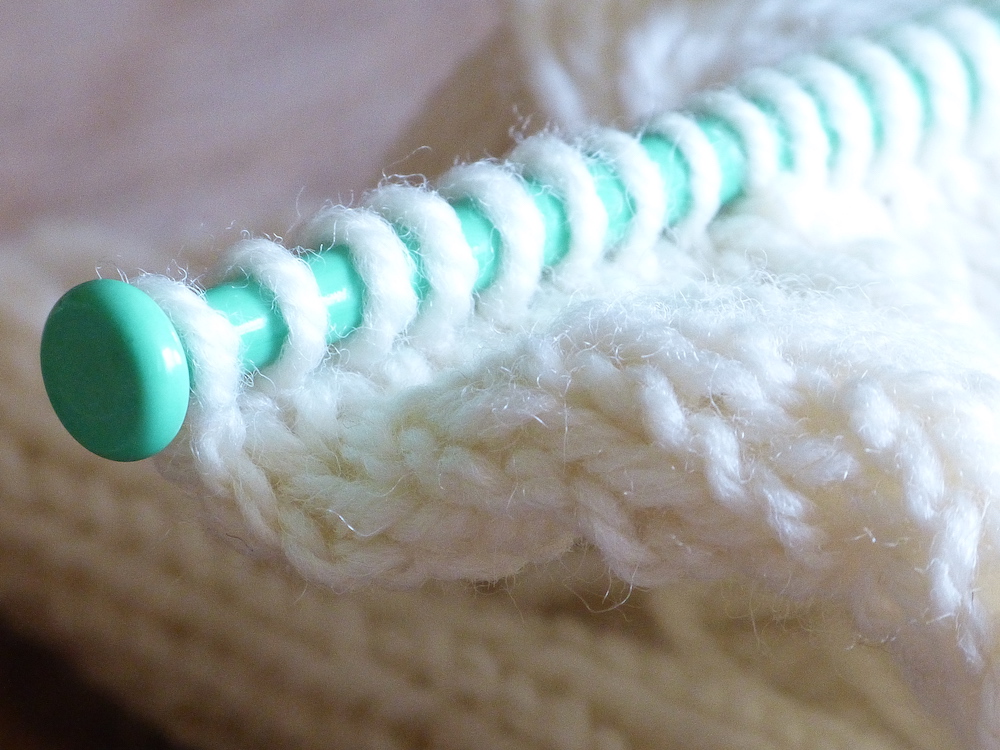
Yesterday I started knitting again for the first time in over 30 years. I had a pair of vintage green needles, and some hand-me-down Aran wool, and some good female company: mother, niece and daughter.
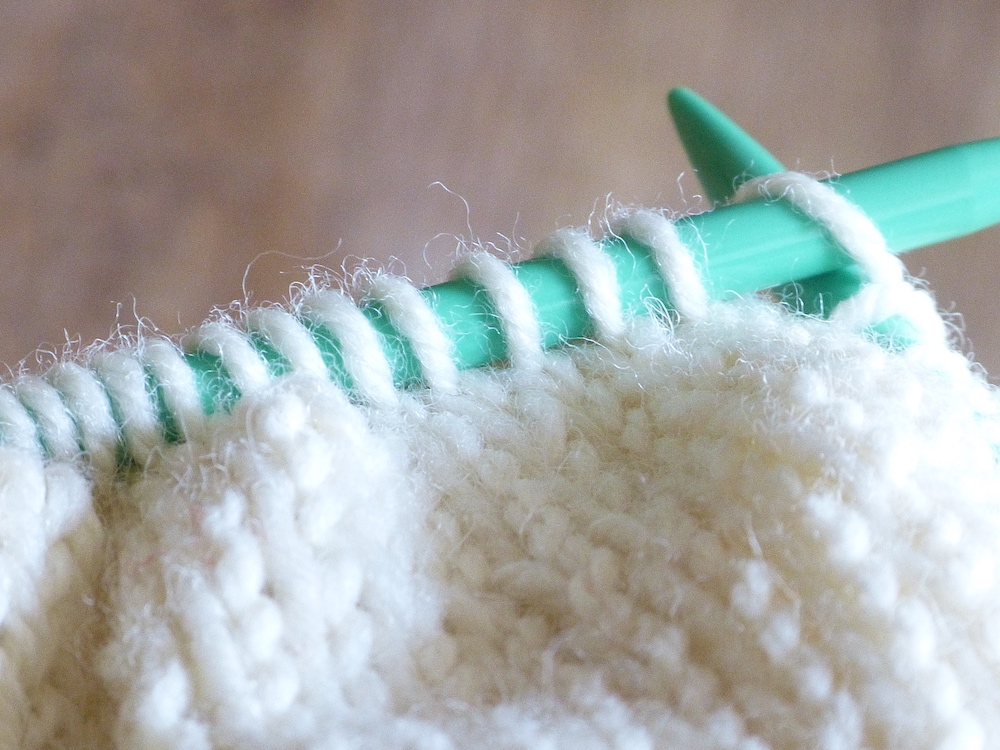
To my surprise, I quickly fell into a peaceful rhythm of softly clicking needles. There was a satisfaction in knowing that a very simple garment – a scarf, or snood – was being made. Something soothing was happening to the neural pathways of my brain as I repeated the same intricate knotting movement over and over. It reminded me of the repetitious nature of meditation, and how that creates a pool of calm in the mind. But there was something else too.
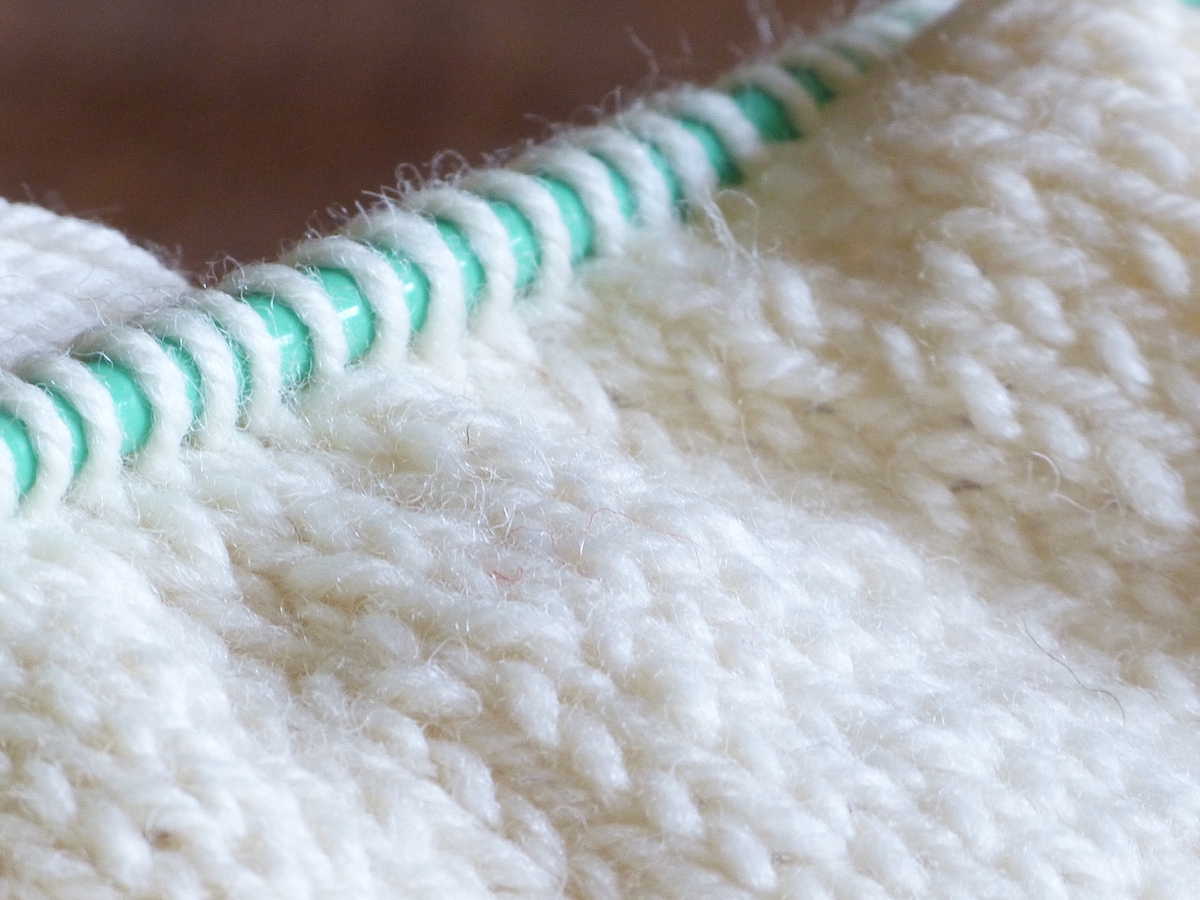
It was as if the endless knotting was tapping on the door of an ancient racial memory: of women making garments with the simplest of tools: needles of wood or bone. In clothing their families, they were also creating the fabric of society, through the mingled act of cloth-making and conversation.
I thought, then, of the times I have been caught up in the hamster wheel cycles of a ceaselessly questioning mind. And I understood that doing the simple things that pertain to survival can help any of us stay sane. I’m talking about activities like making bread by hand; or building and lighting a fire; or sowing and growing lettuces to eat… or, of course, creating a garment with two softly clicking needles.
What is your choice of simple today?
A rose for hard times
31/03/2015 at 7:52 am | Posted in Uncategorized | 4 CommentsTags: flowers, happiness, healing, inspiration, life skills, meditation, nature, parenting, positive thinking, special needs, visualization, wellbeing
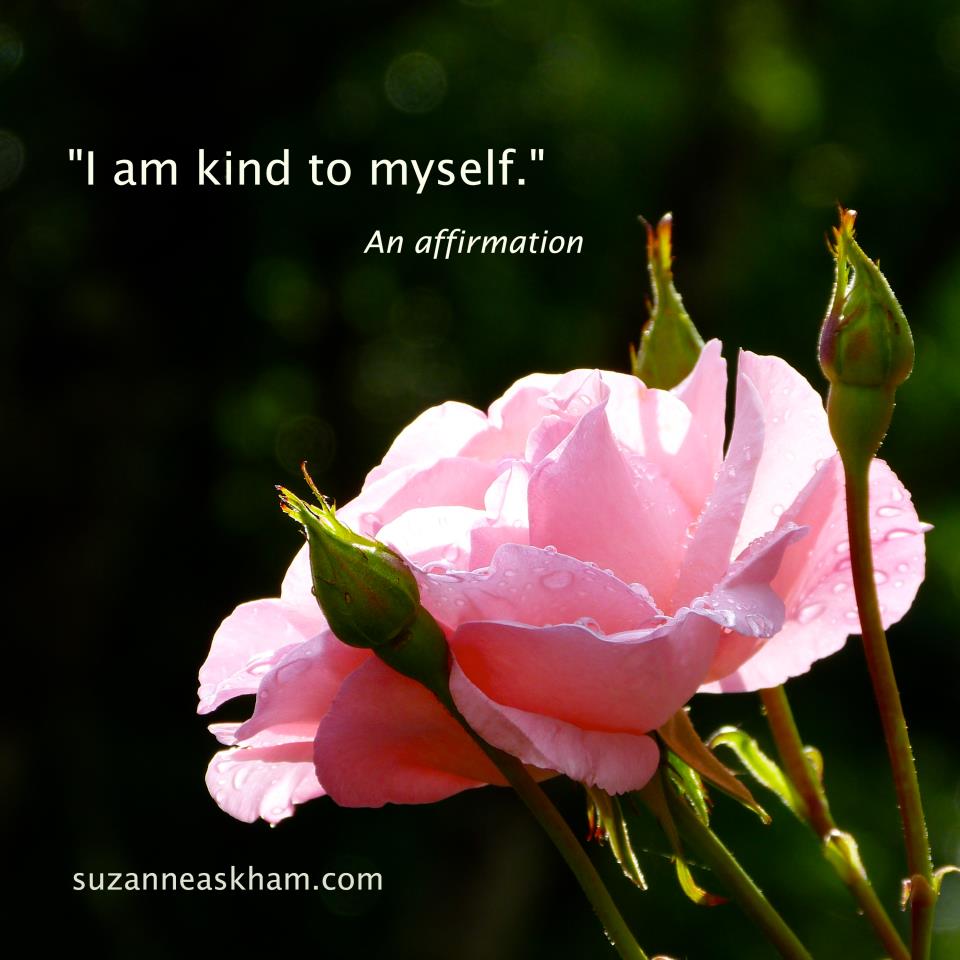
There’s a simple meditative technique we can use in hard times. I call it the Rose Meditation. You can do this anywhere: cleaning the house, ploughing through work, undergoing medical treatment, in a high-voltage meeting….
All you do is this: focus, in your mind’s eye, on a rose. The example shown here was photographed after rain, in the sunshine of the Dordogne.
Picture the feather-light, velvety smoothness of the petals. Imagine yourself miniaturised, resting between the scented petals as though they are the softest bed in the world. Breathe in their heavenly fragrance.
Notice the variations in colour between the inner and outer petals. Absorb the beautiful colours with every cell of your body.
Touch the raindrops; taste their sweetness.
Explore the petals, going inward towards the nectar, and outwards again towards the sun and fresh air.
Do this visualisation any time you feel the need. The rose contains powerful therapy, and simply thinking about it in this way can be soothing, and healing.
Website Built with WordPress.com.
Entries and comments feeds.
 Suzanne Askham