In the heart of a lonely man
27/11/2017 at 10:44 pm | Posted in Uncategorized | Leave a commentTags: kindness, meditation, nurturing, parenting, poetry, reflections, Relationships
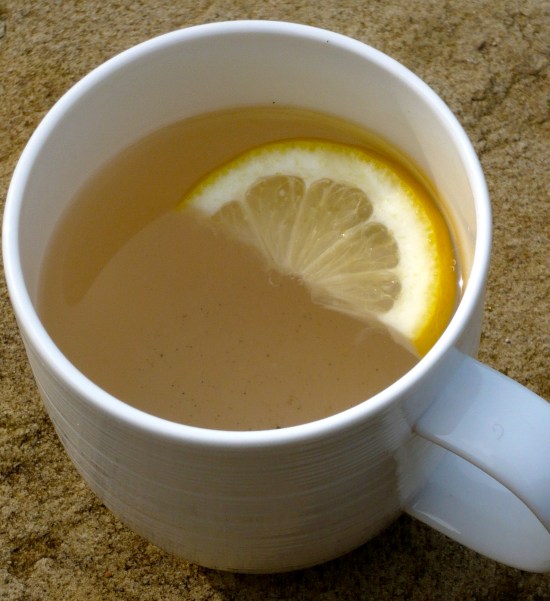
Fragrant and nourishing spring tea.
I remember travelling to a seaside town in the south west with my family. I remember that we went into a café for lunch. I don’t remember what we ate, but I do remember the salty tang of the sea air, and the sun-burnt faces of fellow diners.
I remember breastfeeding my baby daughter in the café. I remember the bliss that arrived as the milk flowed. And I remember that I smiled down at my daughter and looked up, still smiling, to gaze directly into the eyes of a man, sitting at a nearby table, who was staring at me. I remember how bereft he looked. His expression was one of absolute loss. It was a naked expression, as though he’d been caught out by his own silent sadness, almost as though he hadn’t even realised it was there.
That man’s expression has stayed with me these past 12 years. It seems to me that he was expressing, so beautifully, the longing of the lonely soul. We all have lonely elements within us – parts of us that went unnourished at a critical time. At its simplest, it seems to me that I could roll back time to see the man returned to his baby form, left to cry for lack of milk and nurturing.
So that’s why I wrote ‘Milk of Kindness’. And that’s why I’m so pleased it’s just been published in The Poetic Bond VII. I’m privileged to be one of 50 poets represented in the book, which was compiled by Trevor Maynard.
There’s no way that I can know what happened to the man in the café all that time ago. But wherever he is, I wish him peace and kindness.
That wonderful feeling when your dream comes true
20/11/2017 at 8:24 pm | Posted in Uncategorized | 9 CommentsTags: dragons, energy healing, learning, meditation, poetry, reflections, Spirituality

At the beginning of this year I set myself a challenge: get some poetry accepted for publication. Today, that wish has come true. The Poetic Bond VII, an anthology edited by Trevor Maynard, features work by 50 poets from 11 countries. Together, they create a vivid snapshot of now. My three poems are set in England, New Zealand and infinity. They feature love, loneliness and yes, there are dragons. Quite a lot of dragons – the sort that can change lives. They’re worth getting to know!
Do go take a peek at Amazon UK or Amazon.com
Why this is a great time to become more serene
23/08/2017 at 6:39 pm | Posted in Uncategorized | 3 CommentsTags: meditation, reflections, Scotland, serenity, travel, wellbeing

When I saw this photo I couldn’t resist asking to ‘borrow’ it. It’s an image of my niece, Sophie, canoeing along a tributary to Loch Morlich in Scotland’s Cairngorm National Park.
For me, this image sums up the best of serenity.
To make progress, there’s generally some effort involved. There are always bound to be a few rocks along the route. But the best approach is to cultivate a calm manner – to do your best to remain balanced whatever lies in your path.
It’s good to see distractions for what they are: side shows that are not and never will be your true path. That way we don’t become over-reactive, or allow ourselves to be carried along by events.
At the same time, it’s important to be prepared, yet not overly so. It’s wise to take a few useful items with you for your safety and wellbeing, and to help you move forwards. However, it’s also ok to trust that your needs will be met, and to travel light.
I’ve been meditating on serenity daily since the start of the summer. Through busy times it’s frankly been a life-saver. This regular practice actually appears to make life’s challenges… well, less challenging. Which is why this moment, right now, is a great time for you to focus on being serene. Try it and see what happens.
What Westerners can learn from Eastern meditation
13/06/2017 at 10:00 am | Posted in Uncategorized | 4 CommentsTags: dhyana, inspiration, learning, meditation, mindfulness, reflections, relaxation, serenity, Spirituality, waterlily
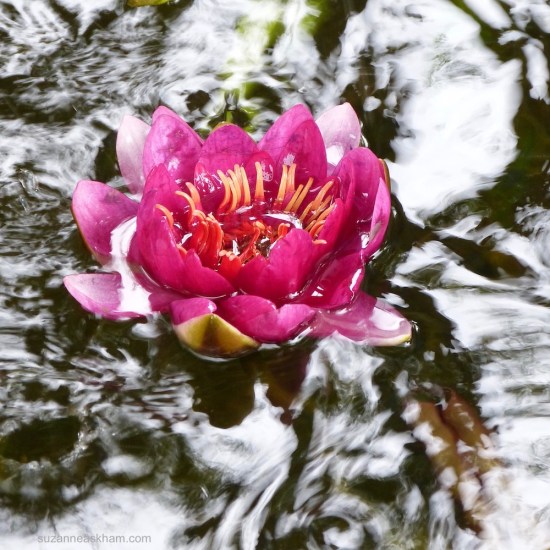
When meditation goes well, it’s brilliant. Blissful. Calming. However many beginners struggle to reach that point. They talk about ‘failing’ and ‘not being able to meditate’, as though it’s an exam they’ve somehow flunked.
I’ve heard this despondent comment many times over the nine years that I’ve been running meditation groups in the UK. When newcomers turn up, they often say, “I can’t meditate, but I want to try and give it another go”. Or “I tried meditation once before, and I couldn’t do it.”
And, of course, I regularly meet people who wouldn’t go anywhere near a meditation group, believing that they are doomed to failure so it’s not even worth trying. But there’s something wistful in the way they tell me this. It’s as if they suspect they’re missing something, and they just don’t know what to do about it.
There is an interesting reason why Westerners may sometimes find it more difficult to meditate than their Eastern counterparts. It all comes down to the name itself: ‘meditation’. Or, to be exact, the origins of the name.
The Western approach
We can trace the verb ‘to meditate’ back to Latin. It meant: to ponder, reflect, consider, devise. In the old European languages it also meant: ‘to measure’, ‘to judge’, ‘to protect’, ‘to provide for’ and ‘to deliberate’. Go further back in time, to the original ‘seed’ language that early humanity shared, and it meant ‘to take appropriate measures’, ‘to give advice’ and ‘to heal’. This was the Proto-Indo-European (PIE) seed word, ‘med’, which also evolved into ‘mediate’ and medicine among other words.
The historical Western approach to meditation is therefore driven by a well-intentioned desire for results: the solving of a problem, the righting of a wrong, the mending of an ill.
The Eastern approach
In the East, the Sanskrit for meditation is ‘dhyana’. Other Eastern languages have variants on this. The PIE seed word for dhyana is ‘dheie’ meaning ‘to see, to look’. The word ‘Zen’, signifying an aspect of Buddhism with a deeply contemplative approach to life, shares the same seed word.
So in the East, ‘dhyana’ is the practice of simply being, simply witnessing without judgement.
Western meditators broadly follow the Eastern tradition. We sit in silence, simply being… but we also have a cultural legacy which whispers to us that we need to get results from our quiet time.
A happy fusion
Of course, we can’t really divide the world into neat East-West packages. Wherever you live, whatever your origins, you’re pretty well guaranteed to experience the ‘monkey chatter’ of your mind during meditation. And this can do a great job of distracting you with wide-ranging thoughts.
But your approach to the monkey chatter can make the difference between frustration and happiness during your practice – and that’s where an awareness of meditation’s ancient definitions can be helpful.
If we accept that we have chosen to sit in silence, focusing on a particular word, or concept, or image, or sound, simply to witness without trying to change anything, then we are much more likely to enjoy our meditation sessions. Each time we notice that our thoughts have strayed, we calmly remind ourselves that we are here to meditate, and we return to our point of focus.
No judgement. Just practice.
To summarise, we meditate simply to meditate. There is no end result we are looking for. So we cannot ‘fail’. We are simply being conscious witnesses of the moment.
And yet, when we make a regular practice of meditating in this way, with no expectation of reward, the insights and inspiration do come. Meditation focuses and refreshes the mind like nothing else.
So if you really struggle to meditate, take heart. You are not alone. Now that you know the ancient secret buried in the very name of meditation, you can choose to let go of the striving and, instead, embrace the serenity.
How to transform your relationships with one fascinating word
05/06/2017 at 10:04 am | Posted in Uncategorized | 2 CommentsTags: energy healing, healing, inspiration, intuitive development, meditation, peace, Relationships, spiritual healing, wisdom
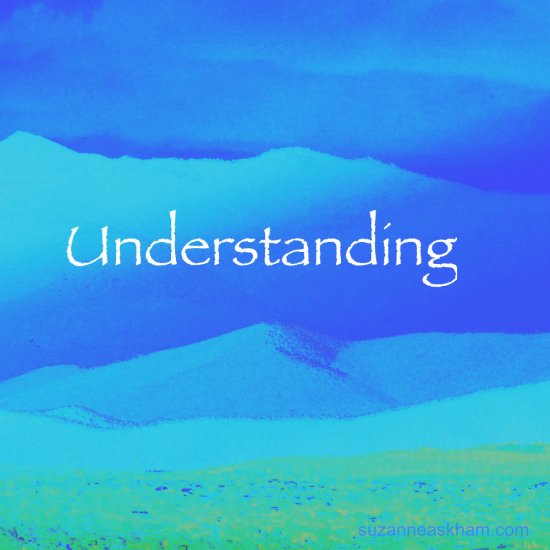
Understanding blends knowledge with kindness. When you apply understanding to a relationship, conflicts crumble. Dynamics alter. Ego gives way to empathy.
An understanding person comprehends something or someone with compassion. They hold a cup of knowledge that contains kindness and love as well as wisdom and perception.
Understanding can strengthen a floundering relationship. If a partnership is ending, it can enable that to happen with love rather than anger. Understanding can also be a wonderful doorway to laughter and humour which in themselves can heal relationships.
Understanding is our meditation word in the Studio this week.
How could applying this word alter a challenging situation for you?
An amethyst for meditation
05/05/2017 at 12:41 pm | Posted in Uncategorized | 3 CommentsTags: amethyst, crown chakra, crystals, healing, meditation, mindbodyspirit, relaxation

This beautiful, tiny amethyst came from a geological seam on Achill Island, Co Mayo. I’ve never been there but I once went foraging in a crystal shop a little further south along the Atlantic coastline, and came across this specimen glowing quietly on a shelf.
I photographed it today because it deserves its own portrait… and also to herald the fact that next week I’m running two meditation sessions on the subject of violet.
During meditation it’s fairly common to see colours spontaneously, with the inner eye – and the colour people see most often during my sessions is violet, or purple.
There’s something blissful about sitting still, in silence, and focusing on this vibrant colour. So I invite you to do just that.
Imagine that you are completely immersed in violet light. Picture every cell of your body bathing in violet’s uplifting rays. Keep doing that for a little while. And witness what happens within your body, mind and spirit.
Enjoy!
When you’re too busy to meditate, try this
20/12/2016 at 7:01 pm | Posted in Uncategorized | 1 CommentTags: calm, meditation, mindfulness, nature, relaxation, travel
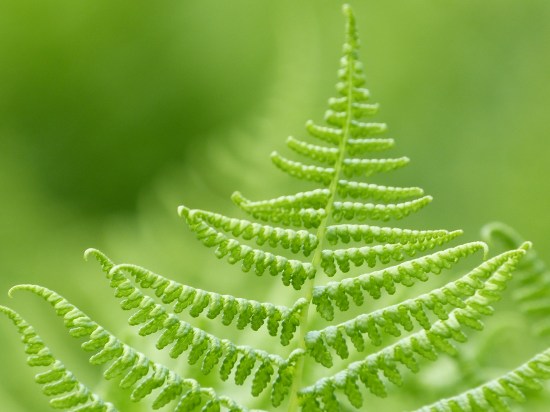
When life gets really busy… like right now… the easiest daily meditation doesn’t require a timer, or an app. It just requires you.
This is what you do. Sit comfortably. Rest your hands loosely on your lap.
Count the thumb and fingers of your left hand, one count per slow, relaxed breath. Lift each finger briefly in turn as you count.
Repeat with your right hand. So now you’ve counted five on each hand.
Then repeat the sequence twice more. So now in total you’ve counted five, six times over.
This is the ‘Three Tens’ meditation. When you’ve time for nothing else, do this. It will help!
Aquamarine bliss
14/11/2016 at 5:18 pm | Posted in Uncategorized | Leave a commentTags: healing, Health, inspiration, meditation, nature
The theme this week in my studio is ‘Aquamarine’. I invite you to focus on the beautiful green-blue colour of the sea. You know, the way it looks when waves rise up and daylight filters through the water…

Here is a wellbeing exercise for you. Imagine you are made up entirely of this sea-glass colour. These pictures taken at Surfer’s Point in Western Australia may help you.
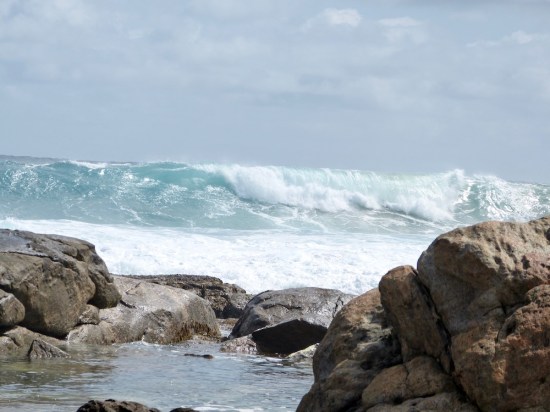
Visualise that any areas of pain or illness in your body are being washed away by the cleansing aquamarine light. Picture your body becoming more and more like aquamarine sea glass, as if lit from within. You might imagine that areas of pain are dark and dense, or sticky and gluey. As the water keeps washing through, these become dislodged until the whole of you is simply aquamarine: healthy; radiating with good health, and speaking with your own authentic voice. Enjoy the feeling!

Breathe your mantra
31/10/2016 at 9:45 am | Posted in Uncategorized | Leave a commentTags: inspiration, meditation
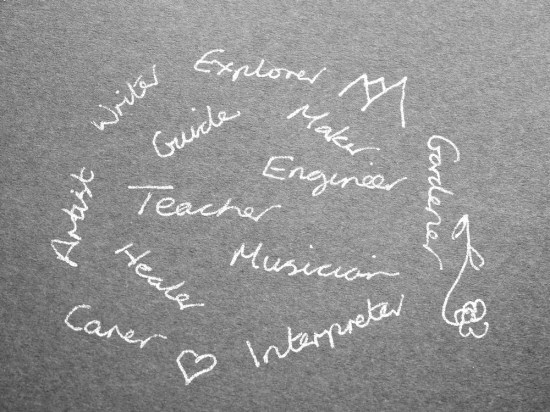
This is
a meditation
an exercise
Easy, but not quick
Breathe in “I am”
Breathe out “mantra”
Repeat
for twenty minutes
maybe thirty
Set a timer
so you don’t need
to worry about time
When you witness
your mind wandering
return to your
silent words
I am mantra
I am mantra
I am mantra
After a while
if you’re lucky
your mind will
offer up the mantra
that runs through
your core
Are you teacher
healer, artist
explorer, engineer?
Are you carer
cook, musician
maker, even mystic?
Listen to the mantra
at your core
Don’t try to change it
Accept it, embrace it
I am mantra
I am mantra
That is all
What an ice mountain can tell you
30/07/2016 at 8:52 pm | Posted in Uncategorized | 1 CommentTags: Guidance, healing, insight, inspiration, meditation, nature, personal development, sacred site, travel
Some places feel special, in ways we don’t fully understand. One such I visited recently is Snaefellsjokull. This ice-capped volcanic mountain rises from a remote Western peninsula in Iceland. Its name translates as ‘Snow-fell glacier’.
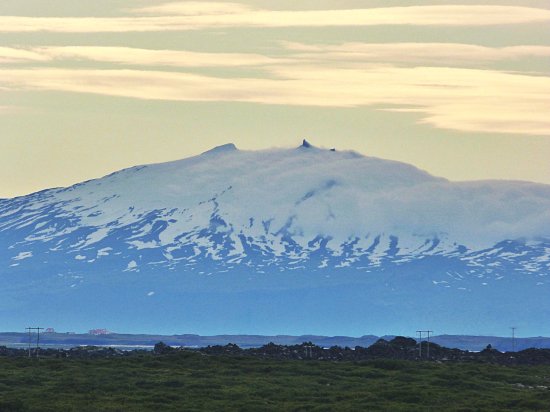
Perhaps it feels remarkable because of the near-Arctic juxtaposition of ancient fire and eternal ice, enhanced by the mystery of ocean clouds.
Or maybe it’s because the myriad volcanic peaks in this region take on their own fierce presence in a stark landscape created by the slow separation of two major continental plates.

On the slopes of the glacier itself, the sense of presence grows stronger, along with a distinct chill. It’s easy to see why Jules Verne chose Snaefellsjokull as the entrance to the earth’s core in his novel, Journey to the Centre of the Earth.
There’s a purity and absolute freshness to the air, as though all human preconceptions have been frozen or blasted away.

The ancient volcano brings gifts to the watchful. My daughter found a piece of obsidian – black fire glass. And I discovered what I fancied to be the subtle, changing image of a fire sprite on a smooth piece of basalt.
Snaefellsjokull is said to be one of the sacred centres of the earth, a portal to other realms.

Standing on the glacier, it’s possible to see things differently… to recognise the true landscape of our own lives.
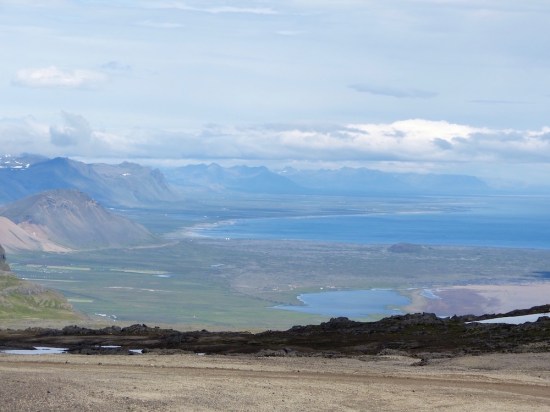
An ice mountain can tell you much about yourself.
Each of us carries within us the qualities of Snaefellsjokull: the ice and fire, the mystery and the deep, all held within a shimmering equilibrium that is subject to disruption when inner or outer forces overturn the state of balance.
Witnessing this in nature is to witness it in ourselves. We can open up to these qualities, and allow them to flow through the meridians, our own subtle energy channels.
There are four burning questions an ice mountain draws out of us:
• What in you is ready to be expressed?
• Look deeper now. What are you suppressing?
• Do you always recognise your own inner promptings towards action?
• And, above all, do you honour the passions and visions that ignite you?
Take time to answer these questions. They are a recipe for life-long wellbeing.

Website Built with WordPress.com.
Entries and comments feeds.
 Suzanne Askham